
AI and automation · Software, AI and technology
Before writing a line of code, I asked forty trucking company owners one question. Only eight answered the way that mattered.
A SaaS dispatch tool for small US trucking companies, taken from idea to a validated, scoped MVP. The work was the validation and the commercial model, not the software.
The idea was a dispatch tool that automated the parts of running a small trucking company that cost the most when a person got them wrong: a load taken at the wrong rate, a deadhead mile nobody planned for, a broker left waiting. Before any of that got built, I went and found forty owners of trucking companies and asked them directly whether the problem I thought I saw was actually theirs.
All forty confirmed it, in their own operation. The first answer was easy to get — a problem described accurately back to someone rarely gets denied. The harder question came next: would you pay for a fix, and would you use it the day it worked. Eight said yes to that.
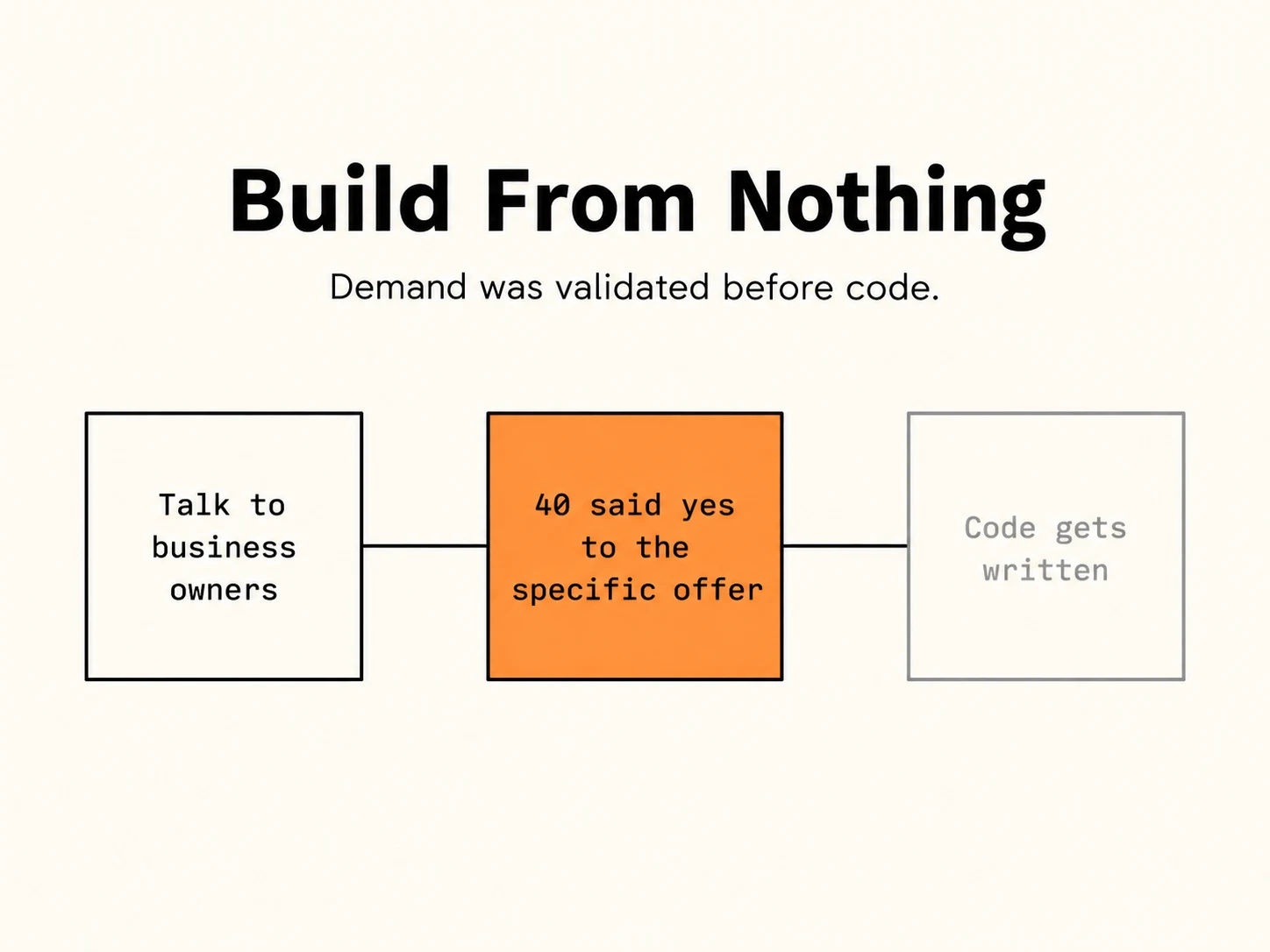
How it was built
- 01 / 40 owners interviewed
Every one confirmed the problem existed in their own operation.
- 02 / 8 said yes
Committed to pay and use it at launch — the number that shaped the entire first version of the product.
- 03 / 2 features built
An automated load grabber and load analytics — the two problems those eight companies had specifically responded to.
Eight verbal commitments, not eight contracts — worth exactly that much, and also the number that shaped the entire first version of the product, because eight real conversations beat forty polite confirmations.
Those same conversations located the actual six minutes that decide a load: refresh the board, open a listing, check where the truck is, work out cost per mile, decide whether the destination leaves the truck somewhere useful, then call or email the broker. In a market where the load goes to whoever calls first, that's not a minor step in the process. It's most of it.
The product that came out of those eight conversations was two features, not ten: an automated load grabber, and load analytics — the two problems those eight companies had specifically responded to. Everything else got pushed to later.
Pricing went the direction a first draft rarely goes: 1% against an incumbent charging 4% to 6%, an undercut rather than a nudge. The first two versions of the revenue model assumed a subscription — pay a seat fee whether or not the tool found you a load. The interviews said otherwise; owners were clear they'd pay for an outcome, not for access. The third version matched that, on a percentage of load value, and it cut the headline revenue number in the deck by a real amount — a smaller number on paper, and the correct trade regardless. How I price a product before anyone has bought it is in startup pricing strategy before the first sale.
Here's the part of the pitch deck I'd flag to an investor myself, before they found it: the market-sizing slide quotes the freight market's full size, near a trillion dollars. That number describes the freight industry. It says nothing about the size of the opportunity for a 1% dispatch fee inside it. The number that actually carries weight is the eight — real owners, asked a direct question, before there was anything for them to be polite about. The other checks an investor runs past the deck are in what investors look for in a startup.
There's no revenue yet. The model projects $2.2 million a year at 100 client companies running eleven trucks each, and $440,000 still at a fifth of that fee if the pricing has to move — both projections built on the interview data, not measured results, and I'm not presenting them as more than that here.
If you're validating an idea right now, the test isn't whether people agree the problem exists — plenty of people will agree with an accurate description of their own frustration. The test is whether they commit before you build anything, and whether that number is meaningfully smaller than the number who just agreed with you. The full method, from the first list of names to a paid pilot, is in how to get the first customers for a startup.
Eight real conversations beat forty polite confirmations.
- 40
- owner interviews before developmentEvery one of them confirmed the need
- 8
- companies committed to use it at launchVerbal commitments, not contracts
- 6 min → 10 sec
- target time from load posting to broker contactDesign target for the MVP, not a measured production result
- 1% vs 4–6%
- service fee against the incumbent dispatch modelThe market rate was the starting point for the pricing work
The full engagement record
DIS-AI — case study