
Operations · Software, AI and technology
Sort your ad account by click-through rate. Now sort it by cost per lead. Same winner?
A US marketplace selling ready jobs to HVAC and appliance technicians needed customers. The research found the audience already paying $180 to $200 a lead to a company they openly warn each other about.
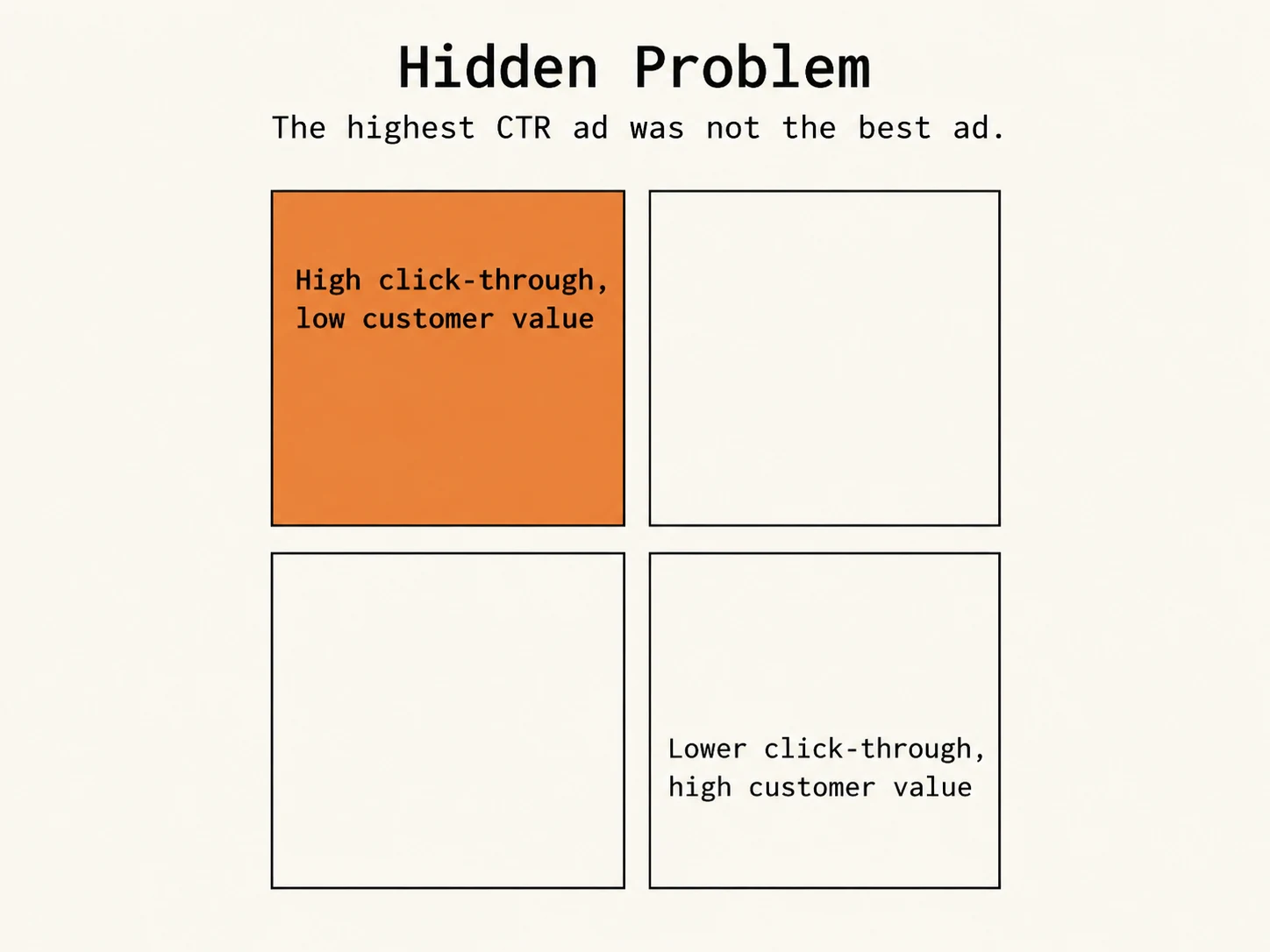
Avenlance's account had one ad running away with the click-through rate: 1.55%, well ahead of everything else. On a report that stops at that column, it's the ad you scale — more budget, more of the same creative, done.
I sorted the same account by cost per lead instead, and the ranking flipped completely. That same ad — "Real clients. Real jobs. Every week." — had the worst click-to-lead conversion of anything running, 18.3%, and a cost per lead of $10.74, almost double the lowest cost per lead anywhere in the account. The clicks were there. The form completions were not.
The ad that was actually working — "ZIP-Based Appliance Jobs" — had nothing persuasive in it. Just a fact: the work is near you. $5.60 a lead, 44% of everything the account produced. Sitting the two side by side, the pattern ran almost opposite to what the top-line report would have suggested: the specific, unglamorous message won, and the broad, emphatic one was quietly the most expensive thing running.
- 127
- technician leadsAugust, $808.89 spend
- $4.70
- lowest regional cost per leadMaryland; the observed range reached $12.19 in New Jersey
- $1,960
- of booked work per subscriber, monthly28 jobs a month at a $70 average, against $180–200 for a single Angi lead
The numbers alone didn't explain why one message worked and the other didn't. The forums did. Avenlance sells ready work to HVAC and appliance technicians — a monthly subscription, twenty-eight jobs guaranteed, refunded if it doesn't deliver. Before writing a word of ad copy, I went through the places these technicians actually talk to each other — not to find a slogan, to find the sentence already being said. It was there in plain language: "Biggest SCAM, poor quality leads, $180 to $200 each," next to "DO NOT SIGN UP," aimed at the company already selling them leads. The complaints weren't about understanding the category. They were about the quality of the leads and the price — which meant the message had to answer that complaint directly, not describe the service in better words.
Five messages went up against that. Two took the incumbent's failure head-on — "Appliance jobs, not fake leads," "Booked Jobs, Not Another Leads." One sold nothing at all: "The job was easy. The client wasn't." Before launch, I set one rule: judge the ads by cost per lead, not clicks.
127 leads came in on $808.89 of spend, regional cost running from $4.70 in Maryland to $12.19 in New Jersey — a spread geography explains on its own. One number in the same data doesn't have an explanation: a campaign launched August 18th returned leads at $3.75, and two more launched five days later, same targeting, came back at $7.87 and $9.19. If Avenlance turns the campaigns back on, that gap is the first thing worth chasing down before touching the creative again.
They haven't needed to. One month at $5.60 a lead filled the company's serviceable capacity — a subscription business can only take on as many new accounts as it can actually deliver work to, and that month did it.
Before your next budget conversation, pull up your own best-performing ad by whatever metric your dashboard leads with. Then sort the same list by what it actually cost you per customer. Avenlance only found the gap between the two after looking at the second column. If an agency runs the account, ask it for exactly this ranking; the other checks are in is my marketing agency wasting my money.
The full engagement record
Avenlance — case study