
Operations · Legal and professional services
The offer was built for consumers. The ad account was built for professionals.
A US debt resolution firm was spending on Google Ads and LinkedIn with no strategy and no audience analysis. Rebuilding around one channel produced volume that needed a 24/7 call centre to absorb.
A debt resolution practice running the same offer in the US and Ukraine — reducing or settling credit card debt and missed payments — came in with a specific request: build out Meta advertising. They were already running Google Ads and LinkedIn side by side.
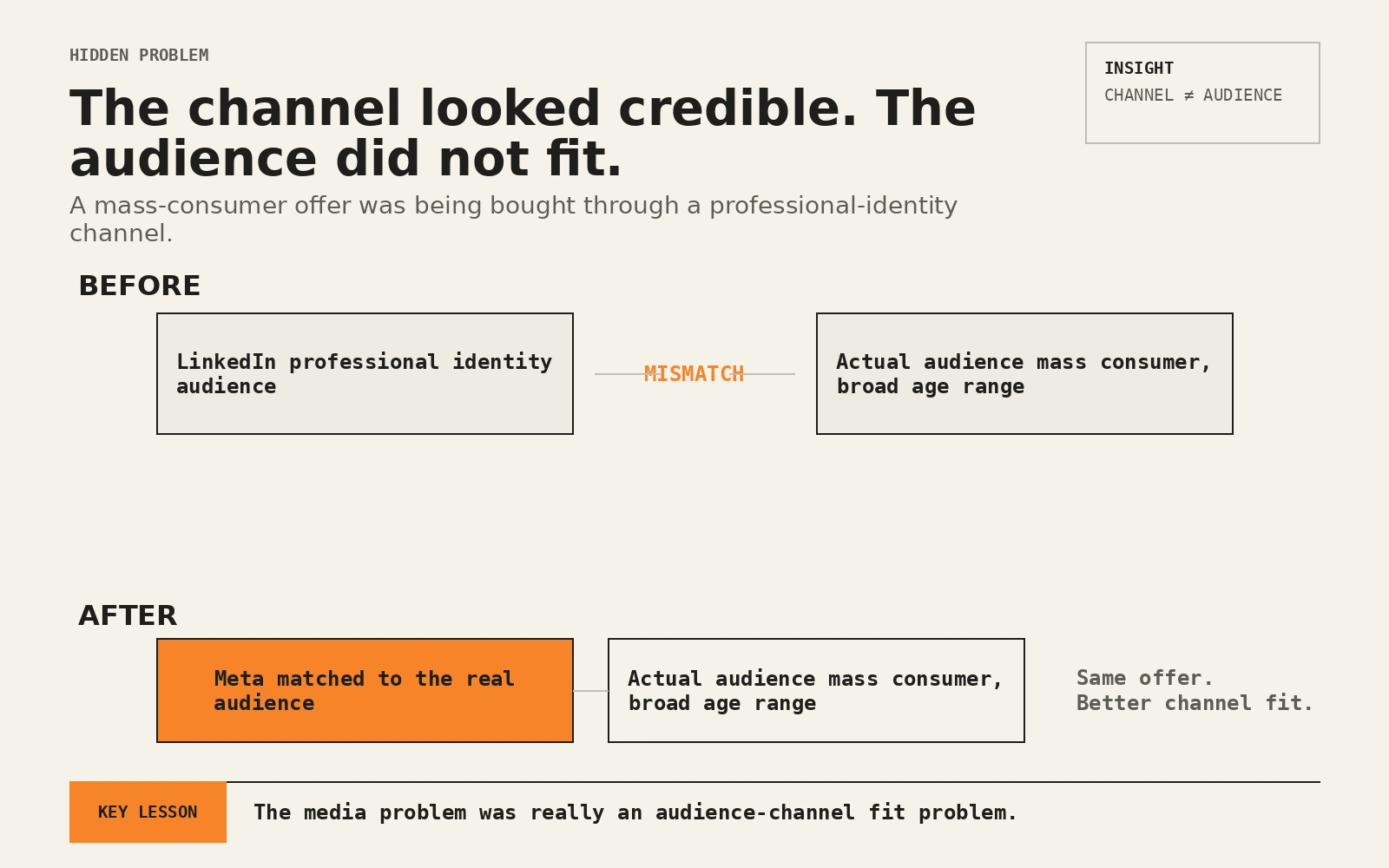
LinkedIn was the detail that explained everything else. LinkedIn targets professional identity — it's where people go to look employed. Debt resolution is a mass consumer service with no connection to that context. Running a consumer offer on a professional network isn't just a channel mismatch on its own — it's evidence the channels had been picked without anyone first building a picture of the actual customer.
Reviewing the account confirmed the rest directly: no audience research, nothing underneath the spend explaining why any specific dollar was going where it was going.
The audience itself turned out to be enormous — credit card debt runs from 20 to 70 years old, so reach was never going to be the hard part. Trust was. Research into how people actually described their own hesitation found a different objection at each stage: at the top, "I've never heard of a company like this, I didn't know this was possible." In the middle, "it might be a scam, I'll waste my time." Near the decision, "rude service, they won't call back, nobody explains anything."
One finding from that research governed every decision after it: the objections people raised weren't about the debt itself, they were about whether this specific company could be trusted — and the language people used pointed toward wanting a way back, not another warning. Most advertising in this category defaults to alarm. That wasn't the direction the research pointed toward.
LinkedIn came out. Meta became the primary channel, matched to a mass consumer audience instead of a professional one. The messaging led with the way back instead of the warning. Response time became one of the main operational constraints, directly answering the "they won't call back" objection found in the research — a lead that gets a callback in minutes doesn't have that objection to overcome anymore.
More than 3,000 leads a month came in at under $1 each, by the original campaign records. A dedicated call centre and a five-person sales department ran around the clock to reach every new lead inside three minutes. Separately, over the following period, the firm's own lawyers took on extended proceedings with a large share of these clients — some of that legal work is still ongoing today. This wasn't a short spike in enquiries followed by nothing. It became years of legal work, which is a different kind of outcome than a marketing campaign usually produces.
If you're advertising into a category where the person on the other end has real objections about trust, not just about the product — debt, health, a legal problem — go find the actual words people use for their own hesitation before deciding what tone to advertise in. The objection research usually points somewhere more specific than "reassure them," and it's rarely the same specific place as what the rest of the category is already doing. Volume like that only became sales because someone answered within minutes; the other places leads stop are in getting leads but no sales.
- 3,000+
- leads per monthFrom original case records
- <$1
- cost per leadFrom original case records
- <3 min
- target response time
- 24/7
- call centre coverageSupported by a five-person sales department
The full engagement record
Confidential: debt resolution practice, US and Ukraine — case study