
Operations · Manufacturing and industrial
The plan was a US market entry. The deliverable was a reason not to spend $450,000.
A Turkish agricultural group wanted to know whether the United States was worth entering. After two months on the product line, the market, the paperwork, and the money, the answer was no.
A Turkish agricultural group came to me in the summer of 2023 wanting a plan to enter the United States — no brand presence there yet, no regulatory foothold, no existing route to sell through. The assignment wasn't to prove the US market worked. It was to find out whether the numbers actually supported entering, and accept that the answer might be no.
The turning point wasn't the competitor research or the market sizing. It was the first-year cost model. Compliance, certification, regulatory work, legal support: all of it easy to underestimate from Istanbul, and required in full before Avagro could sell a single unit in the US. Modelled against the budget they actually had, that came to roughly $450,000 before meaningful revenue showed up, with a long runway after that before sales reached normal volume and those costs stopped running.
I put the same model against Europe and Africa. Europe was easier to read, cheaper to enter, faster to a result. Africa already had traction worth building on. Same company, same product, same amount of work — a completely different number on the other side of the comparison.
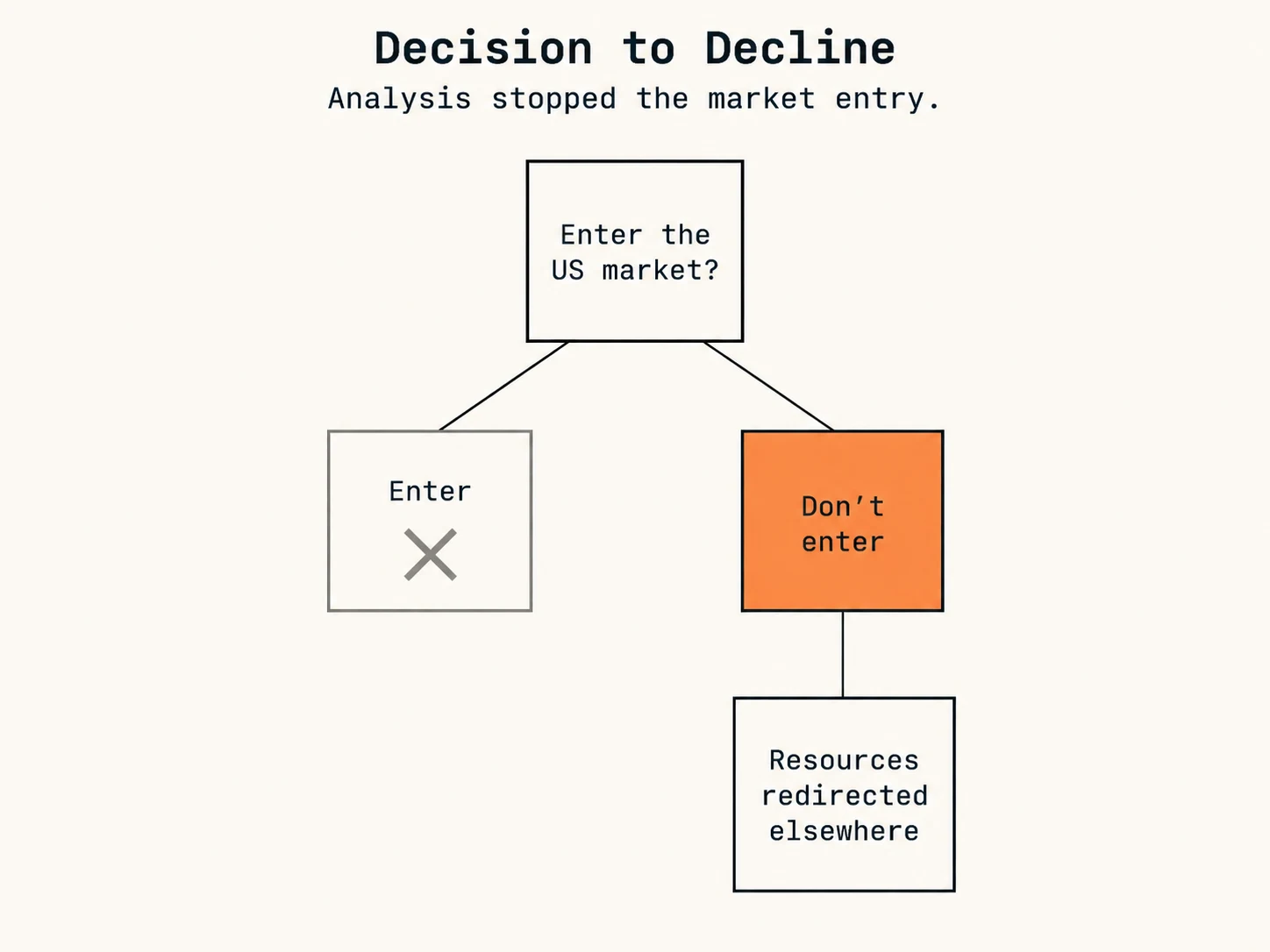
Avagro didn't enter the United States. That decision was the outcome of the work, not a failure to produce one. The company avoided committing roughly $450,000 to a market that hadn't yet proven it could pay that back, and put the same money toward Europe and Africa instead — markets the same analysis had already priced as faster and cheaper to work in.
Before you commit to the market that looks like the obvious next move, put the actual first-year compliance, legal, and setup costs of getting in next to what the same budget would buy you somewhere less exciting. Avagro ran that comparison before spending the money, not after — which is the only point in the process where it's still a choice. How to write a study like that so the answer is on the first page is in how to write research a decision-maker will use.
The full engagement record
Avagro — case study