
Team and contractors · E-commerce and retail
Twenty projects were ready to start. None of them had an owner or a finish line.
ERC (erc.ua) is a major Ukrainian technology distributor and wholesale retailer. Across retail, wholesale, e-commerce, and systems-integration channels, ideas had no clean route to a named owner, a test, or a decision.
I pulled the list of twenty stalled initiatives at ERC and looked at two columns: named owner, success metric. Both were blank, on every row, without exception. ERC is a major Ukrainian technology distributor and wholesale retailer working across retail, wholesale, e-commerce, and systems-integration channels; good ideas weren't the shortage, they came from every part of the company. A third gap sat next to the first two in how each proposal had been written up, scoped large enough on paper to invite exactly the kind of scrutiny that stops a project before it's tried at a smaller scale.
The new process asked for less, not more: a defined scope, a named owner, one way to measure the result, before any pilot could start. Nothing beyond that was required, so following the process was faster than working around it. Pilots were kept small enough that nobody had a specific reason to block one. IT, marketing, and business teams used the same process instead of three separate ones, so a proposal didn't die in the handoff between departments. The rule also allowed a pilot to end when the result didn't justify continuing, with that ending recorded as a result rather than an abandoned row on the sheet.
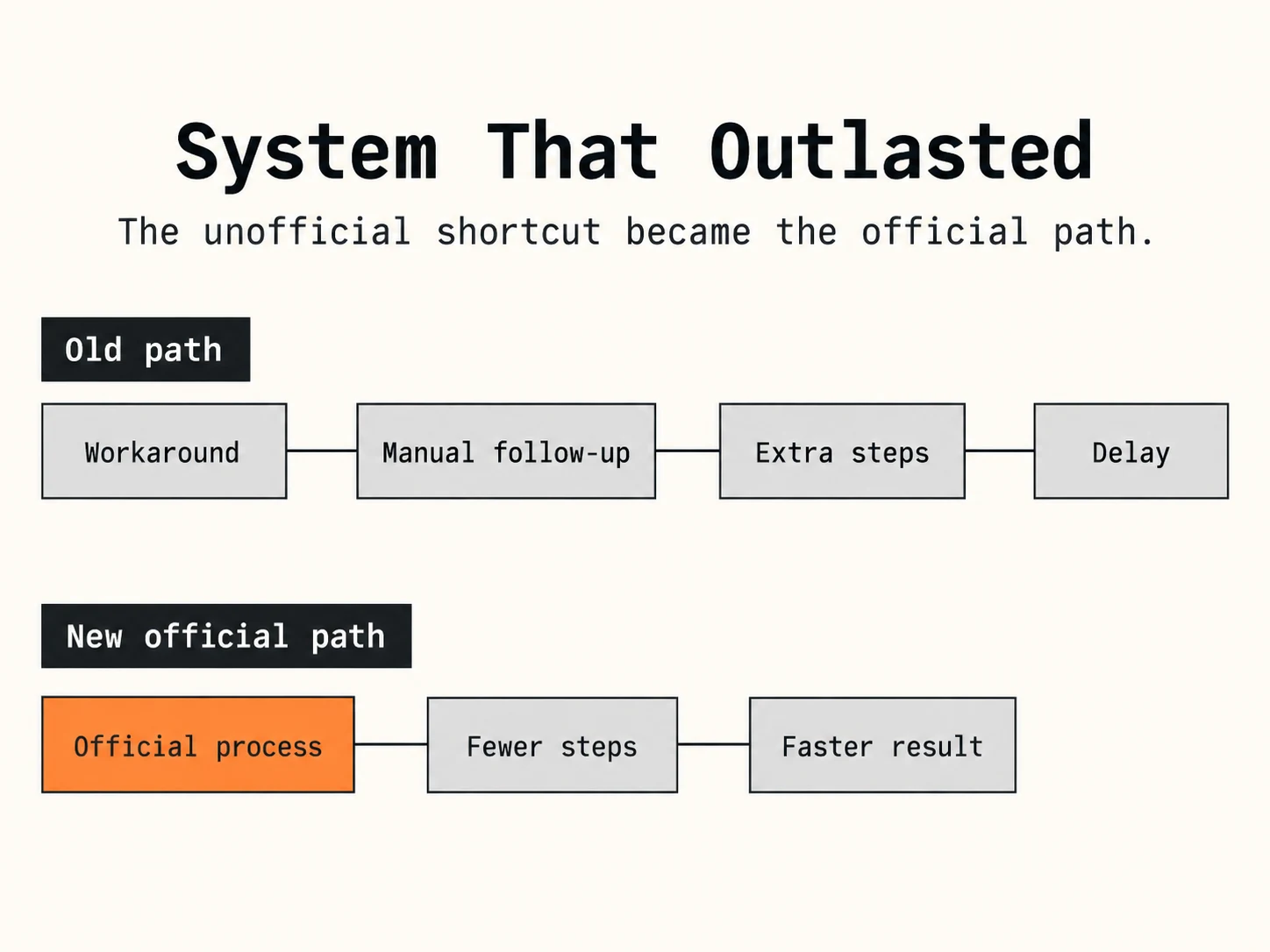
- Made the flow lighter, not stricter, so the official path became the fast path
- Required three things before any pilot: defined scope, a named owner, one success metric
- Kept experiments small enough that nobody had a reason to block them
- Got IT, marketing, and business onto the same flow so ideas stopped dying in the handoff
- Treated "close this one" as a legitimate outcome, not a failure
- −40%
- project lead time
- +12%
- average cart sizeLoyalty upsell widget, split test
Project lead time dropped 40% once scopes and ownership were standardized this way. One pilot that went through the new process — a loyalty upsell widget — lifted average cart size 12% in a split test. The same internal waiting sits inside most purchasing delays; the method for finding it is in how to reduce supplier lead times.
The widget is the smaller result. What outlasted the engagement was the route itself: the next twenty ideas at ERC had a defined path to a test, not just the one that happened to go through it first. What stayed with the company afterward wasn't a person running every pilot personally — it was the review step and the three requirements in front of it, still there to keep the next proposal moving instead of stalling where the last one did.
Pull your own list of stalled ideas — the ones that come up in every planning meeting and never actually get tried. Check each one for the same two columns: a name attached, a way to know if it worked. If most rows are blank, the shortage in your business isn't ideas either.
The full engagement record
ERC — case study