
Operations · E-commerce and retail
The ads were doing their job. The product pages were answering a different question.
A national jewellery chain had a serious digital budget and no return on it. The funnel had been built for generic e-commerce, and nobody buys jewellery the way they buy a phone case.
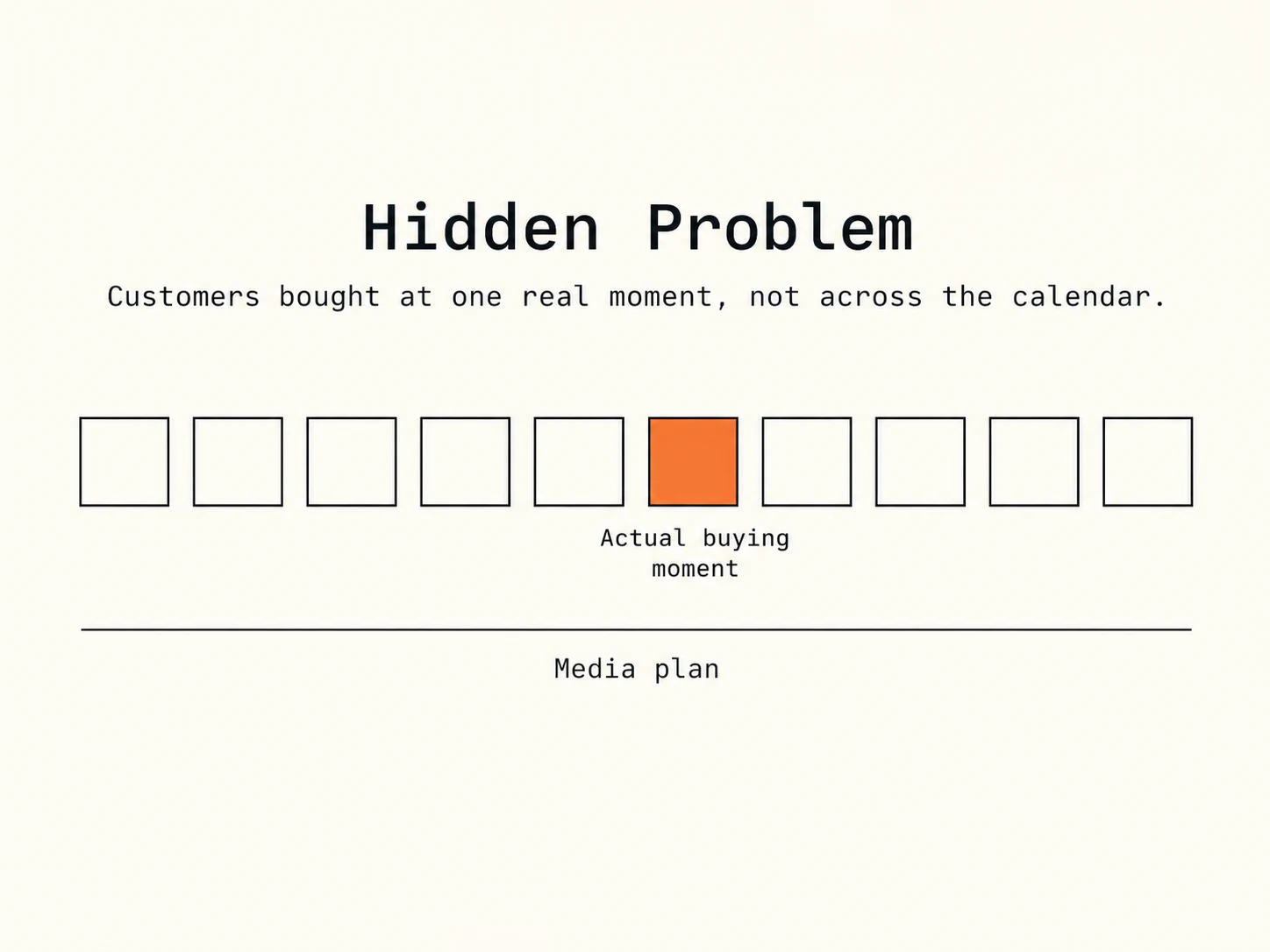
A national jewellery chain came in with a real digital budget and flat online sales — not a business refusing to invest, one investing steadily and getting nothing back. I opened the product pages the ad spend was actually sending people to, and put two purchases side by side: a ring bought for an anniversary, and a bracelet bought because someone liked the design in passing. The page treated both the same way — specifications, materials, price — with nothing distinguishing a purchase against a deadline from one that wasn't.
That's the mismatch a jewellery buyer runs into constantly. Most of these purchases happen visually, for somebody else, and often against a date. A page built to answer "what is this" leaves the situation the buyer is actually in — the anniversary, the deadline, the gift — completely unaddressed.
- Profitable
- ROAS, first time that year
- −25%
- cost per saleWithin six weeks
- +47%
- paid conversion rate
Three specific gaps sat underneath that mismatch. The product pages gave no reason to buy this one now. Remarketing was thin, in a category where the stretch between browsing and buying can run for weeks. And mobile creative was doing the least work of the three, on a majority-mobile audience.
None of the three were a campaign-structure problem. Rebuilding the campaigns first would have sent better-targeted traffic into the same pages that weren't converting it — spending more to reach the same wall.
Paid media shifted toward gifting occasions and purchase timing instead of product attributes. The deadline stopped being treated as a seasonal spike and became a fixed property of the category — jewellery gets bought against a date whether or not that date is a holiday. The remarketing sequence rebuilt around buyer timing instead of repeating the same message on a fixed schedule. Mobile creative moved to the front of the work. All of it went in before campaign structure got touched at all.
Cost per sale fell 25% within six weeks. Paid conversion rose 47% in the same window. Paid marketing turned a profit for the first time that year.
None of that came from inside the ad account. The pages, the follow-up sequence, and the creative format were the three things a campaign review doesn't usually touch first — and they were the only three things that actually moved.
If you're running paid traffic into a page that describes your product instead of the situation your buyer is actually purchasing for, check the page before you touch the media plan. Better-targeted ads into the same page just get more people arriving at the same problem, faster.
The full engagement record
ZLATO — case study