
STANAG 4671 is an airworthiness code, not a certificate. What that means for a drone maker heading for NATO buyers
Drone founders say "STANAG 4671 compliant" as if it were a badge. It is a code a national military authority uses to decide whether a large unmanned aircraft is safe to fly. Here is what it covers, its smaller siblings, what one maker spent to meet it, and how a startup should plan.
STANAG 4671 is NATO's airworthiness code for fixed-wing unmanned aircraft with a maximum take-off weight between 150 and 20,000 kg. It sets out what a design must meet to be considered safe to fly: structure, systems, software, protection against lightning and ice, and the evidence that proves it. It is not a certificate and NATO does not issue one. A national military airworthiness authority, such as the UK's Military Aviation Authority or Germany's military aviation authority, uses it as the basis for a military type certificate for one aircraft type.
That distinction is where most founders go wrong. "STANAG 4671 compliant" on a slide means nothing until someone can say which authority, which edition, which aircraft and what evidence. What a STANAG is in general is in a STANAG is a standard, not a certificate; this post is about the one that decides whether a large drone may fly where people live.
Which code applies to which drone?
| Code | Covers | Weight band |
|---|---|---|
| STANAG 4671 | fixed-wing unmanned aircraft systems | 150–20,000 kg |
| STANAG 4702 | rotary-wing unmanned aircraft systems | 150–3,175 kg, per UK guidance |
| STANAG 4703 (AEP-83) | light fixed-wing unmanned aircraft | up to 150 kg |
| EMAR 21 (Edition 3.0, approved 27 May 2025) | European military rules for certifying aircraft and the organisations that design and build them | a framework, implemented by each participating country |
| MIL-HDBK-516C | US criteria for airworthiness certification, a handbook rather than a certificate | criteria the US authority tailors to each aircraft |
Two points matter for a startup. The codes are implemented nationally, so being under 150 kg does not by itself authorise flight anywhere. And the editions change: the US registry lists AEP-83 Edition B from November 2016, so check which edition the buyer's authority uses before you build to the public one.
What it is not
- Not a NATO certificate. The certificate comes from a national authority.
- Not codification. Ukraine's ministry "codifies and authorises" drones for use by its forces, as it did with the Vespa-15 in May 2025. That is an approval for operational use and a catalogue entry, not a STANAG 4671 type certificate.
- Not airspace integration. UK guidance says STANAG 4671 Edition 2 does not address detect-and-avoid, lost link and traffic; those need their own treatment.
- Not weapons clearance. The UK certified the Protector airframe in April 2025; its weapons qualification testing was completed in July 2026.
- Not a civil approval. In the EU a civil drone goes through EASA's specific or certified categories and a 10-step risk assessment, SORA, not a military code.
What did meeting it cost?
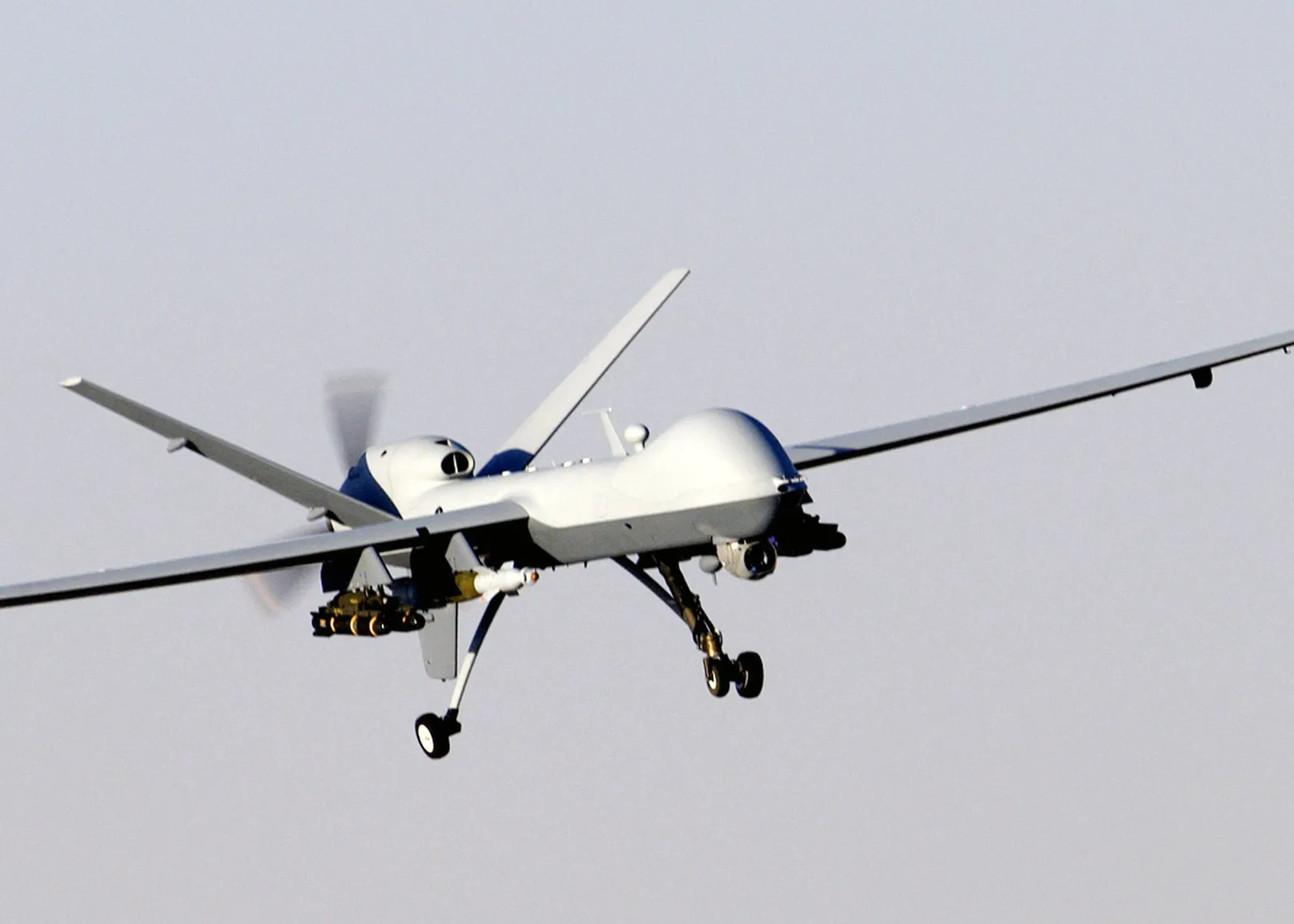
The one public account with numbers is General Atomics'. On 29 April 2025 the UK Military Aviation Authority issued a military type certificate to the RAF's Protector RG Mk1, the MQ-9B, against STANAG 4671 Edition 2, clearing it to fly without geographic restrictions, including over populated areas. The company says it invested over $500 million in an 11-year effort, begun with the MQ-9B in January 2014, to develop an unmanned aircraft that meets NATO's airworthiness standards; that covers development as well as certification. The evidence behind it: three flight-test aircraft, environmental testing of components and systems, static tests to ultimate loads, bird-strike and hail protection, fatigue testing to three lifetimes of 40,000 notional flight hours each, and more than 140,000 pages of technical data. Flight-critical software was built to DO-178C and DO-254 and kept separate from mission software.
Germany's Heron TP, built by Israel Aerospace Industries and certified in December 2022 by the German military aviation authority with Airbus as prime contractor, took what the companies described as years of work, adaptations of multiple systems and hundreds of documents. A startup's drone is usually smaller and its approval route different, but the shape of the work is the same: the evidence is part of the product.
What will the market need next?
General Atomics says it spent over $500 million over 11 years to certify one large drone against STANAG 4671. No startup can do that, which is why the market will split by size. Large unmanned aircraft that must fly over populated areas will need full airworthiness evidence. Smaller drones will be approved under lighter standards, such as STANAG 4703 for light aircraft, and the companies that turn a small drone's test data into an approval package a military authority accepts will have many customers.
Two more products sit around certification. Engineering tools that keep the evidence as the design changes, so a product update does not restart the paperwork. And insurance: an operator flying an approved drone over people needs cover, and underwriters need the approval evidence to price it.
Signals worth watching: military type certificates issued for drones under 150 kg, national authorities publishing approval routes for small military drones, and insurers offering cover for military drone operations over populated areas.
How should a drone startup plan for it?
- Name the authority first. The buyer's country decides who certifies and against what. Agree the certification basis, the compliance methods and the evidence plan with that authority before the design freezes. US guidance expects the certification basis approved before the System Requirements Review.
- Pick the code by weight and type, and decide early if the aircraft will cross 150 kg. Crossing it moves you from AEP-83 to STANAG 4671, changes the certification basis and usually enlarges the evidence package.
- Design the evidence in. Separate flight-critical from mission software, keep test records from the first prototype, and track configuration so that each test applies to a known build.
- Ask for tailoring, do not assume it. Authorities can tailor requirements to the aircraft and its use, but only they can approve it. Deleting an inconvenient requirement yourself is not tailoring.
- Plan the commercial clock around it. A large drone cannot fly over populated areas or in shared airspace until the evidence is accepted. In my work bringing ten of Omnipol's product lines into NATO STANAG compliance, the standard was the sales argument as much as the engineering one: buyers on a procurement committee cannot see the engineering, but they can see the compliance. The case is in Omnipol.
For a drone under 150 kg selling into a war, the faster routes, in my view, are codification in Ukraine and testing with units, covered in how to get a drone tested in Ukraine. For a larger aircraft heading for NATO budgets and shared airspace, STANAG 4671 is the work, and the earlier it is planned the less it costs. The US security gate for drones is separate, in the Blue UAS list.
Sources (11)
- UK Military Aviation Authority, RPAS suggested minimum standards and possible mitigations
- NATO, STANAG 4703 / AEP-83 Edition A, light UAS airworthiness, September 2014
- US Defense Logistics Agency, AEP-83 Edition B record
- European Defence Agency, military airworthiness (MAWA) documents, EMAR 21 Edition 3.0
- US Department of the Air Force, DAFI 62-601, airworthiness, June 2025
- US Defense Logistics Agency, MIL-HDBK-516C record
- EASA, specific operations risk assessment (SORA)
- General Atomics Aeronautical Systems, UK certifies Protector, 8 May 2025
- General Atomics, qualification testing for UK Protector weapons completed, 20 July 2026
- EDR Magazine, German Heron TP awarded type certificate, December 2022
- Ministry of Defence of Ukraine, Vespa-15 codified and authorised, May 2025