
How to get a drone tested in Ukraine, and what to settle before it flies
Ukraine is the only place where a drone meets real electronic warfare and real buyers every night. There are now official routes in for foreign and Ukrainian makers. Here is the sequence, what each step gives you, and the terms nobody publishes that you have to agree first.
Field testing drones in Ukraine is the fastest way a defense-tech company can find out whether its product works, because Ukraine is the only place where a drone meets dense Russian electronic warfare, real targets and real crews every night. It is also the place where many well-funded products have found out that they do not. Since 2025 there are official routes in for foreign makers as well as Ukrainian ones. Getting a product into one is the easy part. Getting a useful answer out, and keeping the rights to it, depends on what you settle before anything ships.
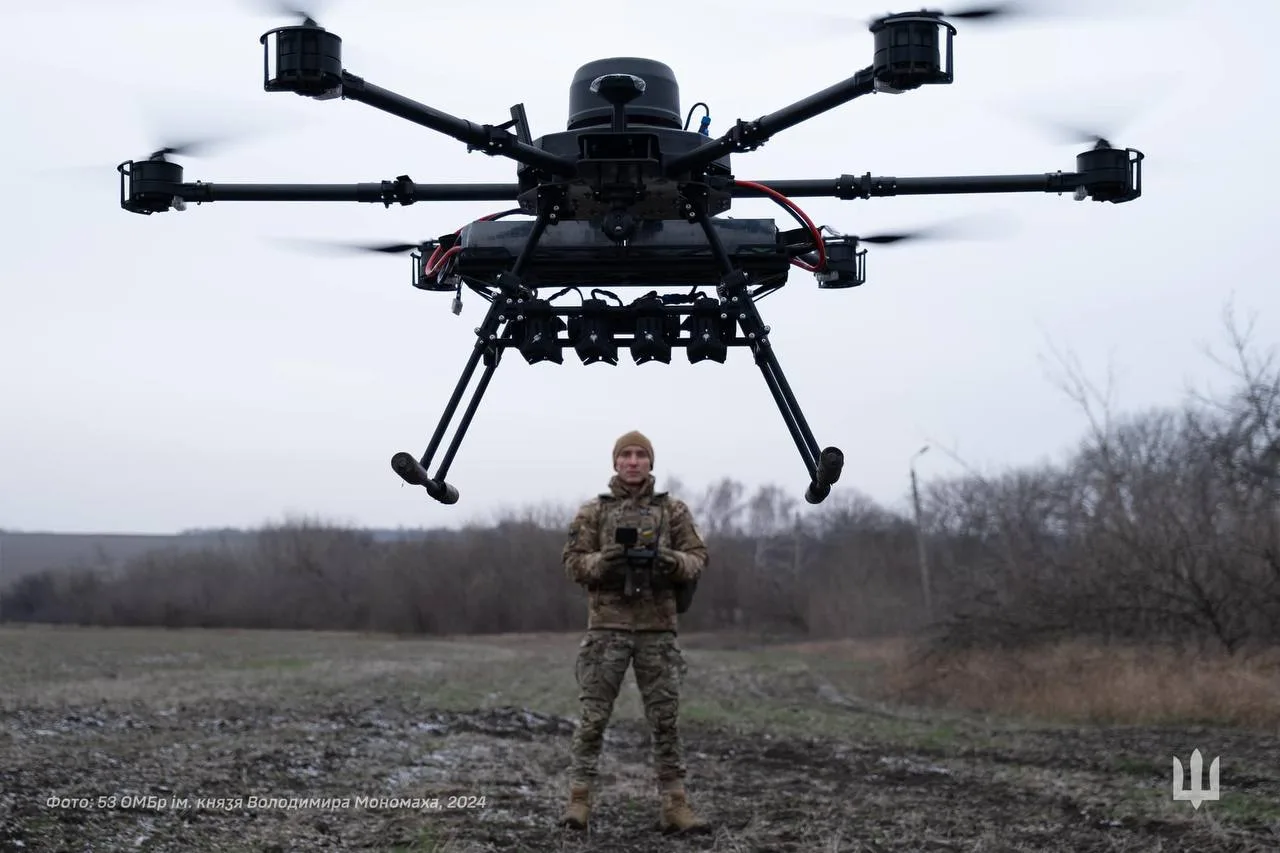
Which routes exist?
| Route | Run by | For whom | What you get |
|---|---|---|---|
| Test in Ukraine | Brave1, Ukraine's defense-tech cluster; launched July 2025 | foreign developers of drones, ground and naval unmanned systems, electronic warfare and AI | testing on equipped ranges close to battlefield conditions, feedback from combat units, a structured report |
| Iron Range | the Ministry of Defence with the Strategic Industries Ministry and the General Staff; launched 15 August 2024 | Ukrainian manufacturers at early development stages | supported range testing, help with test methods, an official protocol and conclusions from the General Staff's Central Military-Scientific Directorate; repeat visits allowed |
| Direct work with units | individual brigades and the Unmanned Systems Forces | companies already supplying or partnering | the hardest feedback there is, without a public application route |
Scale so far: Iron Range logged more than 500 tests in its first year, by August 2025. Brave1 reported 45 applications from foreign companies to Test in Ukraine within a month of launch. The first participant named, as reported, was Germany's Diehl, which completed the program's first unmanned-ground-vehicle trial.
The route, step by step
- Decide what the test must prove. Write down the two or three questions the test has to answer: does the datalink survive this jamming, does the airframe hold at this temperature, can a crew learn it in a day. A test without a decision attached is just a flight. Done when a buyer reading the report would know whether to order, and you know what you will change if it fails.
- Get your own export permission first. Test in Ukraine helps with import into Ukraine; it does not waive your home country's controls. A US product needs its ITAR or EAR classification and, usually, a licence; a European one needs its national licence. If Ukrainian engineers will see the design as well as the drone, that is a separate authorisation; how it works is in sharing technical data with Ukrainian engineers. Done when the product, its software and any technical data you will share are cleared to go.
- Apply and agree the format. Through Brave1: registration, a suitability check, then agreement on the test format and conditions. There are two modes. In Test Together your team comes and adjusts the product on site. In delegated testing you train Ukrainian operators online and Brave1 runs the test and sends a detailed report. Done when the format, the dates and the scenarios are written down.
- Clear import, security and logistics. Brave1 publishes an import-control manual for international manufacturers and offers support on import, data protection and what happens to damaged or destroyed equipment. Done when the units are in the country and the people who will handle them are cleared.
- Settle the terms nobody publishes. See the next section. Done when each is in writing.
- Test, and expect to fail the first time. Shield AI's V-BAT needed roughly eight months of rework before it passed Ukrainian jamming tests, as reported by Fortune; after that 16 were sent, mostly paid for by European allies. Skydio's drones were found ineffective against Russian electronic warfare in Ukrainian testing, which led to a partnership with Armada to upgrade them. Helsing said in July 2026 that its HX-2 had not yet flown often enough at the front for a fundamental assessment, after orders of 4,000 HF-1 and 6,000 HX-2. Done when you have the report and the raw observations behind it.
- Turn the result into a sale. A test is not an order; who signs, and in what order, is in defense tech go-to-market. In Ukraine the next steps are codification and admission to service, which are separate procedures, and verification by the Defence Procurement Agency, which then sends requests for quotes when the ministry has a funded need. Done when the product is on a list a buyer can order from.
What to settle before the product ships
The public materials promise a report. They do not say who owns what comes out of the test, and that is where the commercial value is.
- Data. Who owns the raw telemetry, the video, the crews' notes, any training data, and can you take them out of Ukraine? Export rules apply in both directions.
- Publication. Can you say "tested in Ukraine" or "combat-proven", in which words, and with whose sign-off? A claim the buyer cannot verify is worth little; a claim the testers dispute is worth less than nothing.
- Loss and damage. Units will be destroyed. Who pays, who recovers wreckage, and what happens to a lost unit with your firmware on it?
- People. If your engineers go, who covers their security and liability?
- The next step. If the test goes well, what is the route to an order, and who will tell you?
None of this is unusual commercial ground. It is the same set of questions I would settle in any first contract with a large buyer; what is different here is that the test itself destroys the evidence if you do not agree in advance who keeps it.
The test plan I would ask for before anything ships
- the exact product version, and what changed since the last test;
- the mission it is expected to perform, and the threat environment it will meet;
- the three failure modes you most want exposed;
- the baseline and the pass criteria for each, written before the flight;
- the data that has to come back, in what form, and who owns it;
- the person on your side who can approve a change the day the report lands;
- the date of the second test, set before the first one starts.
This is the part I most often find missing. A company has a working prototype and a contact in Ukraine, but nobody owns the loop between what the operators report, what the engineers change and what goes into the next production batch. That loop is the product of the test.
How long does it take, and what does it cost?
There is no published timetable from application to combat feedback, and Test in Ukraine's charges were not disclosed at launch; the ministry described Iron Range as a free service. Plan in months, not weeks. The fastest part is the test; the slow parts are your own export licence, the import, and the iteration after the first failure, which, as the V-BAT case shows, can take most of a year.
What happens to products that skip this test?
Some of the best-funded weapons in the West have answered that already. American small drones sent to Ukraine went off course and were lost under Russian jamming, the Wall Street Journal reported in April 2024. Excalibur GPS-guided artillery shells fell from over half hitting to under one in ten, according to Ukrainian assessments reported by the Washington Post. GMLRS rockets fired from HIMARS needed repeated software changes to keep hitting, CNN reported in 2023, and the GLSDB glide bomb missed so often in early 2024 that Reuters reported the fixes would take months. Abrams tanks were pulled back from the front because drones overhead made every movement visible, the AP reported. I go through all of them in why Western weapons stumbled in Ukraine.
None of these was bad engineering. Each was an assumption that had never been tested against Russian electronic warfare and drones: guidance that had not faced jamming at scale, a drone never flown under real electronic warfare, a tank designed for a battlefield without cheap drones above it. The ones that recovered did it the way this article describes, through changes made after combat feedback. The difference between them was how fast.
What will the market need next?
Testing in Ukraine has turned into a service market, and it is bigger than it looks. Western companies need the trial arranged, the unit chosen, the export licences for the prototype and the test data, and someone who keeps the evidence usable for a buyer back home. Ukrainian units and test ranges have the conditions no Western range can reproduce, real Russian jamming and real Russian drones, and the companies that arrange that access well will be in demand for years.
The second market is what comes after the first bad result. A Western team that fails a test needs to change the product in weeks, not months, often with Ukrainian engineers who saw the failure. Field engineering support, with people near the front line in Ukraine who can fix and update a product between tests, is a service few providers offer.
Signals worth watching: Western companies announcing tests in Ukraine, programmes such as Test in Ukraine growing their intake, and Western procurement requiring performance data under electronic warfare.
What a founder should take from it
A drone that flies, a robot that drives or a launcher that fires does not yet work. It has shown that it is ready to be tested. It works when it has passed the range and then real combat, in the hands of real soldiers, and come back better for their feedback. Products that look excellent in a deck and on a test range have arrived in Ukraine and failed, Western ones included. And one front is not one customer: two units on the same front can need two versions of the same product. The company that listens to them and adapts gets the widest demand.
Ukraine tests two things at once: whether the system works under real jamming, and whether your team can change it fast enough after the first bad result, while keeping the rights to the evidence when it works. The founders who come out of Ukraine with an order planned the second test before the first. The same product will usually be flown again for American buyers, under different rules: what a team needs to fly legally in the US is in testing defense drones in the US.
Testing is also the first step of the route into Ukraine's market, which runs through Brave1, the business map of Ukraine's defense industry and, for exports back out, the export rules. Before any of that, the classification question in ITAR and EAR decides what you can bring at all. And if the test is going to be read by an investor, it should answer the questions in how I would evaluate a defense tech startup.
Sources (18)
- Brave1, Test in Ukraine
- Ministry of Digital Transformation, Ukraine opens the Test in Ukraine platform; first participant Diehl, July 2025
- Reuters, Ukraine offers its front line as a test bed for foreign weapons, 17 July 2025
- Brave1 on LinkedIn, 45 applications from foreign companies, August 2025
- Ministry of Defence of Ukraine, the Iron Range testing service, 15 August 2024
- Ministry of Strategic Industries of Ukraine, Iron Range open range service
- Ministry of Defence of Ukraine, one year of the Iron Range: over 500 tests, August 2025
- Fortune, Shield AI in Ukraine, 21 December 2025
- Shield AI, more than 130 V-BAT sorties in Ukraine, April 2025
- DW, AI drones made in Germany see duty on Ukraine's front line, 2026
- Defense Express, Ukraine forces the US to re-evaluate its approach to EW and drone design
- US International Trade Administration, Ukraine aerospace and defense country guide
- Defence Procurement Agency of Ukraine, DRONExplainer
- The Wall Street Journal, How American drones failed to turn the tide in Ukraine, 10 April 2024
- The Washington Post, Russia jamming US weapons in Ukraine, 24 May 2024
- CNN, Russia's jamming of US-provided rocket systems complicates Ukraine's war effort, 5 May 2023
- Reuters, Ukraine's long-range glide bomb blunted by Russian jamming, 23 May 2024
- AP, Ukraine pulls US-provided Abrams tanks from the front lines over Russian drone threats, April 2024
Where this comes up on the site
- Ukraine digitized its army's paperwork and purchasing the way it digitized the battlefield, and now the front line decides what gets bought
- Operation Spider's Web: the raid that ended distance as a defense
- Anduril looks like a weapons maker, but its core is Lattice, and Ukraine showed what its data had not yet seen