
NATO’s 5% pledge counts money spent on Ukraine’s defense industry. Here is what a supplier does with that.
The headline is 5% of GDP by 2035. One sentence in the declaration decides which purchases count toward it, and that sentence matters more to a supplier.
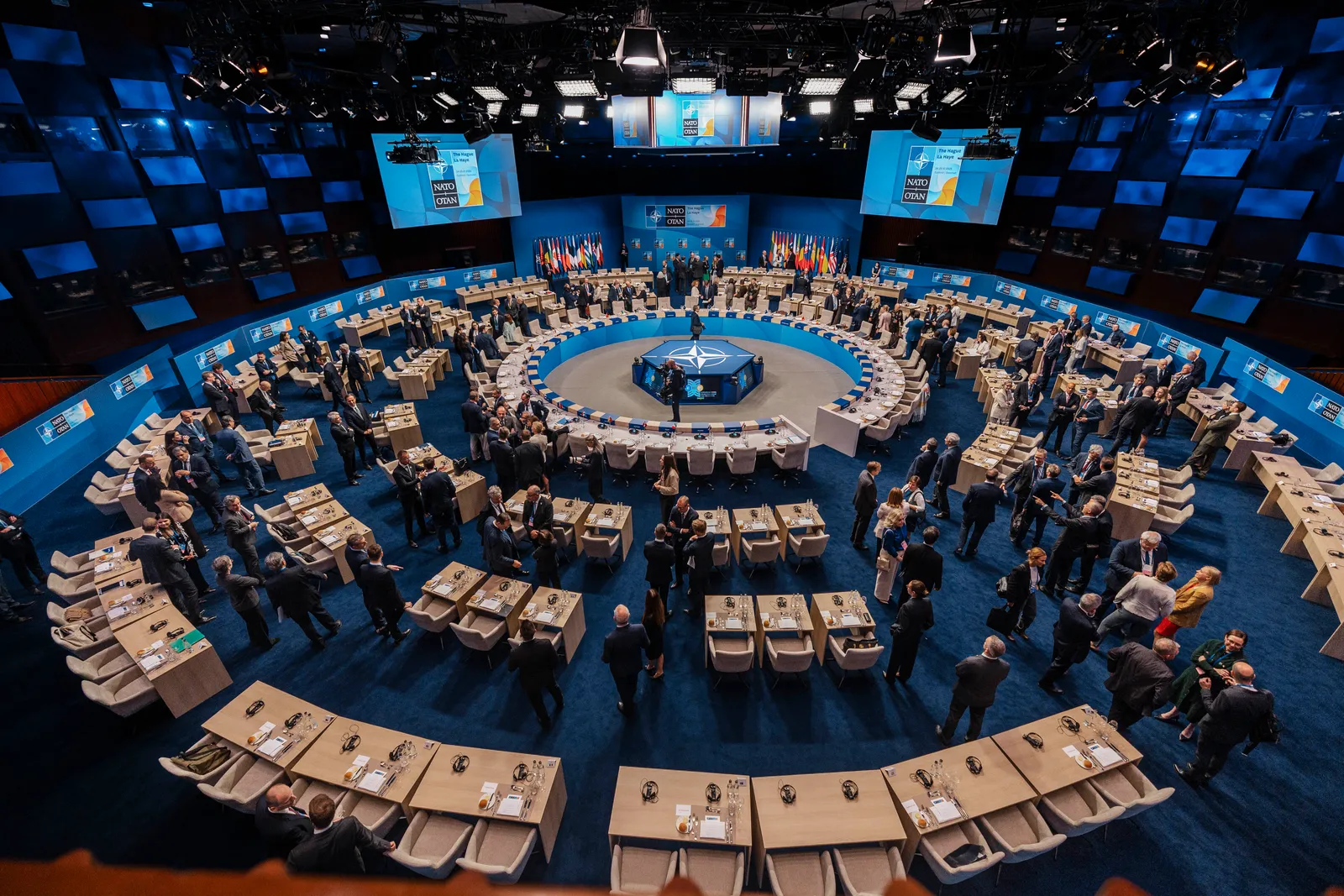
Allies "will include direct contributions towards Ukraine’s defence and its defence industry when calculating Allies’ defence spending." That is one sentence from NATO’s Hague declaration, and if I sold to a ministry it is the one I would read twice. Most of the coverage of NATO’s 5% defense spending target asks whether governments will pay it. A supplier should ask which purchases count.
The declaration in four lines
- When: signed at The Hague on 25 June 2025.
- How much: 5% of GDP a year on defense and security by 2035.
- Split: at least 3.5% on core defense requirements, up to 1.5% on related areas such as protecting critical infrastructure, defending networks, civil preparedness and resilience.
- Checkpoint: the trajectory and balance are reviewed in 2029.
What the counting sentence does
It is a rule about counting, and it sits in the primary document, not in commentary. My read: a ministry that pays a Ukrainian manufacturer can show that payment against its own target. For a finance ministry facing a large new number, that is a reason to buy from Ukrainian producers that has nothing to do with technology.
The mechanism to carry the money already exists. Ukraine’s Ministry of Defence describes the Danish model as partners reimbursing contracts with Ukrainian manufacturers instead of sending stockpiles, and reported €597 million of weapons delivered that way as of 6 February 2025. I lay the channels side by side in three ways Western money reaches Ukrainian defense producers.
What it leaves alone
It does not attach money to any supplier. It is a 2035 target with a 2029 review, and a company that plans its cash flow on 2035 numbers without a first paid contract is planning on a press release. It does not touch export rules: a country allowed to count a payment still needs goods that can be exported, and Ukraine’s conditions are a separate gate, covered in what the July 2026 export mechanism means for your contract. It does not certify anything either. A committee that can count your product still has to be able to accept it, which is the standards question in what a STANAG is and is not.
What will the market need next?
The counting rule creates a buyer who wants to pay a Ukrainian producer and needs the paperwork to show the payment counts. That gap is a service: contracts structured through partner financing so a ministry can report them, with the delivery and end-use records its finance office will ask for. I expect a handful of law and advisory firms in Copenhagen, Berlin and Warsaw to build exactly this, and the producers who arrive with the structure already done to sign faster.
The second market sits in the smaller bucket. Up to 1.5% of GDP goes to protecting critical infrastructure, networks and civil preparedness, and most defense startups pitch only to the 3.5%. Counter-drone protection for power plants and substations, hardened communications for local governments and resilience kits for utilities fit the 1.5%, and the large primes compete for them far less.
A Western company that builds jointly with a Ukrainian producer can sell into its own government's target and into the money allies count for Ukraine at the same time. That is why I expect joint ventures to become the product that turns this sentence into revenue.
Signals worth watching: the first national budget reports that count payments to Ukrainian producers against the 5% target, the volume paid through the Danish model, and procurement calls under the 1.5% heading.
If I were selling this quarter
- I would write down which of the two buckets my product belongs to, in one line. If the honest answer is "both", I would pick the one where I have a reference.
- I would ask each buyer which budget line pays, and whether purchases for Ukraine run through a different process from purchases for their own forces. I have found no source that answers that across countries, so I would not assume it.
- I would have the compliance evidence ready before the meeting. A procurement committee that cannot show it chose a safe supplier will not choose you. What a committee accepts as compliance is its own decision; I go through it in what a STANAG is and is not.
The funding side is a separate story, and a different set of numbers: how to read European defense-tech funding numbers.
What would change my read
I am reading a declaration, not a budget. If a ministry turns out to count a payment differently, or not at all, that changes it. That depends on national implementation I have not seen, so the person to ask is the buyer’s own finance office.
Quick answers
Does the 5% include support for Ukraine?
The declaration says allies will include direct contributions towards Ukraine’s defense and its defense industry when calculating their spending. It does not say Ukraine is part of the 5% itself. It says what allies may count.
Does this guarantee contracts for Ukrainian defense companies?
No. It gives allies a reason to buy. Contracts still depend on the product, the buyer’s process, the export conditions and who pays.
When is the target reviewed?
In 2029, according to the declaration.