
Finding a European partner for a Ukrainian drone company: start with the offer, then settle five things
A partner search that starts with names usually stalls, because neither side has decided what it is offering. I work in the other order.
A question that comes up constantly in this field is some version of "who is the right European partner for a Ukrainian drone maker," or the reverse. A partner search that starts with names usually stalls, because neither side has decided what it is offering. This is the order I would work in, as a playbook: seven steps, each with a "done when" test, so you know when to move on.
I will not give a list of matches. The companies publicly named in official announcements are listed in Ukraine’s defense industry in 2026; a list of who works with whom goes out of date quickly and does not do the work of a fit.
Step 1. Write the offer in half a page
What you make or need, what you bring, what you want in return. Done when it fits half a page and a stranger could repeat it back. If it does not fit, it is not ready.
Step 2. Decide why a joint venture, and why now
The European Commission’s Drone Alliance, launched on 17 July 2026, is described by the Commission as a platform for joint ventures between Ukrainian and European companies. Its first 18 founding members are split evenly, nine EU-based organizations and nine Ukrainian companies. So the format is not exotic. It is the one the EU is promoting.
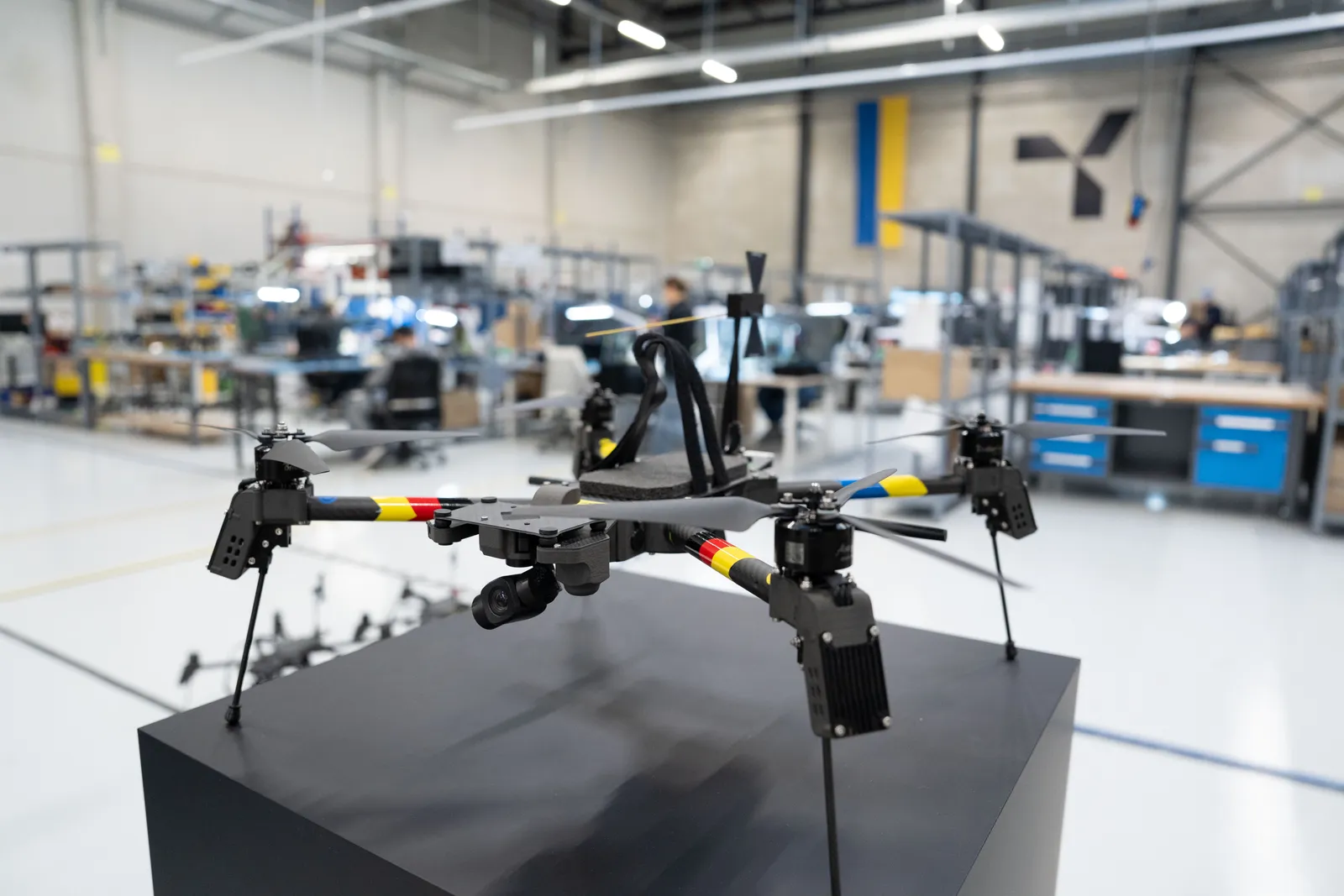
The Ukrainian side has its own reasons. As reported, Ukraine’s July 2026 export mechanism lets transferred technology keep Ukrainian intellectual property rights with usage controls, and requires written consent for re-export. That pushes toward arrangements where production is shared rather than shipped as a finished product. Done when you can say in one sentence why a venture beats a plain sale for you.
The offer that changed a discussion I worked on is an example. In 2022 I worked with Omnipol, a Czech defense and aerospace group. For some buyers, a completed sale was worth less than a technology transfer with local production rights. That turned a transaction into a relationship, and it answered a concern the buyer rarely says out loud: dependence on a supplier who might one day stop supplying. I rebuilt the offer around technology transfer with local production rights, rather than a one-off sale. The Omnipol case tells the story. A joint venture is easier to open with a clear offer to a specific need than with a general wish to cooperate. The full account is in the Omnipol story.
Step 3. Find who is looking, using official platforms
The Commission’s Alliance page names its members, and the Ukrainian government’s programs are public. Reading who is in them tells you who is looking. Done when you have a short list of names whose stated needs overlap with your offer.
Step 4. Ask what the other side wants before you say what you do
In my experience the first meeting goes better when one side has done that homework. Done when you can state their need in their words.
Step 5. Settle five things before any term sheet
These are questions, not legal structures. Each one needs counsel on both sides.
- Who makes what, and where. Which parts of the product are built by whom, in which country, and what happens to the parts that cannot move. If the answer is "we will figure it out," the venture has no plan yet.
- What stays with whom on intellectual property. As reported, Ukraine’s rules keep Ukrainian IP rights on transferred technology, with usage controls. A European partner needs to know what usage it is actually getting before it invests in a line.
- Which export path each product takes. Ukraine’s side has conditions on destinations and on re-export; the European side has its own. Read what the July export mechanism means for a contract, and ask counsel about the European regime.
- Who sells to whom. A joint venture needs a clear route to customers or a clear strategic purpose. If the answer is "the same ministries either partner could already reach," ask what the venture adds.
- What happens when priorities collide. As reported, Ukrainian export can be denied when the Ministry of Defence plans to buy the goods. A venture that depends on export output needs a rule for what happens when Ukrainian demand takes the volume first.
Done when each of the five has a written answer both sides accept, even if the answer is "open, owner named."
Step 6. Test the fit before anyone pays lawyers
A fit that fails the five questions above will fail more expensively later. Done when neither side is surprised by what the other said in step 5.
Step 7. Hand over to counsel
Only now does a term sheet make sense. The commercial side is what I look at: what the offer is, whether the structure is coherent, whether the partners want the same thing. I do not draft agreements, give legal opinions, arrange licenses or broker equipment.
What will the market need next?
The search itself is the gap. Official platforms list members, not needs, and both sides spend months on meetings that fail at step 5. I expect demand for partner search that does the homework before the first meeting: the half-page offer, the other side's stated need, and the five questions answered in draft, so the first call starts at step 6. European primes and mid-sized makers already buy partner searches this way in other industries; for Ukrainian ventures almost nobody sells it.
Once a venture exists, it needs things neither partner has on its own. A supplier base in the European country, qualified to the buyer's standards. Quality records a European buyer accepts. And someone who manages design changes between two countries, because the Ukrainian side will change the product after combat feedback and the European line will need a frozen build standard. Engineering change control across a border is a service almost nobody offers.
Signals worth watching: Drone Alliance ventures that announce a product and a plant, European primes naming a Ukrainian partner, and venture agreements that say who holds design authority.
How do you find a European partner for a Ukrainian drone company?
Start from the offer, not from names, then use official platforms such as the Commission’s Drone Alliance page to see who is looking, and test the fit against the five questions in step 5.
What is technology transfer with local production?
An arrangement where the technology is transferred to a partner who produces it locally, instead of a finished product being shipped. As reported, technology transferred under Ukraine’s July 2026 export mechanism keeps Ukrainian IP rights, with usage controls.
Do you need an export license for a joint venture?
Ukraine’s side has export conditions, and the European side has its own regime. Which applies to your product is a question for counsel in both jurisdictions. Membership of the Drone Alliance is not a license.
What can go wrong in a defense joint venture?
The common failures I would look for are an unclear split of who makes what, unclear intellectual property rights, no agreed export path, no buyer for the venture, and no rule for what happens when one side’s domestic demand takes priority.
For the wider landscape, see three ways Western money and partners reach Ukrainian producers.