
ARMOR turns the barrels a Ukrainian brigade already has into artillery, which matters more than a new gun when shells are short
ARMOR, called Bronia in Ukrainian, is a tablet app that calculates firing data for indirect fire from tanks, armored vehicles, mortars, guns, anti-aircraft guns and machine guns, Soviet-made and NATO-made alike. Built since 2015, it has been activated on more than 8,000 tablets. Here is how it works, why it is an upgrade to weapons Ukraine already owns, and what it means for the market.
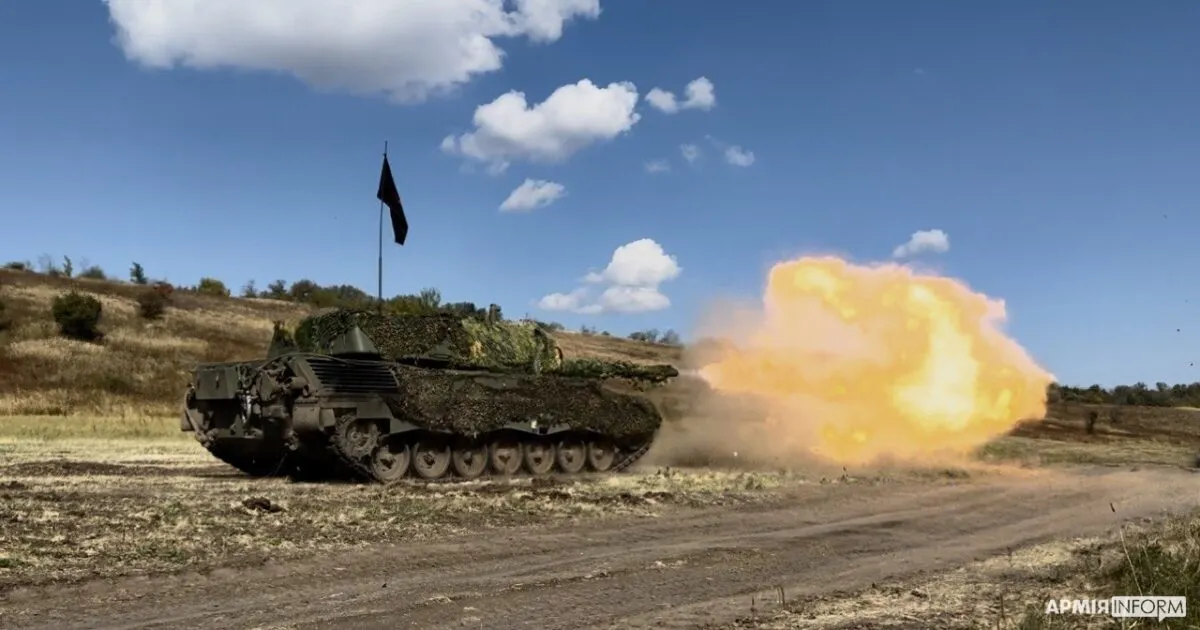
ARMOR is the app that lets a Ukrainian tank crew fire like an artillery battery. Russia's full-scale invasion of Ukraine, under way since February 2022, has been fought with fewer shells than either side wanted and against an enemy who targets anything that shows itself. A tank that drives up to a ridge to fire at what it can see is a tank that may not drive back. Firing from behind cover, at a target it cannot see, needs the calculations an artillery battery makes, and ARMOR, Bronia in Ukrainian, puts those calculations on a tablet for weapons that were never built to do them.
My argument is that ARMOR is the best example of software as an upgrade to an existing army. Ukraine fights with a mixed fleet: Soviet-era tanks and mortars next to NATO guns and ammunition, many of them in small numbers. Standardizing that fleet would take years and money nobody has. ARMOR makes dozens of those weapon types more useful as they are, and that is worth more in this war than one more modern gun.
ARMOR in numbers
| What it is | Tactical-level system that calculates firing settings for fire from covered positions, on tablets |
|---|---|
| Designation | Bronia (ARMOR) system, by the developer's naming |
| Weapons | About 70 implemented: 6 tank types, 7 armored vehicles, 22 mortars, 19 guns, 6 heavy machine guns, 4 anti-aircraft guns, 4 grenade launchers, 2 rocket systems (developer, 2026) |
| Ammunition | More than 100 types, from Soviet and NATO stocks |
| Reach | More than 8,000 tablets activated and 15,000 soldiers trained (developer) |
| Since | First version in 2015; a team of more than 15 people |
| Claimed effect | Engagement time cut to 5 to 7 minutes from about 30; ammunition use cut by 5 to 10 times (developer, via a 2025 survey of Ukraine's combat software) |
Why fire a tank like a howitzer?
Because seeing the target is what gets a vehicle killed. On a front watched by drones day and night, a tank or infantry fighting vehicle that exposes itself to fire directly is found within minutes and struck by a drone or a guided shell. Fired from a covered position, the same gun can still hit targets several kilometers away without being seen, but only if someone works out the elevation, direction and charge for that gun, that round, that day's weather and that target. Artillery units train for years to do this. A tank crew, a mortar team or a machine-gun crew usually does not.
ARMOR does the arithmetic. A crew enters the target, the weapon's position by geodetic coordinates rather than a magnetic compass bearing, the weapon and round, and simple weather data, and the app returns the firing settings. It calculates each weapon on its own instead of computing for one base gun and applying corrections to the rest, and it adjusts after the first rounds land. The developer claims a hit with one to three rounds and adjustment in one or two shots.
Why is it an upgrade rather than a purchase?
Because it adds a capability to weapons already in the unit. A brigade that has Soviet-era tanks, Soviet 120 mm mortars and a few NATO-standard guns does not need to replace any of them to fire them from cover. It needs a tablet, accurate positions and weather data, and a few hours of training. That changes the economics of a war in which Ukraine receives weapons from dozens of countries in small batches: instead of each new type needing its own fire-control system, it needs an entry in one app's library.
The ammunition math is where this pays. A gun that hits with three rounds instead of thirty spends a tenth of the shells, and in a war where artillery shells have been rationed for long stretches, the shells saved are capability gained. The developer's own scenario for a 120 mm mortar puts the time to a hit at four to five minutes against 20 to 32 the conventional way. Those are the developer's figures, from its own example rather than an independent trial, and user reports on the developer's site point the same way, one of them putting the time saved on aiming alone at 40 to 50 seconds.
Why is training part of the product?
Because a firing app only works as well as the crew using it. ARMOR's team counts 15,000 trained soldiers next to 8,000 activated tablets, and one user report says two to four hours over two days is enough in most cases. The French Institute of International Relations (IFRI) made the same point in its 2026 study of Ukraine's battlefield technology: ARMOR's gains came from pairing the software with structured training and standard procedures. Without them the tablet gives numbers a crew cannot use well.
ARMOR also connects to the intelligence side. Griselda, the platform that turns messages, intercepts and sensor data into verified intelligence, feeds its results into ARMOR, and both came from the same developer, Oleksii Teplukhin, as I describe in Griselda.
What do gunners say about it?
That it took calculations from minutes to seconds. A Ukrainian gunner who helped introduce an early version in his brigade told the researchers behind "The War Phone," a 2022 academic study of mobile phones on the front in eastern Ukraine, that the app cut the time for artillery calculations from minutes to seconds, and the study describes soldiers, volunteers and technical specialists introducing it together rather than receiving a finished product. The criticism is about the ecosystem. Taras Chmut, head of Come Back Alive, one of Ukraine's largest military charities, which supported ARMOR's rollout, warned in 2022 that some brigades use one system and others another, and that they are not very interoperable. That is the problem DELTA was later built to solve, and ARMOR's link to Griselda is part of the answer.
How does ARMOR differ from Kropyva and GIS Arta?
By the weapons it serves. Kropyva is the artillery crew's map, messenger and ballistic calculator, and GIS Arta coordinates dispersed guns as one battery. ARMOR's focus is the weapons that were never meant to be artillery: tanks, armored vehicles, mortars, anti-aircraft guns and heavy machine guns firing indirectly. A brigade can run all three, because each answers a different crew's question.
Where does ARMOR go next?
I expect three things.
- More weapons, faster. Every new type that reaches Ukraine from a partner needs its ballistics entered and checked. The speed of adding them is where ARMOR's team can stay ahead.
- Links to drones as spotters. A firing app that receives target coordinates straight from a drone overhead closes the loop from seeing to hitting without retyping a grid reference.
- Interest from armies with mixed fleets. Many NATO members also run a mix of older and newer weapons in small numbers. The idea of one firing app across them travels well.
Signals worth watching: the count of weapon types in ARMOR's library, links to DELTA and drone video, and any foreign army testing it.
What will the market need next?
- Ballistic data as a service. Accurate firing tables for every weapon and round, kept current as new ammunition lots arrive, are the core asset. Whoever maintains them for many weapons can sell them to every app that needs them.
- Rugged tablets and mounts for vehicles. A firing app is only as available as the device it runs on, in a tank, in the cold and under jamming.
- Training packages sold with software. Short, standard courses that make a crew competent in hours, delivered at brigade scale.
- Integration with sensors and drones. Feeding targets from drones, radars and intelligence platforms into the firing app is the step that removes minutes from every engagement.
What ARMOR means for a defense founder
- Upgrade what the buyer already owns. A product that makes existing weapons more useful is easier to buy than one that asks the buyer to replace them, and it scales across every type in the fleet.
- Count the shells, not the features. ARMOR's strongest argument is ammunition saved per hit. Put your product's value in the unit the buyer is short of.
- Ship training with the code. Fifteen thousand trained soldiers is ARMOR's moat as much as its library. The volume problem I describe in why one to a thousand is the hard part applies to people as well as products.
Sources (7)
- ARMOR (Bronia), official site
- Ukraine's Arms Monitor, Combat software in the service of the Armed Forces of Ukraine, 21 June 2025
- IFRI, Mapping the MilTech War: eight lessons from Ukraine's battlefield, February 2026
- Palgrave Macmillan, The war phone: mobile communication on the frontline in eastern Ukraine, 2022
- Forbes Ukraine, IT chaos in the service of the armed forces, 14 November 2022
- ITKeyMedia, Ukrainian AI defense tech Griselda raises $600K, 21 March 2025
- Militarnyi, Ukraine develops intelligence system based on artificial intelligence, 20 October 2023