
In defense tech, zero to one is the easy part. One to a thousand is where companies break.
A small team can now hand-build a working drone or strike system in weeks. Very few can build a thousand of them, on schedule, at a price a ministry will pay twice. That second skill is operations, and it is the one that decides who wins the contracts.
Scale-readiness is whether a product can be built a thousand times, by people who did not design it, from parts you can buy again, at a cost and a rate a buyer can plan around. A working prototype proves none of those four things, and it does not show whether a company can scale up. In defense tech right now, that gap is where most companies fail, and it is where the money actually gets won.
For most of the last decade the rare skill in defense technology was invention. That has changed. A small team with a few hundred square meters, the right engineers and enough of its own money can now build a working drone, an interceptor or a guided munition in weeks, by hand, held together with tape if it has to be. In the crowded, low-barrier segments there are dozens of such teams. What is rare is the organization that can turn that one working unit into a thousand identical ones, delivered on schedule, at a price the buyer will accept again next year. Defense tech scale-up is an operations problem, and the companies that treat it as one are the ones that grow. Russia already plays by this rule: its Banderol cruise missile is built from commercial parts to deliberately relaxed requirements at about 80 a month, which I take apart in Russia’s Banderol, read from Ukraine’s teardown.
What scale-readiness is, and what it is not
It is not a factory. Plenty of companies have floor space and still cannot produce to a plan, and I have seen lines running at two-thirds of their capacity because nobody had worked out what was actually limiting them.
It is not a good prototype either. A prototype is optimized to prove the product works. A production design is optimized to be built repeatedly, by different hands, from parts that arrive on time. Those are different objectives, and when a company treats the first as if it were the second, the result is a product that works beautifully and cannot be delivered.
And it is not a promise of volume. "We can make thousands a month" is a claim about the future. Scale-readiness is visible in the present: in the bill of materials, the supplier list, the build time per unit, and who has the authority to change the design.
The US defense establishment has a name for this gap. The Center for Strategic and International Studies calls it the valley of death: the difficult passage from a prototype or commercial product to an actual Defense Department contract, made worse because startups raise money on one- to two-year cycles while acquisition runs on three to five. The Pentagon’s Defense Innovation Unit describes its whole purpose partly as solving for that same valley. The gap is well known. What is less well understood is that most of what closes it happens inside the company, not in Washington.
Why is building a thousand harder than building one?
Because every shortcut that made the first one possible becomes a cost at volume. The first unit was built by the people who designed it, who know which cable goes where without a drawing. It used whatever components were on hand. It was adjusted by eye. Each of those is free at a quantity of one and expensive at a thousand: the design has to be documented well enough for a stranger to build it, the components have to be available every month, and the adjustments have to become a process with a tolerance.
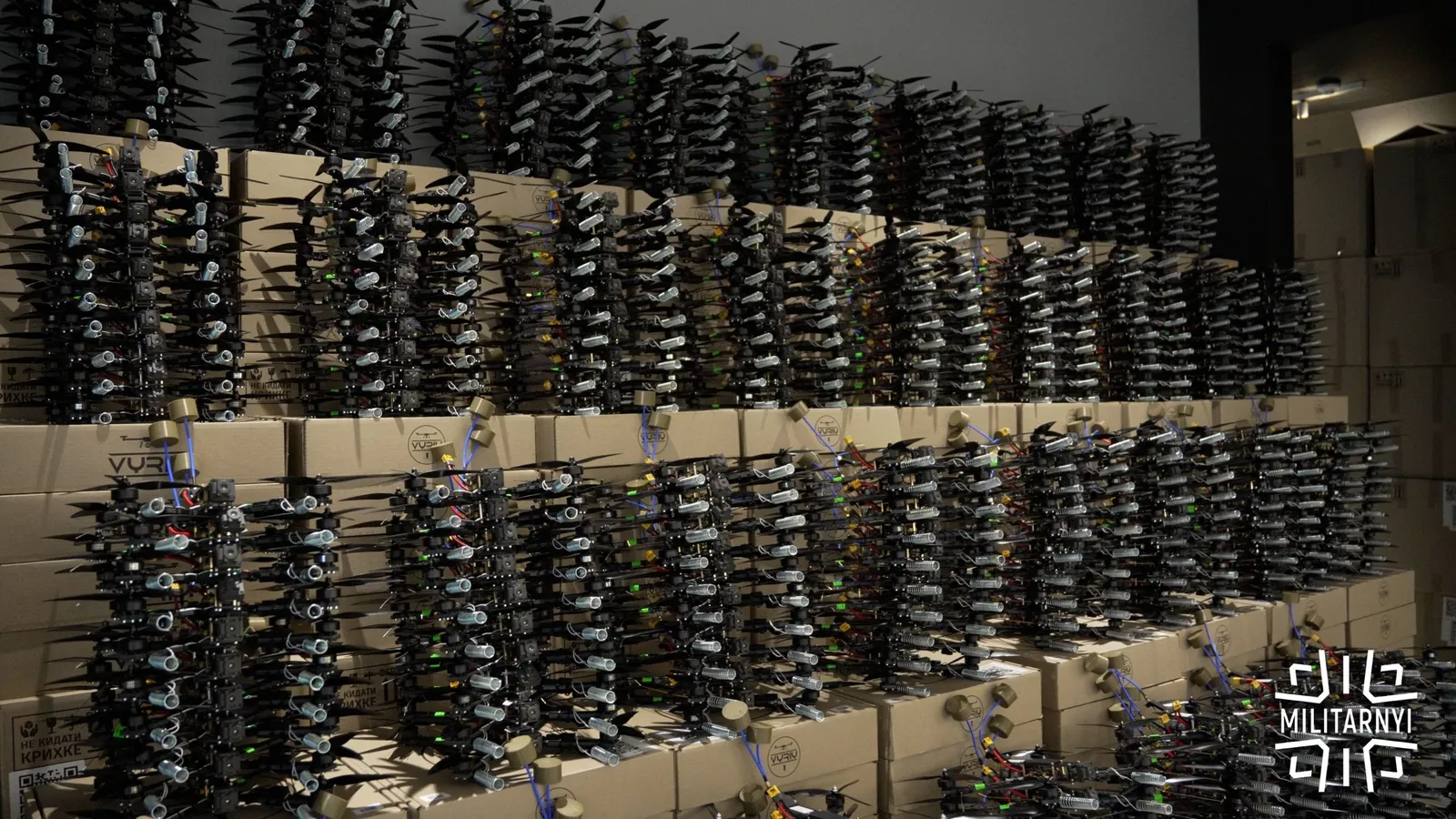
The organization changes faster than the product, too. A company that grows from twenty people to several thousand in two or three years is not the same company with more staff. It is a different company that still has the first one’s habits. The informal decisions that worked when everyone sat in one room turn into bottlenecks, and the founder who used to approve everything becomes the queue.
Where I see companies actually break is in three places at once. Quality slips, because the people who built the first units by hand are not on the line and quality assurance was never staffed for volume. Margin slips, because parts bought in tens are priced for tens and the suppliers cannot deliver the volume the order needs. And product updates stall, because the engineers are busy keeping the line running. Most of that comes back to people: production engineers, technicians and quality staff are harder to find than the money for the plant.
Should engineering or production have the final say on a design?
Production, more often than engineers like. My position is that production should hold a veto over engineering decisions that cannot be built at volume, and that every design choice should be scored for manufacturability before it is locked.
Take a simple trade. Suppose an alternative wing profile costs 5% of aerodynamic efficiency but cuts the build time from days to hours, because the molds are simpler and the wiring goes in during layup instead of after. On a prototype, you would never accept that trade. At a thousand units a month it is the only trade, because the constraint is no longer how well one unit flies. It is how many flying units leave the building. The engineer who optimized the wing was right about the wing and wrong about the product.
This is uncomfortable for a company founded by engineers, and it is often resisted at first, partly because production usually knows less about the physics than the design team. That turns out to be an advantage. Someone who has to build the thing asks the question the designer stopped asking: why this way and not a simpler one?
Four principles that make a product scale-ready
- Design around parts you can buy again. A product designed around one specific component is hostage to that component’s supplier. If an airframe can only take one engine, one battery or one camera, every delay at that supplier is a delay in your deliveries. Ukraine's jet-interceptor program is stalled on exactly this in October 2026. Design interfaces so that several interchangeable parts fit, from more than one source, and treat the longest lead time in the bill of materials as a design problem, not a purchasing one. I go through why the longest lead time, not the average, sets what you can promise in what breaks first between prototype and series production.
- Choose the process that repeats over the material that impresses. The most advanced material is not the right one if it cannot be made in volume. A simpler material that can be produced quickly and consistently, with less specialist equipment, often beats a high-performance one at the thousandth unit. The same goes for tooling: equipment that can produce several variants is worth more than a faster machine that makes only one, because at volume the product will change and the tooling has to follow it.
- Give production real authority, not a title. The person who invents a system and the person who industrializes it are rarely the same person, and the second needs the power to say no to the first. A head of production who can only report problems, but cannot change the design, is a spectator.
- Make mistakes early and cheaply, and treat a repeated one as a system failure. At volume, a mistake is not an event; it is a rate. The goal is not to avoid errors, which is impossible in a young product, but to make them in the lab and on the test range, where they cost a component and a day, rather than in the field. The mistake to take seriously is the one that happens a second and third time, because by then it is not a person’s error. It is the process, being repeated at scale.
What it costs to get to the first unit
Getting to a working, tested system in defense is not cheap, and teams that try to do it on a shoestring usually take longer, not less money. Iteration speed depends on being able to buy components, build, break and rebuild without a purchase approval for every step. A team counting every dollar before the first contract iterates slowly, and in a market where the threat changes every few months, slow iteration means arriving with last season’s answer.
The same logic applies after the first contract. Scaling a hardware business is cash-hungry in a way software never was: components have to be bought months before the finished units are paid for, and every increase in volume widens that gap. A company whose growth plan does not account for working capital does not have a growth plan.
Where technology is still the moat
This is not an argument that engineering does not matter. In the low-barrier segments, where a competent team can build a credible product with modest capital, the market is crowded and the advantage goes to whoever produces reliably at the lowest cost. That is where operations decides almost everything.
At the frontier it is different. Long-range strike systems, guidance, propulsion and the components that are hard to buy or impossible to import take far more capital, specialist talent and time to develop, and very few companies attempt them. There, the technology itself is still a real barrier, and operations becomes the second test rather than the first. Component localization sits in between: replacing an imported part with a domestic one at a reasonable price is partly an engineering problem and partly a supply-chain one, and it is one of the most undersupplied opportunities in the sector. The distributed, strike-resilient version of all of this, and what it costs a producer who has to build under fire, is in what Ukraine’s dispersed production trades away.
What will the market need next?
If scale-readiness is the scarce skill, the market will pay for it in three forms. Design-for-manufacturing reviews that rescore a working prototype for build time, parts availability and tooling before the first big order. Contract manufacturers that take a founder's design to volume, the way electronics makers have done for decades, which defense hardware at startup scale still lacks in Europe and the US. And production leaders for hire, people who have run a line and can hold the veto this post argues for, placed in a startup between the funding round and the first delivery.
Investors will want the same thing as a check before they wire money: a review of the bill of materials, the supplier list and the build time per unit by someone outside the company.
Signals worth watching: contract manufacturers that specialise in defense hardware raising money, primes moving subassemblies to startups' manufacturing partners, and term sheets that release money against build-rate milestones.
How to test scale-readiness before you buy or invest
If you are a buyer, an investor or an acquirer, the questions that tell you whether a company can go from one to a thousand are rarely about the product:
- What was the build time per unit six months ago, and what is it now?
- Which components have only one supplier, and what is the lead time on each?
- Who can veto a design change on manufacturing grounds, and when did that last happen?
- What was the last mistake that happened twice, and what changed in the process after it?
- How much working capital does the next doubling of volume need, and where does it come from?
A founder who answers those with numbers and names has thought about operations. A founder who answers with the product’s specifications has not yet. The wider list I use is in how I would evaluate a defense tech startup, and the certification side of being procurable, which also has to be built for volume, is in what a STANAG is and is not.
Where I could be wrong
This is a position, drawn from leading product and operations in aerospace and drone manufacturing and from watching the defense-tech market closely, not a law. Some products genuinely are limited by their technology rather than their production, and some companies scale well with engineering firmly in charge. My claim is narrower: in most of today’s defense-tech market, more companies fail between the first unit and the thousandth than before the first one, and most of those failures were operational.