
The NATO Innovation Fund, a €1 billion venture fund owned by 24 governments
The NATO Innovation Fund is the first venture fund backed by a group of states, investing in deep-tech startups that matter for defense. Here is who is behind it, what it writes, what it has bought, and how it differs from NATO’s other program for startups, DIANA.
The NATO Innovation Fund is a venture capital fund with governments as its investors: more than €1 billion from 24 NATO allies, invested in startups whose technology matters for defense, security and resilience. NATO calls it the first multi-sovereign venture fund. It is independently managed, takes equity like any other fund, and holds it for up to 15 years, much longer than a normal venture fund, because deep tech takes longer to qualify and sell to militaries.
My argument is that the NATO Innovation Fund matters less as a fund than as a signal. A €1 billion fund owned by governments is small next to the private money now pouring into defense tech, but its presence tells private investors that taking equity in defense startups is acceptable, and that the governments who will buy the products are also willing to own the companies.
Who is behind it, and since when?
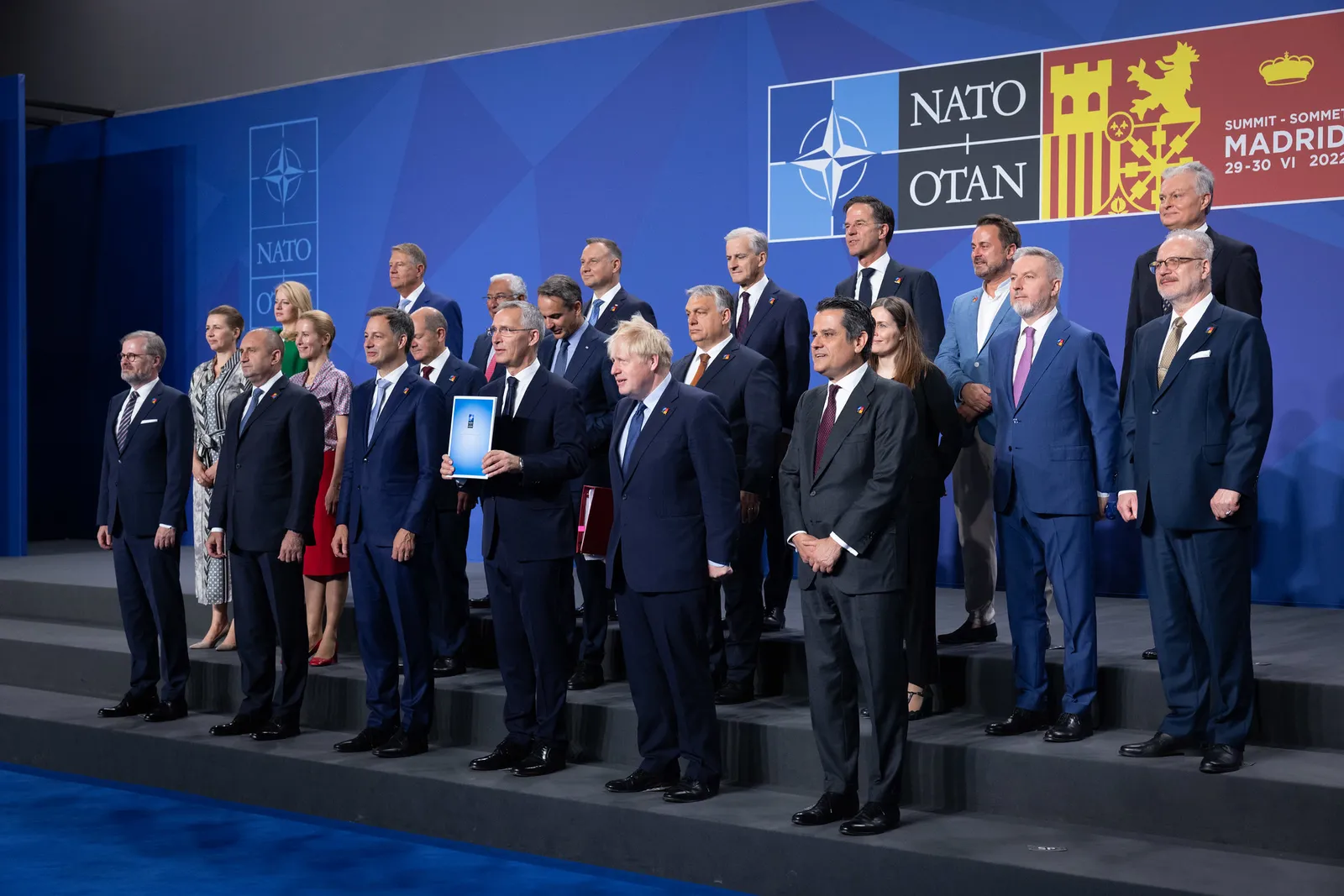
Allied leaders agreed on the fund at the Brussels summit in 2021 and finalized it at Madrid in 2022, with 22 allies: Belgium, Bulgaria, Czechia, Denmark, Estonia, Germany, Greece, Hungary, Iceland, Italy, Latvia, Lithuania, Luxembourg, the Netherlands, Norway, Poland, Portugal, Romania, Slovakia, Spain, Türkiye and the United Kingdom. Finland joined after entering NATO in 2023 and Sweden in 2024, making 24. The United States, Canada and France are not participants. The investment team was appointed in mid-2023 and the first investments were announced on 18 June 2024.
How does it invest?
| Feature | What is public |
|---|---|
| Size | €1 billion-plus |
| Horizon | up to 15 years |
| Direct investments | mostly pre-seed to Series A, with follow-ons; leads initial investments with up to €15 million and keeps reserves for later rounds |
| Fund of funds | commitments to other deep-tech venture funds, such as Twin Track Ventures and Warsaw-based Expeditions Fund II, which closed at €197 million in July 2026 |
| Focus | AI, autonomy, quantum, biotech, novel materials, space, energy, hypersonics, next-generation communications, cybersecurity, supply-chain resilience, advanced manufacturing |
| Not public | standard ticket below the €15 million ceiling, ownership targets, commitment sizes to other funds |
What has it invested in?
The first five direct investments, in June 2024, show what the fund means by defense-relevant: ARX Robotics (ground robots), Fractile (faster, more efficient AI chips), iCOMAT (composite manufacturing), Isar Aerospace (small-satellite launch) and Space Forge (semiconductor materials made in orbit). Later deals include Kraken Technology Group (autonomous surface vessels), Kelluu (surveillance airships), TERASi in Sweden (communications designed to be unjammable and undetectable), a €6 million Series A it led in Laki Power (grid monitoring) in July 2026, and a share of Basecamp Research’s $140 million Series C in September 2026.
Few of these are weapons. The fund backs the technology underneath defense, much of it with a large civilian market, which is the profile a government investor can hold for fifteen years.
How is the NIF different from DIANA?
Both are NATO, and founders often mix them up. DIANA, the Defence Innovation Accelerator for the North Atlantic, runs challenge programs and gives selected startups non-dilutive grants, mentoring and access to more than 90 test centers; it ran 10 challenges in 2025. The NIF takes equity. A startup can go through DIANA without NIF money and raise from the NIF without DIANA; there is no automatic pipeline between them, though NATO names both as the tools for scaling technologies such as quantum.
What it says about the market
The NIF matters less for its own size than for what it signals. With the Dealroom data it co-publishes, it put European defense, security and resilience venture funding at a record $8.7 billion in 2025, a broad category whose reading I go through in the $8.7 billion European defense-tech funding figure. Government money taking equity in early-stage defense startups lowers the risk for private funds that follow it.
Where does it go from here?
I expect its role to shift from first mover to validator. When the fund started, few private funds would touch defense; by 2026 private rounds of a billion dollars are common. The fund's value will be in the companies others still avoid: deep technology with long horizons, such as materials, chips, space and underwater systems, where its patience and its governments' attention help. Its early stake in ARX Robotics, now building ground robots with Ukrainian partners, is the pattern.
The risk is the one every government-backed fund faces: pressure to invest for political balance across 24 countries rather than for the best companies. Signals worth watching: the share of follow-on rounds it leads versus joins, investments in companies working with Ukraine, and whether a second, larger fund is raised.
What will the market need next?
The fund backs deep technology that it expects to win commercial revenue first and grow into defense: materials, chips, space and underwater systems on horizons of up to 15 years. That makes the first civilian customer the market for its companies. A startup making a new sensor or material needs an energy, telecom or industrial buyer who pays while defense procurement is still years away, and companies that can open those civilian doors for deep-tech founders have a portfolio of clients across 24 countries.
Government money in the cap table creates a second, quieter market. Private funds that follow the NIF into a round want to know what its presence obliges them to: reporting, ownership limits, export rules. Diligence on those obligations, done before a co-investment, saves both sides a renegotiation.
Signals worth watching: the fund's next investments and their stage, private funds co-investing alongside it, and its portfolio companies signing their first civilian contracts.
What I would do with it as a founder
Pitch it as a deep-tech investor with a defense lens, not as a buyer. It wants a company that can win commercial revenue and grow into defense, which is the dual-use positioning problem in another form, a long technical runway and a story about why its technology matters to allies. It will not buy your product, and it will not replace a procurement contract; what it adds is patient capital and a signal to other investors. The commercial side it will not do for you, getting from prototype to production and a first buyer, is the work I describe on the defense-tech page. If you are a Ukrainian company, the more direct instruments are national ones, starting with Brave1. And whatever the investor, the diligence questions are the ones in how I would evaluate a defense tech startup.
Sources (10)
- NATO Innovation Fund, about
- NATO Innovation Fund, first investments, 18 June 2024
- NATO Innovation Fund, portfolio
- NATO Innovation Fund, backing the €197 million Expeditions Fund II, July 2026
- NATO Innovation Fund, leading Laki Power’s €6 million Series A, July 2026
- NATO Innovation Fund, first investment in Sweden, TERASi
- NATO Innovation Fund, Basecamp Research Series C, September 2026
- NATO Innovation Fund and Dealroom, record $8.7 billion raised in 2025, 10 February 2026
- NATO Allied Command Transformation, digital transformation and the NIF
- NATO, DIANA
Where this comes up on the site
- European defense tech funding hits a record in 2026. Most founders will see very little of it.
- Ukraine's ground robots by the numbers: 22,000 contracted, nearly 20,000 missions a month, and $77.6 million of European venture money
- Ukraine pushed Russia's fleet out of Sevastopol with cheap maritime drones. Investors are funding expensive ones. Both are right, for different buyers.