
Brave1 sells speed, not grants: how Ukraine's defense cluster turned startups into an industry, and what could slow it
Brave1 is not a fund and not a manufacturer. It is the government platform that takes a Ukrainian defense product from registration to battlefield testing, grants, codification and a buyer. Here is how it works, what it has done, and where a foreign company fits.
Brave1 is the Ukrainian government’s defense-tech cluster, and the closest thing the war has produced to an operating system for defense startups. It is not a fund and not a manufacturer. It is the platform a Ukrainian developer goes through to get a product in front of soldiers, tested in combat, codified to NATO standards, paid for with a grant and matched with a military buyer. If you meet a Ukrainian defense-tech startup today, the odds are high it has passed through Brave1, and if you want to work with that market from abroad, Brave1 is now one of the doors.
My argument is that Brave1's real product is speed, not grants. It compresses the path from an idea to a soldier's hands to a state order into months, and that compression is what turned hundreds of startups into an industry. The same thing that makes it work, a small team moving faster than a ministry, is what it will be hardest to keep as the industry grows.
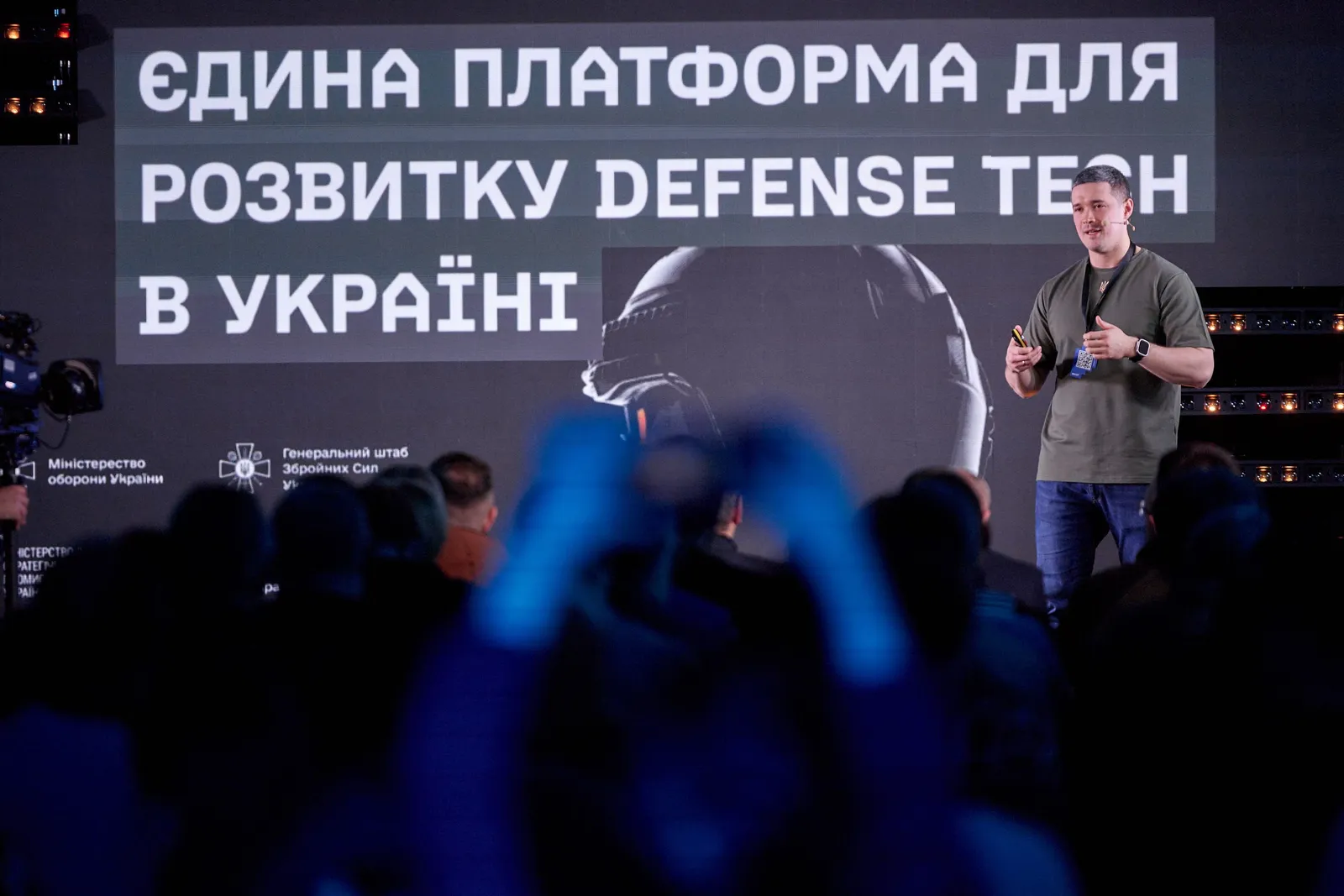
Who runs Brave1, and since when?
It launched in April 2023, co-founded by Ukraine’s Ministry of Digital Transformation, Ministry of Defence, the General Staff of the Armed Forces, the National Security and Defense Council, the Ministry of Strategic Industries and the Ministry of Economy. It describes itself as the state institution shaping defense-innovation strategy and works across eleven priority technology areas, from drones and electronic warfare to ground robots, AI, missiles, communications and medical technology.
How a product moves through Brave1, step by step
- Registration. A developer registers the product on the platform. More than 3,500 developments had been registered by April 2025.
- Military feedback and testing. Brave1 connects the product with units for trials, including in combat conditions, which is the part no Western accelerator can offer. Since July 2025 foreign makers can apply too; the route is in how to get a drone tested in Ukraine.
- Grants. Money for validation, prototyping, IP protection and testing. Grant sizes vary by track and maturity; there is no single schedule.
- Codification. Help getting the product codified to NATO standards, which it needs to be bought by the state and by allies. Over 260 developments were codified by April 2025.
- A buyer. Through Brave1 Market, a marketplace that lets military units order directly from verified makers, paying partly with points their confirmed strikes earn in DELTA, the army's battlefield data system, and through state procurement matchmaking.
- Investors. A company catalogue, matching and consultations for private investors, and events such as Defense Tech Valley, held on 16 and 17 September 2026.
Brave1 in numbers
| Figure | Value |
|---|---|
| Launched | April 2023 |
| Registered developments | more than 3,500 (April 2025) |
| NATO-codified developments | more than 260 (April 2025) |
| Grants | more than 470 for UAH 1.3 billion by April 2025; more than 1,000 by September 2026 |
| 2025 grant agreements | 294, plus 17 from a separate competition and 41 pending |
| State budget for defense-tech grants, 2025 | about UAH 3 billion, roughly $75 million |
| Private capital raised by Ukrainian defense-tech startups | about $5 million in 2023, $59 million in 2024, more than $105 million in 2025 across more than 50 startups, per Brave1 |
| Brave1 Dataroom | launched 21 January 2026 with Palantir; more than 100 Ukrainian companies with access by mid-2026 |
One number to keep separate: the $105 million is private venture and angel money raised by companies in the ecosystem, not Brave1 grants. The two are often added together, and should not be.
What is the Brave1 Dataroom?
A secure environment, launched by the defense ministry on 21 January 2026 and built with the digital ministry, the armed forces, military intelligence’s research institute and Palantir, where Ukrainian developers can test, train and fine-tune military AI models on real battlefield data: visual and thermal footage of aerial targets collected in combat. Ukraine’s unmanned systems alone generate more than 50,000 video streams a month. For an AI company, that data is the asset no one outside Ukraine can buy, and access is currently for Ukrainian companies.
Where does a foreign company fit?
Since 2026, through Brave International, a framework for international defense-innovation cooperation under the Brave1 umbrella. The government announced initial programs worth more than €100 million, with joint grant funds financed 50/50 by Ukraine and a partner country and competitions open to foreign companies as well as Ukrainian ones. One example already running is EU4UA Defence Tech, announced on 1 December 2025: €3.3 million in total and up to €150,000 per applicant. An early-2026 Brave1 roadshow in the US put Ukrainian companies in front of more than 100 American investors.
For most foreign founders the practical routes are four: a joint grant competition, a partnership with a Ukrainian developer already in Brave1, investment through its matchmaking, or a joint venture. How the money moves in each case is in how Western money reaches Ukrainian producers, and the full map of instruments is in the business map of Ukraine’s defense industry.
Where does Brave1 go next?
I see three pressures on it over the next two years.
- From incubator to market maker. With the Brave1 Market handling unit orders and the EU's BraveTech EU programme funding joint projects, Brave1 is becoming a marketplace and a gateway for foreign partners, not only a grant office. That is where its influence will grow.
- The weight of success. An organisation that handles more than a thousand grants and thousands of registered developments drifts toward procedure. The EU Institute for Security Studies flagged the summer 2026 dismissal of the defence minister who championed this approach as a risk to the reform drive. Speed is a culture, and cultures change with people.
- Copies abroad. NATO countries are building their own fast lanes, from DIU in the US to national innovation units in Europe. The ones that copy Brave1's link between testing and buying will move fastest.
Signals worth watching: the time from registration to codification, the share of state procurement that runs through the Brave1 Market, and whether European programmes start funding Ukrainian developers directly through it.
What will the market need next?
Brave1 creates demand for things it does not provide itself. Foreign companies that want to test in Ukraine need someone to arrange the trial, the unit, the paperwork and the export path for the evidence; Ukrainian startups that pass through Brave1 need the production capacity and the first foreign buyer it cannot give them. Both are service markets with few providers.
The Brave1 Dataroom is the less obvious opening, and it runs on software from Palantir, which gives that company a place at the start of Ukraine's military AI. Combat footage for training military AI is available to Ukrainian companies, so a foreign AI company that wants it needs a Ukrainian partner or a joint venture. That makes partnerships with Ukrainian AI teams worth more than their own revenue suggests, which investors pricing those teams should know.
Western governments copying Brave1's link between testing and buying will need people who have seen it work. I expect advisory and operating roles in national innovation programmes to become a market for those who have.
Signals worth watching: foreign companies admitted to Brave1 testing, joint ventures formed to access Dataroom data, and national programmes abroad that buy directly after a field test.
What I would do with it
Use it as a filter, not a stamp. A Brave1 grant, a codification and a Brave1 Market listing tell you a product has been seen by soldiers and passed a state process; they do not tell you it can be built at volume or that the company can survive without grants. When I look at a Ukrainian defense company I ask where it is on the Brave1 path and then ask the questions Brave1 does not, the ones in how I would evaluate a defense tech startup. For a foreign company, the most valuable thing Brave1 offers is the one that cannot be bought elsewhere: fast feedback from real use, of the kind that took Ukraine’s interceptor drones from prototype to a thousand a day in about a year.
Sources (11)
- Digital State UA, Brave1
- Brave1, official site
- Brave1, for investors
- Ministry of Defence of Ukraine, Brave1 Dataroom launch, 21 January 2026
- Cabinet of Ministers of Ukraine, more than 100 companies train AI on Brave1 Dataroom data
- Cabinet of Ministers of Ukraine, international grants from Brave1 and partner countries
- Ministry of Digital Transformation, Brave1 grant program report for 2025
- UNITED24 Media, what Ukraine’s battlefield AI can do
- Columbia SIPA, report on Ukraine’s defense innovation, July 2026
- EEAS, EU4UA Defence Tech grant program with Brave1, 1 December 2025
- UATV, more than 100 US investors interested in Ukrainian defense companies
Where this comes up on the site
- Ukraine digitized its army's paperwork and purchasing the way it digitized the battlefield, and now the front line decides what gets bought
- How to get a drone tested in Ukraine, and what to settle before it flies
- Palantir sells defense the place where decisions get made, and in Ukraine it is becoming the place where AI gets trained