
Ukraine pushed Russia's fleet out of Sevastopol with cheap maritime drones. Investors are funding expensive ones. Both are right, for different buyers.
Ukraine's naval drones pushed Russia's Black Sea Fleet out of its home port with boats priced in the hundreds of thousands of dollars. Western money is flowing into large autonomous ships and submarines at valuations in the billions. Here is why both make sense, and where a maritime-drone founder should stand.
Maritime drones are the clearest case in Russia's war against Ukraine of a cheap system beating an expensive one. Ukraine has no fleet to speak of, and its naval drones, small uncrewed boats packed with explosives or fitted with missiles, struck enough Russian ships that much of the Black Sea Fleet moved from Sevastopol to Novorossiysk, as Reuters reported. Ukraine's Defence Intelligence counts 17 Russian military targets struck by its Magura drones in two years, 15 of them destroyed, including two Mi-8 helicopters, two Su-30 fighter jets and the ships Sergey Kotov, Ivanovets and Caesar Kunikov.
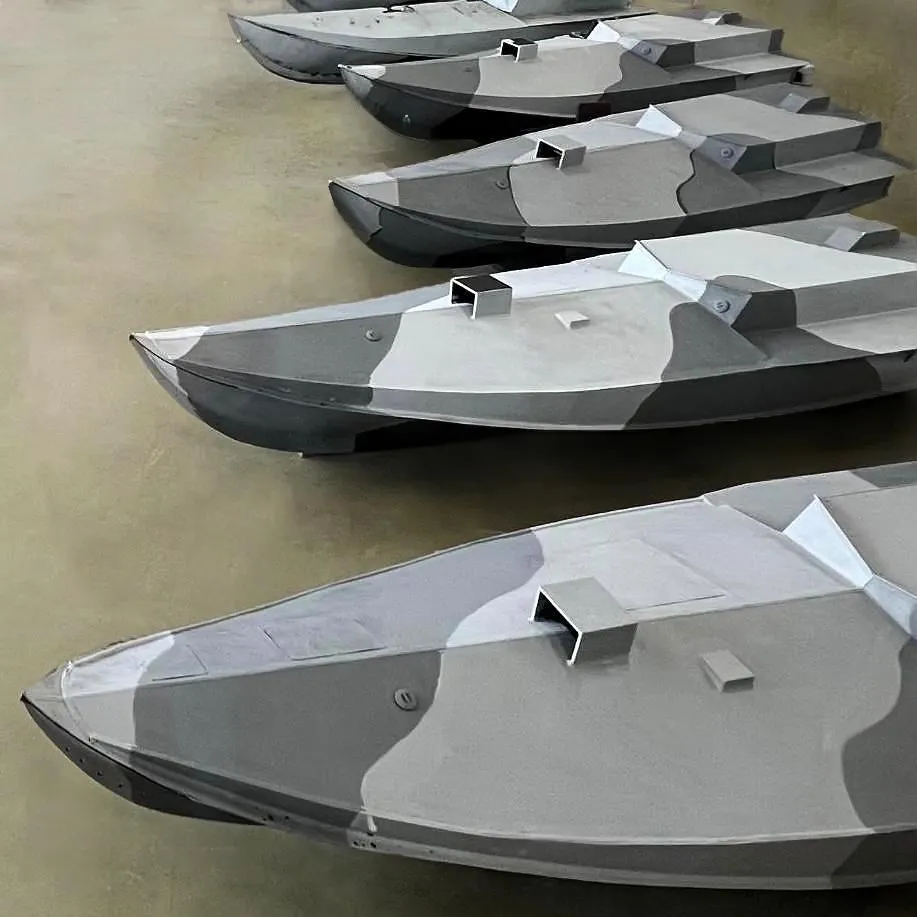
The usual reading of that record is that navies should stop buying big and buy thousands of small, cheap boats. Western investors seem to have read it the other way: the money is going to large autonomous vessels and submarines. I think both readings are half right.
What Ukraine built, and what it cost
| Magura (GUR) | Sea Baby (SBU) | |
|---|---|---|
| Versions | V5 for swarming attacks on ships; V6P multifunctional; V7, armed with two AIM-9 Sidewinder missiles, and a V7 with a machine gun | surface boat; an underwater version, Sub Sea Baby |
| Published figures | not published in full | the 2024 version: 850 kg of explosives, 90 km/h, 1,000 km |
| Cost | not published | UAH 8.5 million each, roughly $225,000 at the time, in the 2024 fundraiser for 35 boats |
| Notable results | 2 Su-30 jets shot down with AIM-9s on 2 May 2025, which GUR described as the first fighter jets destroyed by a naval drone | the Crimean Bridge in July 2023, by the SBU's account (in November 2026 missiles and missile-drones dropped its road span: how that operation was built); on 15 December 2025 an underwater strike on a Russian submarine at Novorossiysk, which Russia denied, as Reuters reported |
GUR estimates the damage to Russia from its Magura strikes at more than $500 million, with the two Su-30s alone worth over $100 million. Even after counting the boats lost on failed runs and the crews, intelligence and communications behind each strike, that is the cost-exchange ratio working for the cheap side, for once.
Where is the money going?
To the other end of the market.
- Saronic, in the US, closed a $1.75 billion Series D at a $9.25 billion valuation in March 2026, and on 30 September broke ground on Port Alpha, an 835-acre shipyard in Brownsville, Texas, with more than $3 billion of planned private investment and initial capacity of 150,000 gross tons a year, for autonomous and crewed ships.
- Kraken Technology Group, in the UK, raised $175 million at a $1 billion valuation in July 2026, with the NATO Innovation Fund, Rheinmetall and the British Business Bank among the backers.
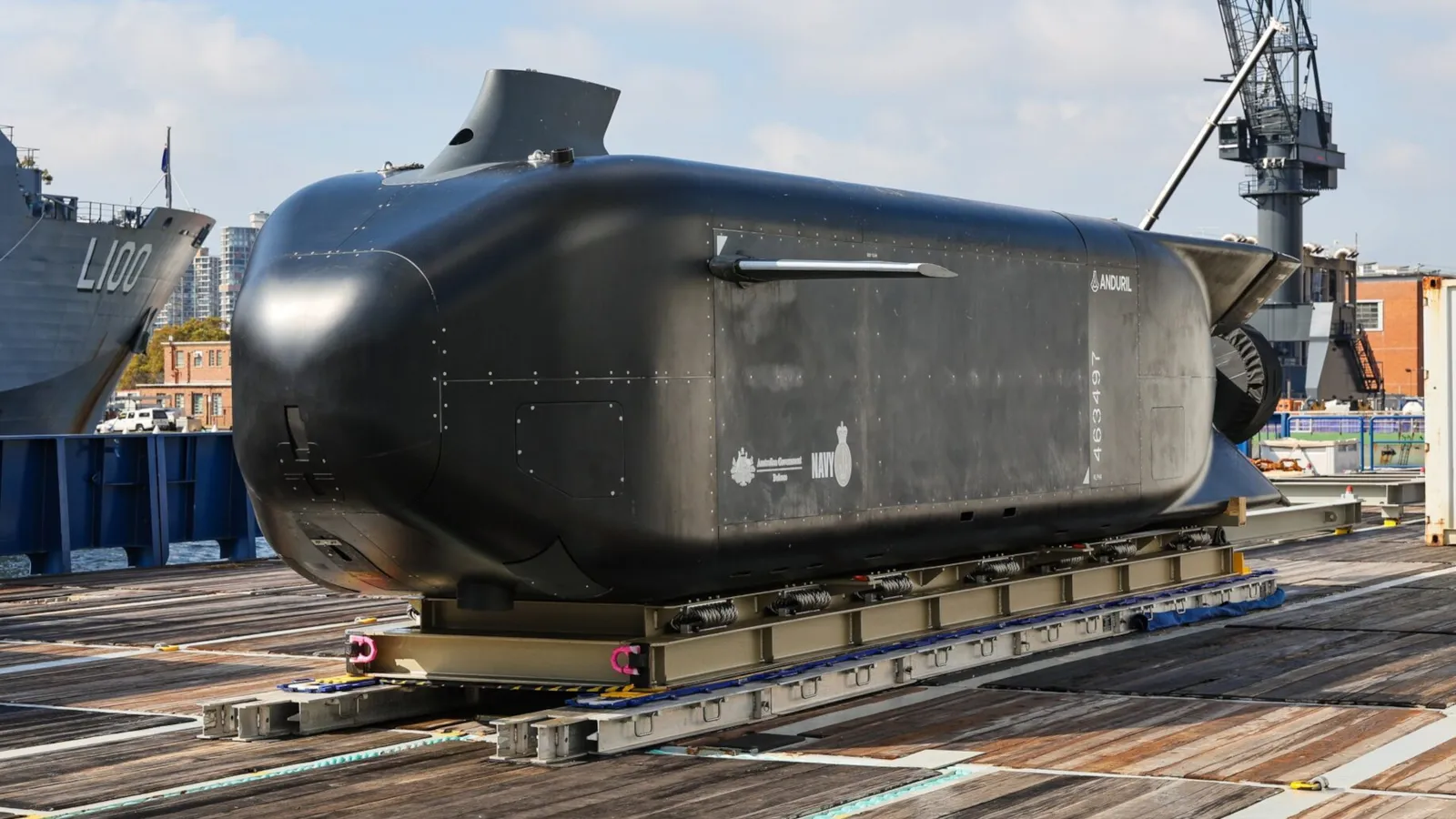
- Anduril won an A$1.7 billion (about $1.12 billion) programme of record from the Royal Australian Navy in September 2025 for a fleet of Ghost Shark extra-large autonomous submarines.
- Helsing unveiled the SG-1 Fathom underwater glider, which can patrol for up to three months, with hundreds deployed per mission; Quantum Systems launched maritime systems in September 2026.
Across Europe, Dealroom counts $796 million raised by maritime-robotics startups in 2026 to September, ten times the $77.6 million for ground robots and a sixth of the $4.7 billion for aerial drones, as Defense News reported.
Why are both right?
Because they answer different buyers.
- Ukraine needed to deny a sea it could not control. A boat priced in the hundreds of thousands and used once is the right weapon against expensive ships that cannot hide, though not for patrolling an ocean. Speed of change mattered more than endurance: the Magura went from an explosive boat to a missile launcher in two years.
- NATO navies need to watch oceans they intend to control. Patrolling the North Atlantic, guarding undersea cables in the Baltic, or tracking submarines for months asks for endurance, sensors and autonomy, which costs more per unit and is easier to build a venture business on. The US Navy's Modular Attack Surface Craft programme, put to industry in July 2025, asks for adaptable, multi-mission craft for distributed operations.
- Investors favour what a navy will buy for years. A long programme of record is a better venture asset than a war-time order that may stop. That is why the money goes to Saronic and Ghost Shark, not to the boats that won the Black Sea.
Where the usual advice holds
The cheap-mass lesson is real for any navy facing a coastal threat, and NATO has taken it seriously: the US Navy's Task Force 66 applied what it called Black Sea lessons to autonomous fleet operations during the BALTOPS exercise in 2025. China's navy took it seriously too: it has drilled against unmanned boats since August 2025, because its own fleet sits concentrated in large ports, as I describe in what China learns from the drone war in Ukraine. A Western navy will want some of both.
What will the market need next?
The money is going to large autonomous ships, while the evidence from Russia's war against Ukraine is about cheap sea drones in numbers. That gap is a market. Navies and coast guards want what Ukraine showed, a sea drone that can reach a warship or a port at a fraction of a ship's price, and most of the Western capital is building something else. Makers of small, cheap sea drones, and of their engines, hulls and communications, have buyers that the large rounds do not serve.
Defense against them is the second market. Ports, offshore energy and shipping companies now need protection from sea drones as well as from air threats, and they buy sensors, barriers and armed patrol boats as a service rather than as a programme. Insurers pricing Black Sea and Baltic risk will push them to buy.
Signals worth watching: navy orders for small sea drones, port and offshore protection contracts, and insurance terms for shipping in waters where sea drones operate.
What I would do as a maritime-drone founder
- Pick the buyer before the hull. Coastal denial, cable and port protection, and ocean surveillance are three markets with three price points.
- If you build cheap, build fast and test in Ukraine. The Ukrainian loop changes a design in weeks; the route is in how to get a drone tested in Ukraine, and the joint ventures that carry Ukrainian designs into European plants are in German-Ukrainian defense joint ventures.
- If you build expensive, find the programme of record. Ghost Shark went from concept to production in under three years because the navy co-funded it. Who signs in the US is in defense tech go-to-market.
- Show the cost per mission, not the price per boat. A navy compares a drone with the patrol ship or the missile it replaces.
The same split between cheap and expensive runs through the other robotic domains; on land it is in Ukraine's ground robots, decoded.
Sources (12)
- Defence Intelligence of Ukraine, era of Magura: GUR presents new naval drones, May 2025
- Defence Intelligence of Ukraine, naval drones destroyed two Russian fighter jets, May 2025
- UNITED24, This is Battleship: fundraiser for 35 Sea Baby naval drones, February 2024
- Reuters, Ukraine hits Russian submarine in first underwater drone attack, 15 December 2025
- Saronic, closes $1.75 billion Series D at $9.25 billion valuation, March 2026
- Saronic, breaks ground on Port Alpha, 30 September 2026
- Kraken Technology Group, raises $175 million at $1 billion valuation, July 2026
- Anduril, Ghost Shark enters program of record, September 2025
- Helsing, Lura and SG-1 Fathom, May 2025
- NAVSEA, US Navy seeks industry feedback for Modular Attack Surface Craft program, July 2025
- US Navy, Task Force 66 applies lessons learned from the Black Sea battle lab, June 2025
- Defense News, European defense startups to raise record $10.5 billion in 2026, Dealroom forecasts, 5 October 2026
Where this comes up on the site
- Ukraine spent a month taking apart the Crimean Bridge's defenses, then hit one arch two nights running. How eleven Ukrainian weapons dropped the span
- The Kalibr cruise missile and the half-life of an expensive weapon
- Anduril looks like a weapons maker, but its core is Lattice, and Ukraine showed what its data had not yet seen