
Quantum Systems bought what no German factory can make: combat feedback from Ukraine
Quantum Systems builds the Vector reconnaissance drone, has worked in Ukraine since 2022 and now runs a factory and three joint ventures there. In July 2026 it raised $1.2 billion at about $8 billion. Here is what it makes, how it grew and what its model means for a defense founder.
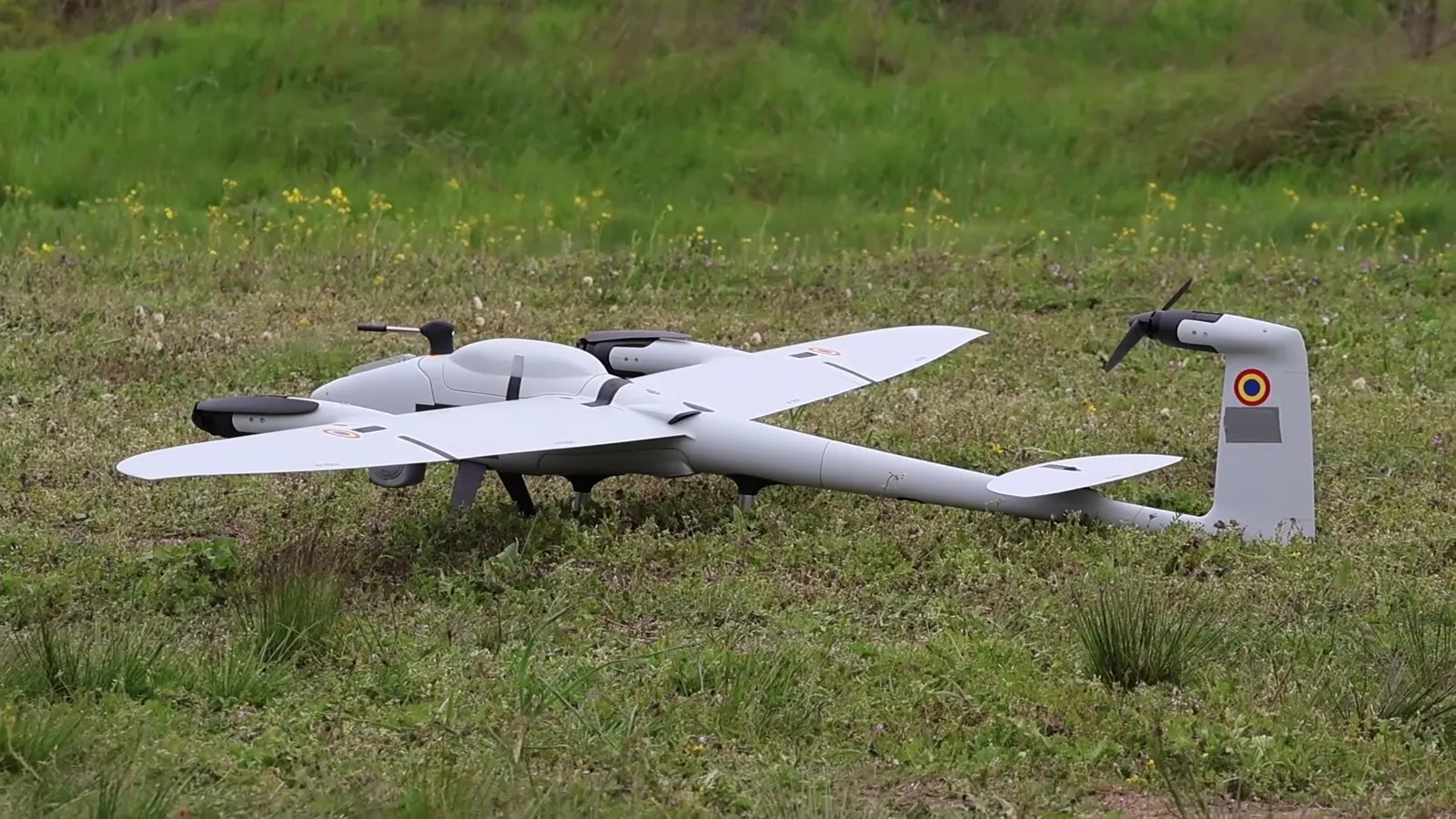
Quantum Systems is a German maker of military and dual-use drones, founded in January 2015 near Munich by Florian Seibel, Tobias Kloss and Armin Busse. It started with fixed-wing drones that take off and land vertically, and its Vector reconnaissance drone has flown in Ukraine since the first year of the full-scale invasion. In July 2026 it signed a $1.2 billion funding round at a valuation of about $8 billion, and it now describes itself as a "neo-prime": a company that wants to supply systems across air, land and sea, not only drones. Few European defense startups are as tied to Ukraine.
My argument is that Quantum Systems took the opposite road from its German rival Helsing. Helsing went from software into hardware at home; Quantum went from hardware into Ukraine, and bought what no factory in Germany can produce on its own: designs and feedback from the front, through people and joint ventures inside the country. Its joint ventures are not a side business. They are its strategy.
What does it make?
The core products are reconnaissance drones, Vector above all, connected by a common software layer the company calls MOSAIC UXS. Around that it has added interceptor drones, ground robots and, in September 2026, maritime systems under the names Seavex and Subvex. After its 2025 Series C it bought the drone makers AirRobot and Nordic Unmanned and the autonomy company Spleenlab, as Evertiq reported, opened a research office in Huntsville, Alabama, in August 2026, and partnered with Israel's XTEND on autonomous mission software in September 2026.
How did it grow in Ukraine?
Through presence. Quantum Systems opened a factory and development hub in Ukraine in April 2024, planned for up to 1,000 reconnaissance drones a year, after supplying Vectors through Germany's support programme. It now employs several hundred people in the country and runs three joint ventures with Ukrainian makers:
- Quantum Frontline Industries with Frontline Robotics, building Ukrainian-designed drones in Germany for Ukraine's forces;
- Quantum WIY Industries with WIY Drones, for interceptor drones, after a contract for 15,000 interceptors for Ukraine's National Guard;
- Quantum Tencore Industries with Tencore, building 2,000 TerMIT ground robots in Germany for Ukraine.
On 4 October 2026 Chancellor Merz announced German financing for several tens of thousands of its interceptor drones, to be made in Ukraine. The model is explained in German-Ukrainian defense joint ventures, and the robot it builds with Tencore in Ukraine's ground robots, decoded.
How was it funded?
| Round | Amount | When |
|---|---|---|
| Series C | €160 million | May 2025 |
| Series C extension | €180 million, valuing the company at over €3 billion, as reported | November 2025 |
| Series D | $1.2 billion, about $8 billion post-money | July 2026 |
The Series D was co-led by Blackstone, Noteus, Airbus and Advent, and Airbus Defence and Space agreed a deeper collaboration alongside it. The company says it is profitable and has more than 1,700 employees in eight countries; it has not published audited revenue.
Where does Quantum Systems go next?
I expect it to keep buying and partnering its way into a full range of systems, air, land and sea, tied together by one software layer, and to become one of the companies European governments treat as a prime. The risks are specific.
- Partners can outgrow the partnership. Ukrainian makers with combat-proven designs are being courted by everyone. A joint venture holds only as long as both sides gain more inside it than outside.
- Wartime demand ends. Much of the growth rests on a war. The company's answer is to sell the same systems to NATO armies, which is why the Romanian and Bundeswehr orders and the new US office matter as much as Ukraine.
- Breadth can blunt the edge. A company that does everything competes with everyone, including its own customers' preferred specialists.
Signals worth watching: whether the Ukrainian joint ventures publish delivery numbers, new NATO orders outside Germany, and whether the next move is a public listing or a large acquisition.
What will the market need next?
Quantum Systems turned joint ventures into a way to reach Ukrainian units, and that model creates demand for things the ventures do not make. Each line in Germany needs German suppliers qualified for a Ukrainian design, each venture needs agreements on who changes the design after combat feedback, and each needs people who can work between a Ukrainian engineering team and a German factory. Few companies offer those services today.
The bigger opening is for companies that copy the route without Quantum's balance sheet. A European maker of a narrow product, a sensor, a radio or a ground robot, can partner with a Ukrainian team that has units as customers and combat data as feedback. Finding and checking that partner, and setting up the venture so both sides gain more inside it than outside, is the work the model depends on.
Signals worth watching: new Quantum ventures and their first deliveries, other European makers announcing Ukrainian joint ventures, and how many venture products reach Bundeswehr orders.
What does Quantum Systems mean for a defense founder?
- In Ukraine, presence is what got rewarded. Quantum Systems grew there by building, employing and partnering inside the country, not by selling into it from Germany. The route in is in how to get a drone tested in Ukraine.
- Joint ventures have become a distribution route. A Ukrainian maker with a combat-proven design can reach German money and plants through a partner like this; a European maker can reach Ukrainian engineering the same way.
- Range sells to primes. Airbus invested in a company that covers air, land and sea through one software layer. A single-product startup should expect to be a component in someone's family of systems, or to be bought.
- Its rival is Helsing. The two German companies took different paths, one from software into strike drones, the other from reconnaissance drones into everything else; see Helsing.
Sources (8)
- Quantum Systems, Quantum Systems raises $1.2bn Series D, 2 July 2026
- Quantum Systems, Series C extension of €180 million, November 2025
- Evertiq, Quantum Systems triples valuation, raises €180 million, December 2025
- Quantum Systems, Merz announces interceptor-drone package, 4 October 2026
- Quantum Systems, 15,000 interceptor contract and WIY Drones investment, March 2026
- Quantum Systems, first joint co-production of Ukrainian drones in Europe, December 2025
- European Security & Defence, Quantum Systems and Tencore to co-produce 2,000 TerMIT UGVs, June 2026
- Quantum Systems, factory and development hub in Ukraine, April 2024
Where this comes up on the site
- German-Ukrainian defense joint ventures: who builds what, where, and who pays
- Ukraine's ground robots by the numbers: 22,000 contracted, nearly 20,000 missions a month, and $77.6 million of European venture money
- The Geran-5 and the end of the cheap-drone era: Russia's jet Shahed, and why only 57% are shot down