
Abrams tanks in Ukraine: a $10 million tank that has to hide from a $500 drone, and the market that creates
Ukraine has received 80 M1A1 Abrams tanks, 31 from the US and 49 from Australia. In April 2024 US officials said the first ones had been pulled back from the front because drones made them easy to find. Here is what they are, what happened and what it means for anyone building armor or protecting it.
The M1A1 Abrams is the American main battle tank, made by General Dynamics Land Systems: about 60 tonnes, a gas-turbine engine and a 120 mm gun, built for Cold War tank battles in Europe. The US announced 31 for Ukraine in January 2023, eleven months into Russia's full-scale invasion, switched to refurbished M1A1s in March to deliver them faster, and the first arrived in September 2023. Australia then gave 49 of its own M1A1s, all delivered by December 2025. By April 2024, five of the US tanks had been lost, and US officials told the AP that Ukraine had pulled the rest back from the front line because Russian drones made them too easy to find.
My argument is that the Abrams in Ukraine is the clearest example of a platform built for another war. A tank that costs around $10 million, by the AP's estimate, now has to hide from a drone that costs a few hundred dollars. The tank still has a job; what changed is that its survival depends on things the tank was never designed to have: protection against drones overhead, electronic warfare and new tactics. That gap is a market.
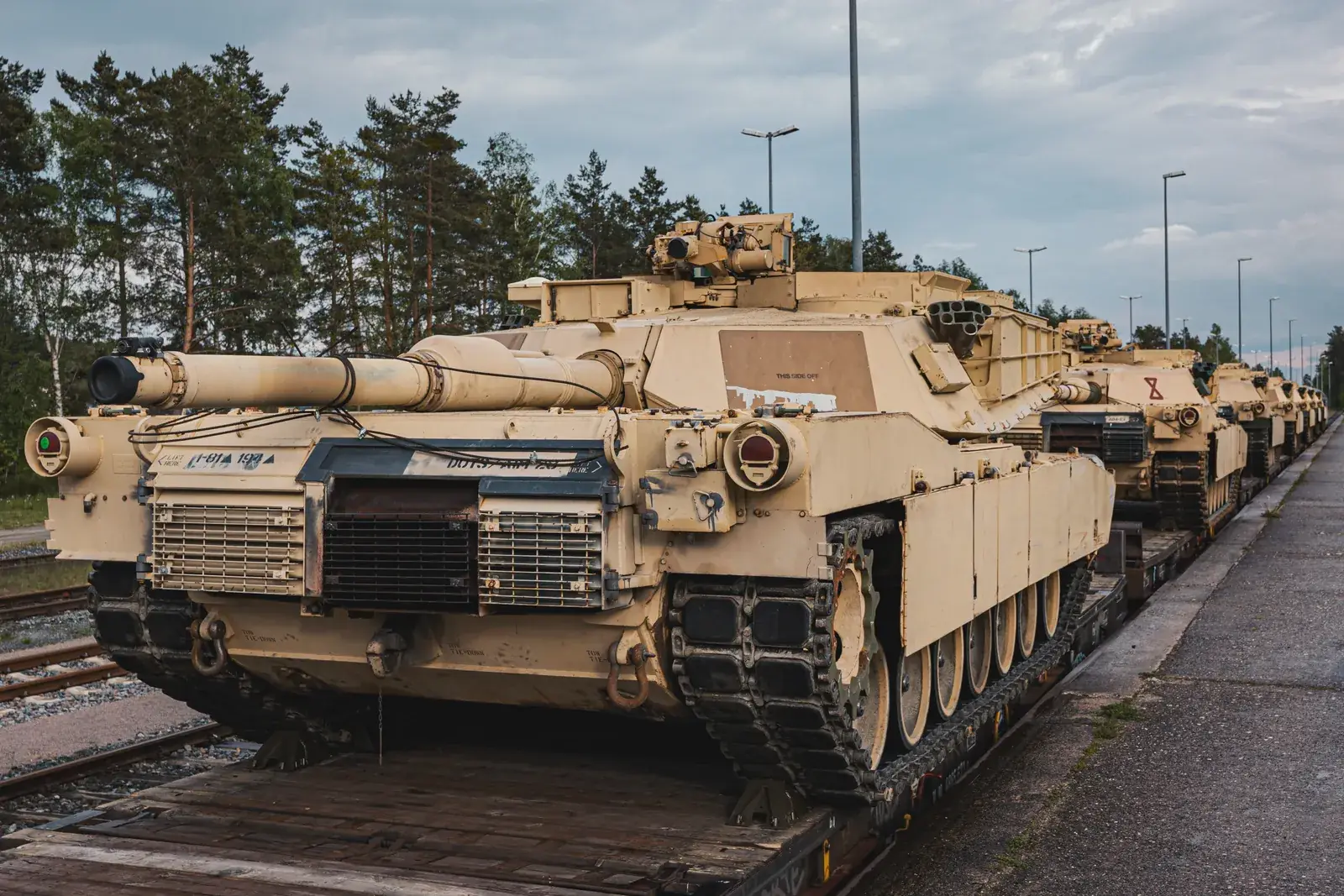
Ukraine's Abrams in numbers
| Maker | General Dynamics Land Systems |
|---|---|
| Version | refurbished M1A1 SA from the US; M1A1 AIM from Australia |
| From the US | 31, announced 25 January 2023 in a $400 million package with ammunition, recovery vehicles, training and support; first arrivals September 2023 |
| From Australia | 49, announced October 2024, most delivered by July 2025, all by December 2025; valued at about A$245 million |
| Losses | 5 of the 31 US tanks by April 2024, as the AP reported |
| Price | about $10 million each, an estimate quoted by the AP, not the transfer value |
Why were they pulled back from the front?
Because the battlefield they arrived on is watched from above all the time. US officials told the AP in April 2024 that the spread of Russian reconnaissance and attack drones meant there was no open ground where a tank could move without being detected and attacked. The first Abrams had fought around Avdiivka in early 2024. Ukraine and the US then reassessed how to use them.
They did not disappear. CNN reported in May 2024 that crews of the 47th Mechanized Brigade were still using some Abrams near the eastern front, fitting explosive reactive armor and complaining about drone vulnerability, an engine fault and condensation in the electronics. Australia's defence department said in December 2025 that many of its tanks were already at the front.
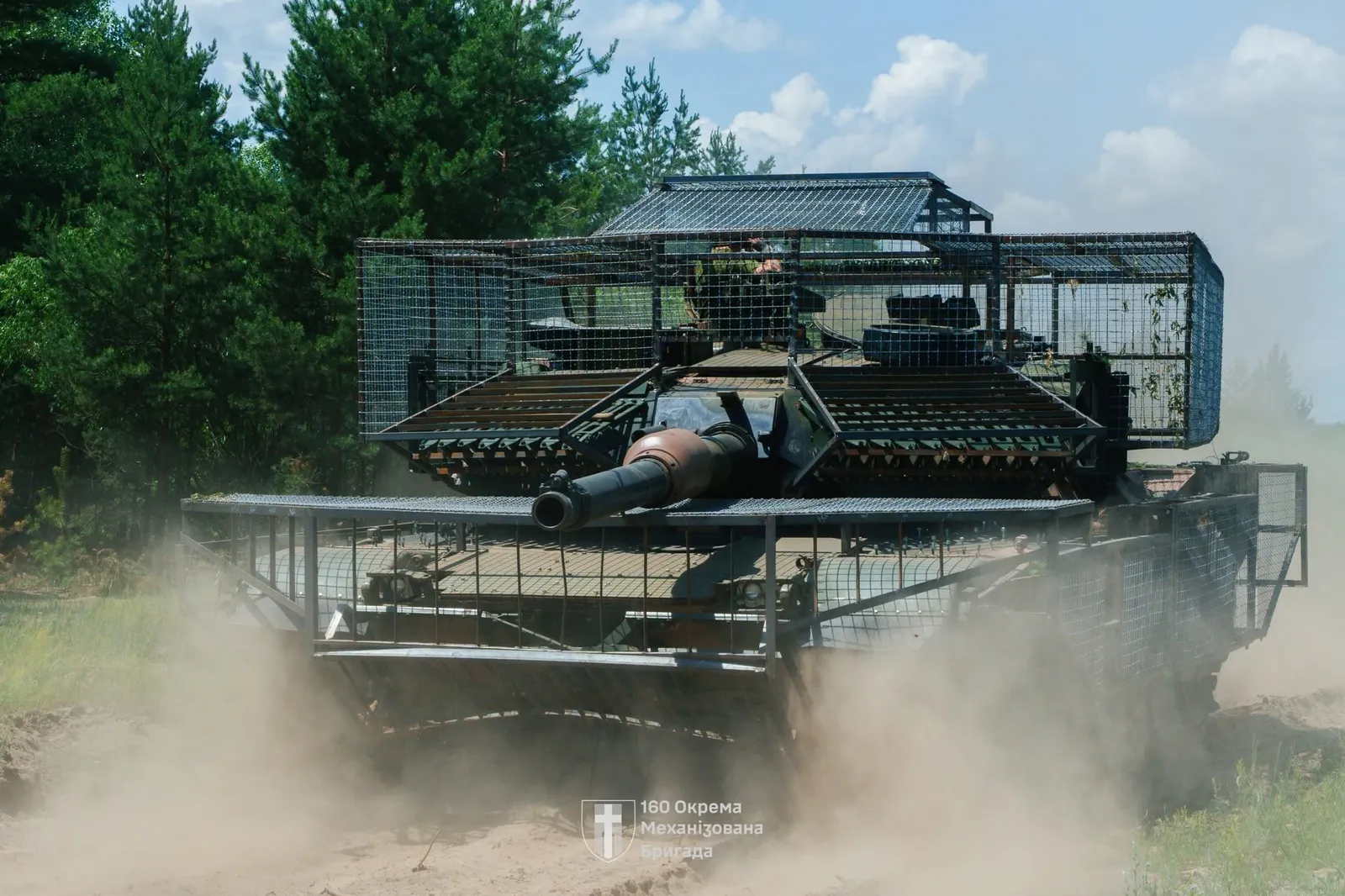
What does this say about Western armor?
That the threat moved and the design did not. The Abrams was built to survive enemy tank guns and anti-tank missiles fired from the front. The weapon that hunts it in Ukraine is a cheap drone diving onto the thinner top armor or the engine deck, guided by another drone that never stops watching. Every Western tank sent to Ukraine, and every Russian one, has met the same problem; crews on both sides weld screens and cages over their vehicles because the factory did not.
This is the cost-exchange problem from the other side. In air defense, the defender spends a million-dollar missile on a cheap drone; here, a cheap drone threatens a ten-million-dollar tank. The arithmetic is in cost-exchange ratio, and it explains why both sides now spend so much on drones and so little on new tanks.
Where does armor go next?
I expect three things.
- Counter-drone protection becomes part of the vehicle. Jammers, sensors that detect a diving drone, small interceptors and physical screens will be designed in, not welded on. A tank without them will be sent into battle less and less.
- Fewer heavy tanks, more cheap ground robots. The jobs that expose a crew, resupply, evacuation, mine clearing, move to unmanned ground vehicles that cost a fraction of a tank and can be lost.
- Tanks become part of a drone team. A tank that moves with its own drones overhead, for watching and for defense, survives longer than one that moves alone.
Signals worth watching: Western tank programmes that specify drone protection as standard, orders for vehicle-mounted counter-drone systems, and how many Abrams Ukraine keeps at the front.
What will the market need next?
Thousands of armoured vehicles in Europe and the US now need protection against drones, and that installed base is the largest counter-drone market nobody calls by that name. Jammers sized for a vehicle, sensors that detect a diving drone, small interceptors and screens a crew can fit in the field are bought for vehicles already in service, from maintenance and upgrade budgets.
The jobs that exposed tanks to drones create a second market. Resupply, evacuation and mine clearing move to ground robots that cost a fraction of a tank and can be lost, and a tank that moves with its own drones overhead needs drones built to work with armour.
Signals worth watching: Western tank programmes that specify drone protection as standard, orders for vehicle-mounted counter-drone kits, and armies pairing drones with armoured units in their exercises.
What the Abrams means for a defense founder
- The platform is a customer. Every armored vehicle in Europe and the US now needs protection against drones. A company that sells that protection sells to the owners of thousands of existing vehicles, not only to new programmes.
- Light, cheap, and fitted in the field. Crews in Ukraine fitted their own protection because nothing better arrived. A product a unit can install itself, quickly, fits how the war in Ukraine is actually fought.
- Prove it where the drones are. Protection tested against a drone the maker flies is not protection tested against a Russian operator who has done it a thousand times. The route is in how to get a drone tested in Ukraine, and the wider pattern of Western systems meeting Russian jamming and drones in Ukraine is in why Western weapons stumbled in Ukraine.
Sources (7)
- Defense News, in reversal, US to send 31 Abrams tanks to Ukraine, 25 January 2023
- Defense News, US to fast-track Abrams for Ukraine by going with older version, 21 March 2023
- Reuters, Abrams tanks arrive in Ukraine, Zelenskiy says, 25 September 2023
- AP, Ukraine pulls US-provided Abrams tanks from the front lines over Russian drone threats, 26 April 2024
- CNN, Ukrainian crews on their US-made Abrams tanks, 29 May 2024
- Defense News, donated Australian Abrams tanks to receive baptism of fire in Ukraine, 23 October 2024
- Australian Department of Defence, Australia completes delivery of tanks to Ukraine, 19 December 2025
Where this comes up on the site
- Western weapons in Ukraine did not fail because they were bad. They failed where they had never been tested against Russian jamming and drones.
- How to get a drone tested in Ukraine, and what to settle before it flies
- China is studying the drone war in Ukraine more closely than anyone. It is still learning last year's war.