
The M270 in Ukraine: a 1980s launcher that matters because of what it fires, and what that says about platforms
The M270 is the tracked American rocket launcher of the 1980s, the heavier sibling of HIMARS, carrying twelve GMLRS rockets. Britain, Germany and France sent versions of it to Ukraine from July 2022. Here is what it is, how it differs from HIMARS, and why an old platform with new munitions is the fastest way to new capability.
The M270 Multiple Launch Rocket System is a tracked rocket launcher built by Lockheed Martin on a chassis derived from the Bradley fighting vehicle, first fielded in the 1980s. It carries two pods: twelve GMLRS guided rockets, or two ATACMS or four Precision Strike Missiles, by Lockheed's figures. Its wheeled sibling, HIMARS, carries one pod. Ukraine, fighting Russia's full-scale invasion since February 2022, announced its first M270s on 15 July 2022, three weeks after its first HIMARS; Britain sent the first, Germany sent its MARS II version and France its LRU.
My argument is that the M270 in Ukraine shows the fastest way to new capability: an old platform with a new munition. The launcher is forty years old. What made it dangerous in 2022 was the guided rocket it fires, which turned a Cold War area-saturation weapon into a precision one. The value sits in the munition and the fire-control software, and the platform is the truck that carries them. That changes where the money is for anyone building in this space.
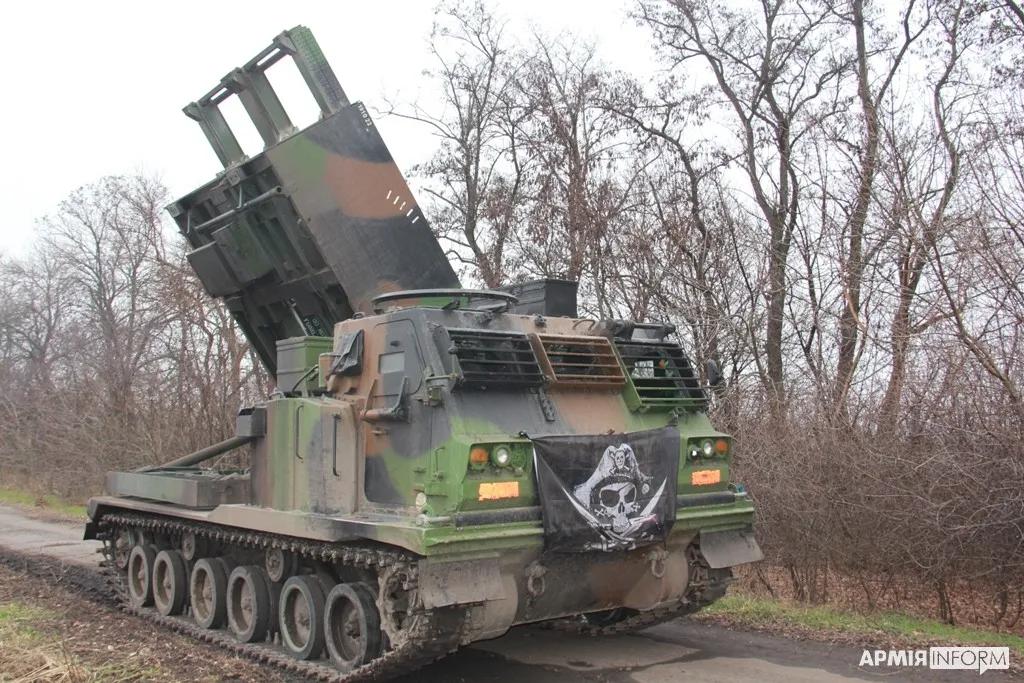
M270 and HIMARS side by side
| M270 | HIMARS | |
|---|---|---|
| Chassis | tracked, derived from the Bradley | wheeled, five-ton truck |
| Load | two pods: 12 GMLRS, or 2 ATACMS, or 4 PrSM | one pod: 6 GMLRS, or 1 ATACMS, or 2 PrSM |
| Strength | twice the ready load, cross-country mobility | faster on roads, lighter, easier to hide and to fly in |
| In Ukraine | British M270, German MARS II, French LRU from July 2022 | US-supplied from June 2022 |
Which versions did Ukraine get?
Several, which is the point. Britain pledged three M270s in June 2022 and more later; Germany delivered three MARS II by the end of July 2022 and announced two more in September, with 200 rockets, as Reuters reported; France sent LRUs, its own version. Britain's launchers were partly backfilled by older Norwegian ones that Britain took in for modernisation. Ukraine ended up with one family of launchers in several national variants, each with its own fire-control software, spare parts and training.
That is the hidden cost of a coalition arsenal. Each variant is a small fleet, and a small fleet is expensive to keep running: its own spares, its own maintenance knowledge, its own software baseline.
Why does an old launcher still matter?
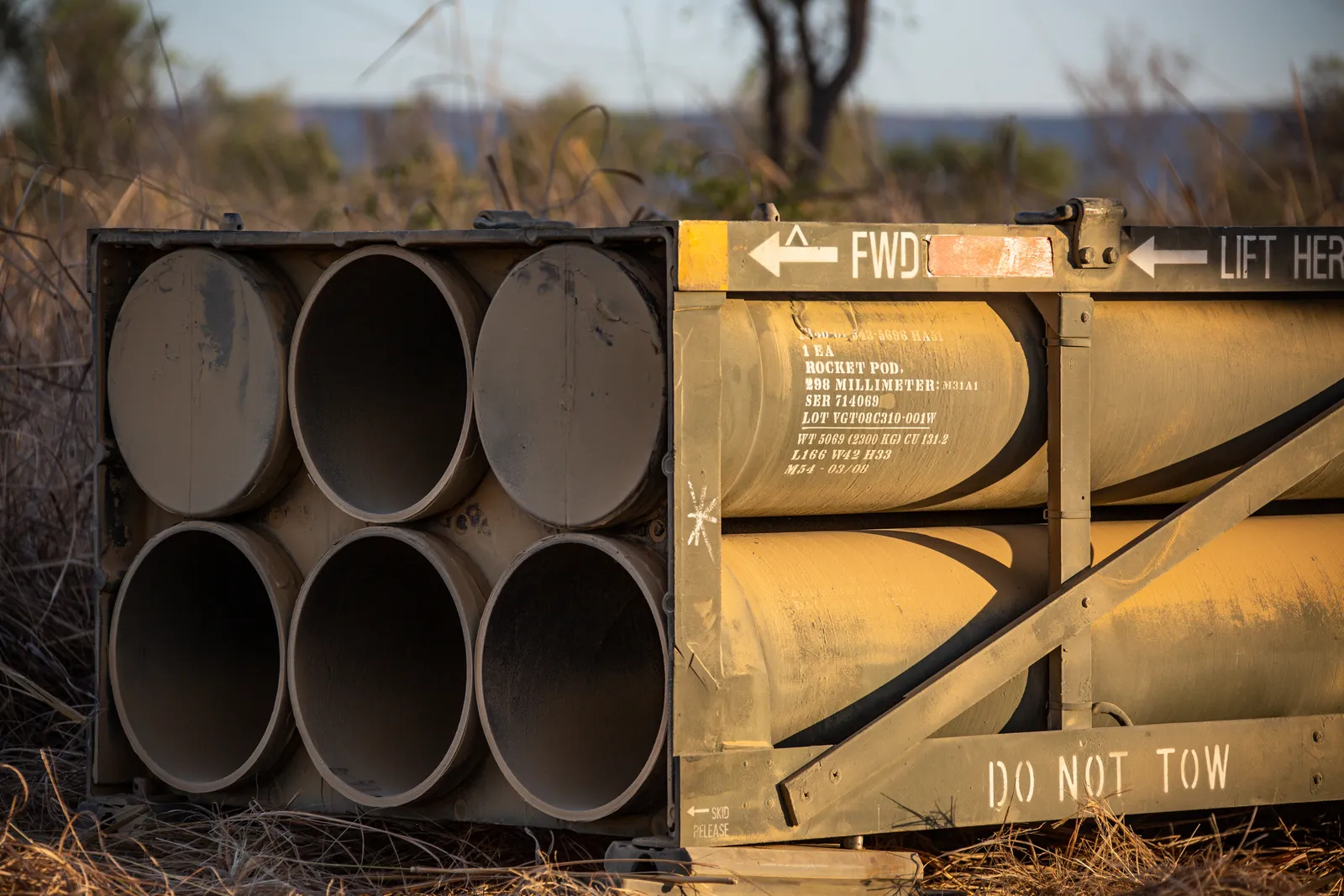
Because the munition carries the technology. A GMLRS rocket fired from an M270 hits as precisely as one fired from HIMARS; the launcher adds load and mobility, not accuracy. Rebuilding an existing launcher and loading it with modern rockets is faster and cheaper than designing a new one, which is why the US Army chose recapitalisation. Lockheed's M270A2 programme rebuilds existing launchers to "zero-time" condition with new engines, armoured cabs and a common fire-control system: 225 M270A1s plus 160 retired launchers in scope. Lockheed announced a $451 million contract for more upgrades in 2024 and fired the first Precision Strike Missile from an M270A2 in April 2025.
Where does this lead?
I expect three things.
- Upgrades over new builds. Armies will keep old launchers, vehicles and aircraft and buy new munitions, software and sensors for them. The upgrade market will grow faster than the platform market.
- Common software across the fleet. Coalition arsenals with several variants of one platform will push toward one fire-control standard, so that rockets, data and repairs move between them.
- The launcher becomes a target. Russia hunts launchers with drones and missiles. Mobility, decoys and speed between firing and moving will matter more than load, which favours lighter launchers and, over time, cheaper ones.
Signals worth watching: M270A2 deliveries, any further M270 transfers to Ukraine, and launcher losses against the number still in service.
What will the market need next?
Old launchers are kept and new munitions are bought for them, so the upgrade market grows faster than the platform market. Common fire-control software across national versions, spares for mixed coalition fleets and maintenance for launchers donated by several countries are bought by every army that runs one family in several variants, Ukraine first.
Survival is the second market. Russia hunts launchers with drones and missiles, so decoys, faster moves between firing and hiding, and protection against drones for the launcher and its crew are what keep the system in use. Those products sell to every rocket-artillery user, not only in Ukraine.
Signals worth watching: M270A2 deliveries, contracts for common fire control across allied launchers, and orders for launcher decoys and counter-drone protection.
What the M270 means for a defense founder
- Sell to the installed base. Thousands of old platforms need new munitions, sensors and software. A product that fits them without a new platform sells faster; the same logic as JDAM-ER kits for old bombs.
- Design for several variants. A coalition buyer runs the same platform in several national versions. A product that integrates with all of them wins over one built for a single variant.
- Production is the constraint, not design. The M270's value depends on how many rockets exist to fire, the volume problem in why one to a thousand is the hard part. The wider pattern of Western weapons in Ukraine is in why Western weapons stumbled in Ukraine.
Sources (7)
- Lockheed Martin, M270 MLRS (load, M270A2 recapitalisation)
- The War Zone, Ukraine gets first M270 multiple launch rocket systems, 15 July 2022
- Reuters, Ukraine gets more US, German rocket launcher systems, 1 August 2022
- Reuters, Germany says it will deliver two additional multiple rocket launchers to Kyiv, 15 September 2022
- Reuters, how Boris Johnson helped Ukraine with its weapons shopping, 8 July 2022
- Lockheed Martin, awarded $451 million to upgrade additional US Army and international M270 launchers, May 2024
- Lockheed Martin, first-time fire: US Army M270A2 launches Precision Strike Missile, 14 April 2025