
ATACMS in Ukraine: a missile limited less by its engineering than by permission and stock
ATACMS is the American ballistic missile fired from HIMARS and M270 launchers, with a range of more than 300 km. Ukraine first used it in October 2023 against airfields in occupied territory. What limited it was not performance but political permission and the size of the stock. Here is what it is and what it teaches.
ATACMS, the Army Tactical Missile System, is a Lockheed Martin surface-to-surface ballistic missile designed for high-value targets: airfields, air defense sites, logistics hubs and command posts. Lockheed gives it a range of more than 300 km. It is fired from the same launchers as GMLRS rockets: one missile in place of a rocket pod on HIMARS, two on the tracked M270. Ukraine first fired it on 17 October 2023, at airfields Russia was using in the parts of Ukraine it occupies, Berdiansk and Luhansk, as Reuters reported.
My argument is that ATACMS in Ukraine was limited less by its engineering than by two things outside it: political permission and the size of the stock. It arrived late, came first in an older, shorter-range version, was allowed against targets inside Russia only from November 2024, and had run out by March 2025, according to Reuters reporting. A weapon a country cannot use freely, or cannot get enough of, shapes the war less than a cheaper one it can build itself. That is the lesson Ukraine drew, and why it now builds its own long-range drones and missiles.
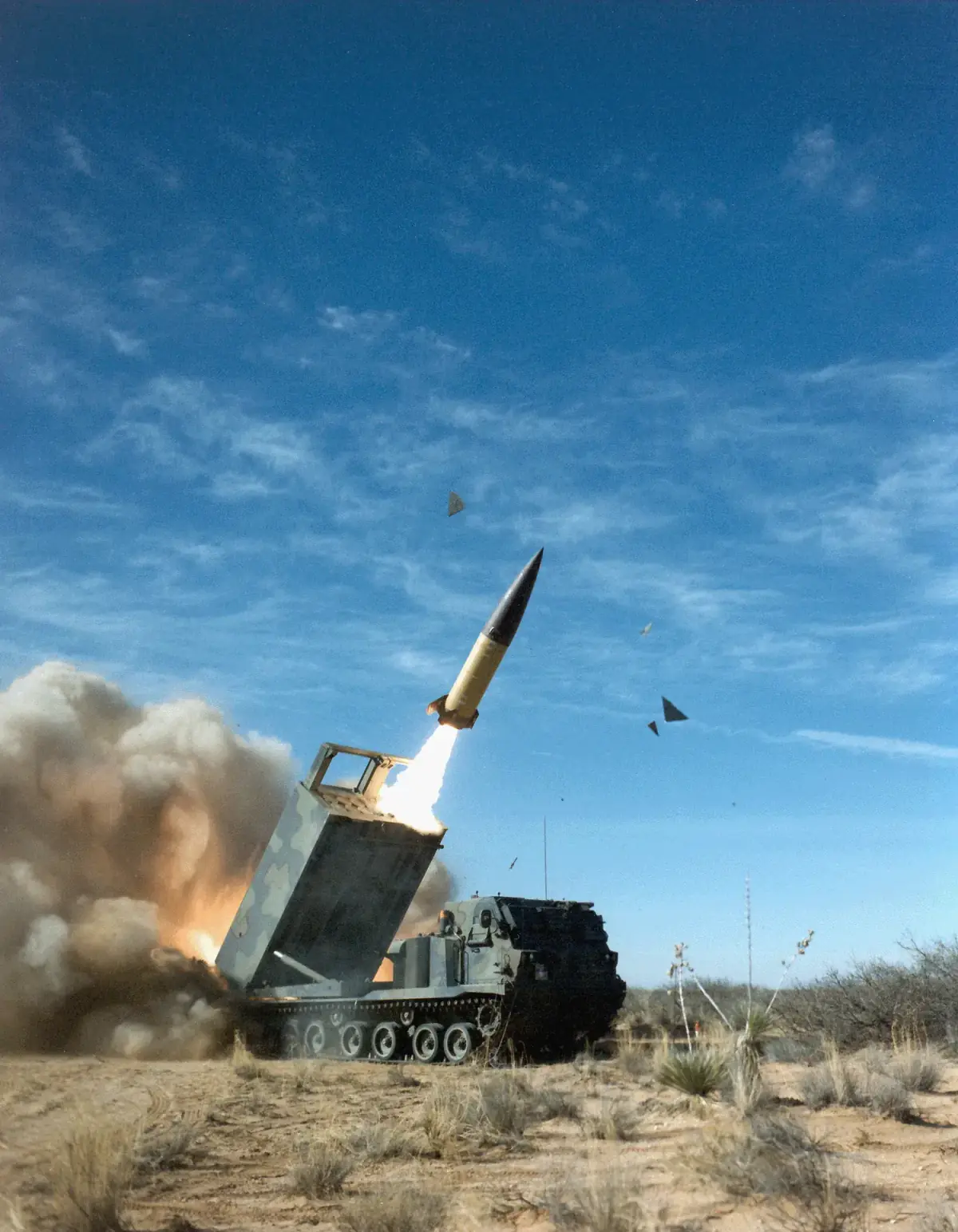
ATACMS in numbers
| Maker | Lockheed Martin |
|---|---|
| Type | surface-to-surface ballistic missile, GPS-aided inertial guidance in later versions |
| Range | more than 300 km, by Lockheed; the first versions sent to Ukraine were older and shorter-range |
| Launchers | HIMARS carries one, M270 carries two |
| Cost | about $1.4 million per missile as a programme average in the US Army's FY2020 budget (94 missiles for $130.8 million) |
| Successor | the Precision Strike Missile, with a range of more than 499 km and two missiles per pod |
How did Ukraine use it?
In stages, each one set by Washington. The first strikes in October 2023 hit occupied airfields. In April 2024 Reuters reported that the US had quietly shipped longer-range ATACMS in a March package and that Ukraine had used them against a Russian airfield in occupied Crimea about 165 km from the front. In November 2024 the US allowed strikes inside Russia, and Reuters reported an ATACMS strike on an arsenal in Bryansk region on 19 November. By March 2025 Reuters reported that Ukraine had used up its ATACMS supply.
Each delay worked for Russia. The arguments over permission were public long before the missiles arrived, which gave it time to move aircraft, air defense and depots further back.
Why did permission and stock matter more than performance?
Because a long-range missile is only as useful as the list of targets it may hit and the number left to fire. ATACMS performed the job it was designed for. But its value to Ukraine was set by decisions made in Washington, and by a production line built for peacetime stocks, not for a war that would want them by the hundred. The US was also replacing it with the Precision Strike Missile, so new ATACMS were not the Pentagon's priority.
Ukraine's answer was to stop depending on it. Its own long-range drones and missiles, from makers such as Fire Point, can be launched against targets Ukraine chooses, in numbers its own factories set. They are less precise per round, but they come without a permission slip.
Where does long-range strike go?
I expect three things.
- Allies build their own, or co-produce. Lockheed and Rheinmetall agreed in July 2026 to move toward producing ATACMS at Rheinmetall's Unterlüß site in Germany. Rheinmetall's chief executive told Reuters he expects first revenue in 2028. Europe wants a long-range missile it controls.
- The successor scales up. Lockheed said in March 2026 it would quadruple Precision Strike Missile capacity, building on a $4.94 billion Army contract. Range doubles; the question of who may fire it at what does not go away.
- Cheap long range takes the volume. Drones and low-cost cruise missiles, the market in FAMM and LCCM, will do most of the long-range work by number, with expensive ballistic missiles kept for targets that need speed and certainty.
Signals worth watching: any European-funded ATACMS or PrSM for Ukraine, the first ATACMS from Germany, and Ukraine's own long-range strike output.
What will the market need next?
The lesson European buyers took from ATACMS is that a weapon someone else can restrict is worth less. That creates a market for long-range strike Europe controls: ATACMS built in Germany under the Lockheed and Rheinmetall plan, and European and Ukrainian missiles and long-range drones free of US export rules. Products designed without ITAR content, the subject of an ITAR-free drone bill of materials, sell more easily to those buyers.
Stock is the second market. A missile bought in hundreds and used up in a year needs a line that can refill it, which favours suppliers of motors, guidance and warheads who can commit to a monthly volume.
Signals worth watching: the Rheinmetall and Lockheed venture's approval and first production, European orders for long-range strike made in Europe, and Ukraine's own long-range strike output.
What ATACMS means for a defense founder
- A product the buyer cannot use freely is worth less. Export rules and political limits on use cut a weapon's value as surely as a technical flaw. Know where your product can go and what it may be used against; I go through the rules in ITAR and EAR.
- Stock is a product feature. A buyer at war asks how many and how fast before how good. A line that can make hundreds a month beats a better product made by the dozen, the problem in why one to a thousand is the hard part.
- The pattern across Western systems that met Russian jamming and drones in Ukraine is in why Western weapons stumbled in Ukraine.
Sources (11)
- Lockheed Martin, ATACMS Fast Facts 2025 (300 km+ range)
- Lockheed Martin, M270 launcher (12 GMLRS, 4 PrSM or ATACMS)
- US Army, FY2020 missile procurement budget estimates
- Reuters, Ukraine says it strikes Russian military equipment near Luhansk, 17 October 2023
- Reuters, US quietly shipped long-range ATACMS missiles to Ukraine, 24 April 2024
- Reuters, Russia says Ukraine attacked border region with US-made long-range missiles, 19 November 2024
- Reuters, US long-range bombs headed to Ukraine as ATACMS supply dwindles, 13 March 2025
- Lockheed Martin, Lockheed Martin and Rheinmetall move forward with ATACMS co-production in Europe, 7 July 2026
- Reuters, Rheinmetall CEO expects ATACMS revenues in 2028, 7 August 2026
- Lockheed Martin, quadruples Precision Strike Missile production, 25 March 2026
- Lockheed Martin, Precision Strike Missile
Where this comes up on the site
- The M270 in Ukraine: a 1980s launcher that matters because of what it fires, and what that says about platforms
- North Korea's KN-23 is using Russia's war on Ukraine as a test range, and every strike on a Ukrainian city tells Pyongyang how to make the next missile better
- HIMARS in Ukraine: the Western weapon that kept working because its makers kept changing it