
Western weapons in Ukraine did not fail because they were bad. They failed where they had never been tested against Russian jamming and drones.
Guided shells, guided rockets, glide bombs, small drones and tanks sent from the West all ran into trouble in Ukraine, most of it from Russian jamming and drones. The common reading, that Western weapons failed, is wrong. Here is what actually went wrong, which ones recovered, and what it means for anyone building or buying.
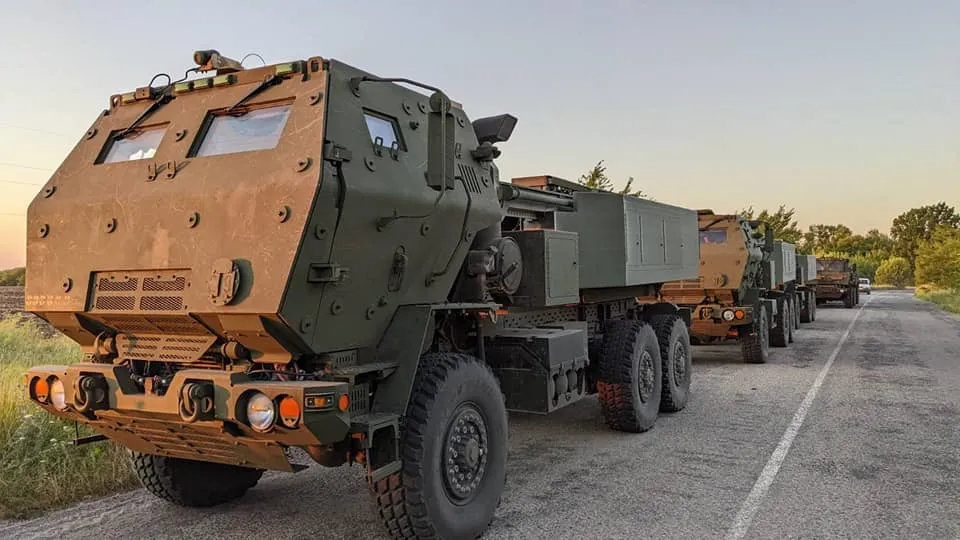
Western weapons sent to Ukraine since Russia's full-scale invasion in February 2022 have a mixed record, and the record is more useful than either side of the argument about it. American GPS-guided artillery shells went from hitting more than half the time to fewer than one in ten. Guided rockets and guided bombs missed under Russian jamming until their software was changed. A new American glide bomb missed so often it was taken out of use and reworked. American small drones were lost to electronic warfare, and American tanks were pulled back from the front because drones made them easy to find. Each of these was reported by major outlets from US, British and Ukrainian sources.
My argument is that none of this shows that Western weapons are bad. It shows that a weapon works only after it has met the war it is used in. Every one of these systems was built and tested against assumptions: that the satellite signal would be there, that the sky above a tank would be empty, that a drone's link would hold. Russia's electronic warfare and Ukraine's drone-saturated front broke those assumptions. The systems that recovered were the ones that could be changed fast, by their makers or by the soldiers using them, after combat showed what went wrong. That, not the brand or the price, is the difference that matters to anyone building for this market.
What actually went wrong, system by system?
| System | What happened | The assumption that broke | What followed |
|---|---|---|---|
| Excalibur guided shell | over 50% hits early in 2023, under 10% months later, by Ukrainian assessments (Washington Post) | GPS will be available | Ukraine largely stopped using it; US deliveries stopped |
| GMLRS rockets from HIMARS | growing misses under GPS jamming (CNN, 2023) | GPS will be available | repeated software updates; stayed in use; output expanded |
| JDAM-ER glide-bomb kit | misses under jamming, and fuzes that did not arm (Politico, 2023) | GPS will be available; integration on Soviet-era fighters | fuze fixed by Ukraine's air force; US moved to hardened receivers |
| GLSDB ground-launched glide bomb | many misses in early 2024 (Reuters) | parts proven elsewhere make a proven weapon | out of use for months; 19 reworked rounds test-fired by March 2025 |
| US small drones, Skydio among them | lost and off course under jamming (Wall Street Journal, 2024) | the link and navigation will hold | Ukraine came to rely more on drones it builds itself |
| Abrams tanks | 5 of 31 lost by April 2024; pulled back from the front over drones (AP) | the threat comes from the front, not from above | reactive armor fitted; kept in use; Australia sent 49 more |
A European case belongs on the list too. Bloomberg reported in January 2026 that Ukraine held off new orders of Helsing's HX-2 strike drone after problems in front-line trials; Helsing disputed key conclusions. It is a contested case, but it shows the pattern is not only American.
Why did systems designed for war fail in this one?
Because they were designed for a war that did not happen. Most of them came from a doctrine in which the US and its allies own the sky, the satellite signal and the electromagnetic spectrum. In Ukraine, Russia contests all three, with jammers in a density no Western exercise reproduced and drones over every road. When exercises finally put Ukrainian drone crews on the opposing side, in Estonia, Germany and Sweden in 2025 and 2026, the Western units lost most of their vehicles in hours, as I describe in what China learns from the drone war in Ukraine. "Jam-resistant" in a specification meant resistant to the jamming its designers expected. Excalibur met its accuracy requirement with and without GPS jamming in US testing, the Pentagon's test office reported in 2014; in Ukraine it fell below one hit in ten.
There is a second, quieter cause. A product that flies, drives or fires has not yet shown that it works. It has shown that it is ready to be tested. It works when it has passed a range and then real combat, in the hands of real soldiers, and come back better for their feedback. Several of these systems arrived with the first two steps done and the third assumed.
Which ones recovered, and why?
The ones that could be changed fast. GMLRS stayed useful because its problem could be answered in software, update after update, while the factory behind it grew to a capacity of 14,000 rockets a year. The JDAM-ER fuze problem was fixed by Ukrainian air force crews working with the kit. GLSDB, which needed physical rework, was out of use for months. Excalibur, a costly round whose fix needed a different guidance approach, was dropped.
Compare that with how Ukrainian makers work. In Ukraine, attack and defense run on parallel tracks, as I describe for the Shahed race: Russia fields something new, Ukraine finds the counter, Russia answers again. A Ukrainian drone maker hears from a unit, changes the product and ships the new version in weeks, and often makes two versions of the same product because two units on the same front need different things. That loop is the reason Ukraine fights with drones it builds itself, a market I describe in Ukraine's interceptor drones.
What will the market need next?
If a weapon works only after it has met Russian jamming and drones, the evidence of that meeting becomes something buyers pay for, and testing in Ukraine, which I describe in how to get a drone tested in Ukraine, moves from optional to required as buyers write performance under jamming into their contracts.
The fix cycle is the second market. GLSDB was out of use for months while it was reworked; GMLRS stayed in the war because its fixes shipped as software. Field engineering teams and repair and modification centres close to Ukraine, able to change a Western system in weeks after soldiers report a failure, sell the speed Western supply chains lack.
The third is partnership. A Western maker that builds with a Ukrainian team inherits its combat feedback, which is the asset its own test ranges cannot produce.
Signals worth watching: Western contracts that specify performance under electronic warfare, modification centres opened near Ukraine by Western makers, and Western-Ukrainian ventures built around testing and updates.
What should a builder or buyer take from it?
Four things, and none of them is "buy Ukrainian, not American".
- Test against the enemy's countermeasures, not your own. Navigation and links are the first things attacked. A claim tested only where GPS works is a hypothesis. The route to testing under real electronic warfare is in how to get a drone tested in Ukraine.
- Design the fix into the product. The part most likely to be defeated, navigation, links, targeting software, should be changeable without a new production line. That is what kept GMLRS in the war.
- Price against real performance. A buyer divides the unit price by hits under jamming, not by the brochure figure. A $100,000 shell that hits one time in ten is a million-dollar hit; the arithmetic is in cost-exchange ratio.
- Count on mass, not perfection. With limited resources, many cheaper systems that each do less break through a defense by numbers. Expensive precision is still needed, but it is no longer the whole answer, the argument behind the Pentagon's cheap missiles in FAMM and LCCM.
For an investor, the question that follows is the one I put first in how I would evaluate a defense tech startup: which claims come with evidence, from which version, tested where and against what. And behind it the harder one: how do you show that a product will survive the countermeasures of the next war, not the test conditions of the last one?
Where does this lead?
I expect Western buyers to rewrite how they accept weapons. Performance under heavy jamming will become a contract requirement, not a test footnote. Update speed, how fast a fielded product can be changed, will be scored. And more Western money will flow to companies that test in Ukraine and to joint ventures with Ukrainian makers, the route I describe in German-Ukrainian defense joint ventures.
Signals worth watching: Western procurement documents that specify performance under electronic warfare, public hit rates for reworked weapons, and the number of Western companies testing with Ukrainian units.
Sources (10)
- The Washington Post, Russian jamming of high-tech weapons in Ukraine, 24 May 2024
- CNN, Russia's jamming of US-provided rocket systems complicates Ukraine's war effort, 5 May 2023
- Politico, Russia jamming US smart bombs in Ukraine, leaked docs say, 12 April 2023
- Reuters, Ukraine's long-range glide bomb blunted by Russian jamming, 23 May 2024
- Reuters, US long-range bombs headed to Ukraine as ATACMS supply dwindles, 13 March 2025
- The Wall Street Journal, How American drones failed to turn the tide in Ukraine, 10 April 2024
- AP, Ukraine pulls US-provided Abrams tanks from the front lines over Russian drone threats, 26 April 2024
- European Pravda, Ukraine pauses further orders of Helsing drones after test problems, 19 January 2026
- Lockheed Martin, GMLRS media kit (production capacity)
- DOT&E, FY2014 Annual Report, Excalibur Increment 1b