
Cost-exchange ratio: the number Western air defense has to start designing to
Ukraine has spent two years learning that a perfect interception can still be a loss. The number that explains why is simple, and most Western procurement still does not plan around it.
Cost-exchange ratio is what a defender spends to defeat one incoming threat, divided by what that threat cost the attacker. Above one, the defender is paying more per kill than the attacker paid per shot. Far above one, the defender can win every engagement and still lose the war of budgets. For Western air defense it has become the number that decides whether a layer can be used every night, and procurement still plans around it least.
What a cost-exchange ratio is, and what it is not
It is a price comparison per engagement: the cost of everything spent to stop one threat, against the cost of the threat.
It is not the whole story, and I would not pretend it is. A cheap missile aimed at a power station or a port can do damage worth far more than any interceptor, and spending a lot to stop it can be the right call. Cost alone does not decide whether a target deserves protection. What the ratio shows is what happens when a defender makes that call every night, against an attacker who designed the threat to force it. An 85-to-1 shot to protect a power station is defensible once. Made every night, it empties the magazine before it empties the attacker’s budget.
How bad is the ratio with Western interceptors today?
Defense News, citing the Center for Strategic and International Studies, put a Shahed-type drone, the Iranian-designed one-way attack drone Russia launches at Ukraine by the hundred, at as little as $35,000 to manufacture and a Patriot interceptor at over $3 million: about 85 to 1 every time one is used against the other. Even the cheaper US counter-drone interceptors are priced in a different world from the threat. The Army bought 600 Coyote 2C interceptors for $75 million in 2024, about $125,000 each by simple division.
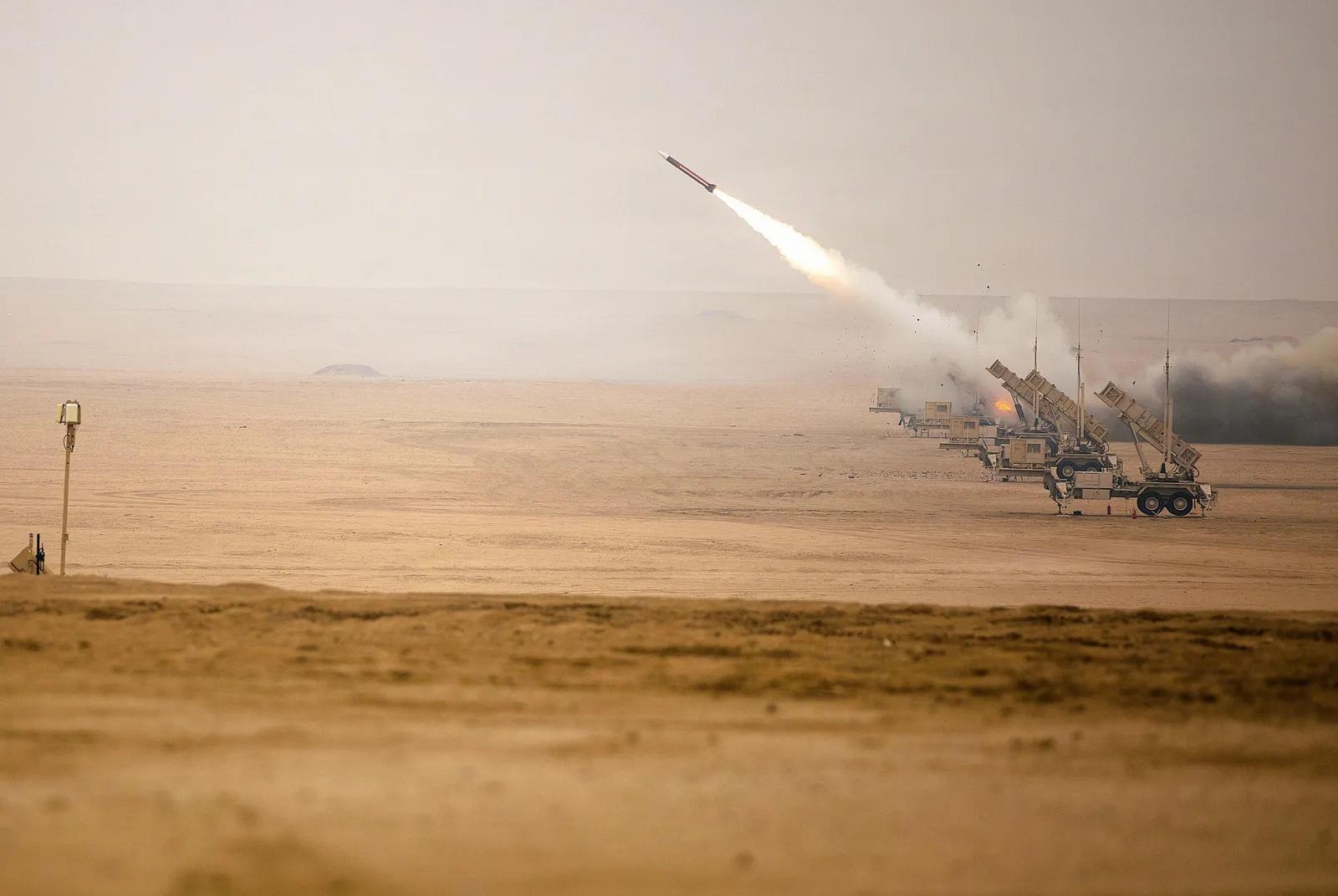
Russia’s Banderol makes it worse. It is a small jet-powered cruise missile, officially the S8000, built largely from commercial parts and launched at Ukraine at about 80 a month; what it is and why it matters is in the overview. A missile costs an estimated $50,000 to $300,000, and Ukraine’s Air Force says jet-powered threats need ground air defense and fighters with air-to-air missiles, the expensive layers. Against a $3 million interceptor that is a ratio of 10 to 1 at best and 60 to 1 at worst. Machine-gun teams that work up to about 250 km/h and interceptor drones that top out around 370 km/h cannot touch a target flying at 520 to 560. Brave1, Ukraine’s defense-tech cluster, says a newer system intercepts the Banderol for less than the missile costs. That fact is the one to build around. The same $3 million interceptor is a fair trade against a $2 million Kalibr carrying 450 kg of explosive; against a Banderol it is not. I go through how the Banderol exploits the gap between layers in why a cheap cruise missile is hard to stop.
Ballistic missiles turn the ratio into a weapon of its own. Against an Iskander-M only a hit-to-kill interceptor works, so Russia now sends cheaper missiles ahead of it to draw that interceptor out. One November 2026 salvo at a Kyiv bridge costs the defender four to six times what it costs Russia, before the decoys; the arithmetic is in what it costs to stop a bridge-strike salvo.
What does cheap defense look like?
Ukraine has already built it against slow drones, and the numbers are public.
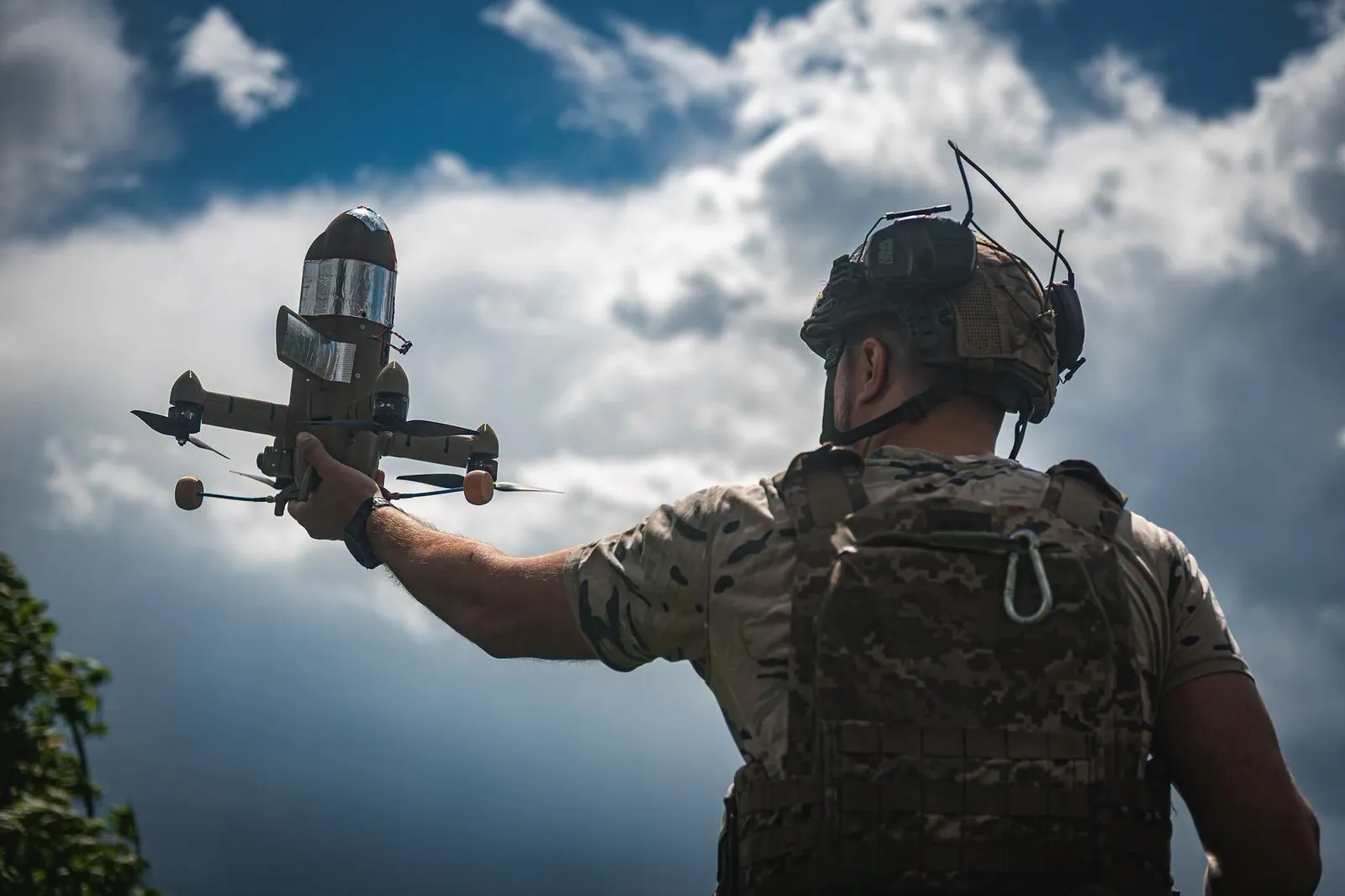
- Interceptor drones at $3,000 to $5,000 each, with 100,000 made in 2025 and a success rate over 60%. Ukraine’s security council puts the cost of downing a Shahed this way at over 25 times below a Western air-defense missile.
- Acoustic sensors at $400 to $1,000 each, about 14,000 of them, picking up cruise missiles as well as drones and cueing mobile fire teams.
- Old missiles in new hands. A MiG-29 brought down a Banderol with an R-60, a short-range missile first fielded in 1973 and rebuilt in Ukraine with digital electronics and a far more sensitive seeker.
- Lasers, next. The UK puts a DragonFire shot at about £10, and in October 2026 the Pentagon put three lasers and a microwave weapon into a homeland counter-drone pilot to learn what they cost to run every day, not only per shot.
- Shoulder-fired missiles. Stinger, Mistral and Poland’s Piorun give the best price per result against the Banderol today. Their limit is numbers: they have to cover every likely entry route, and there are not enough of them.
None of these is exquisite. All of them are cheap enough to use in volume, and built at a rate that matches the threat.
The signal for Western procurement
Most Western air defense was optimized for the hardest targets, not the cheapest ones arriving in numbers, and is priced per unit accordingly. The attacker has started designing to the defender’s price instead. Three things follow.
- Design every layer against the cheapest threat that can reach it. A layer that can only be used against expensive targets will be used against cheap ones anyway, and the budget will show it. The US learned this in its wars with Iran, where the bill came as an interceptor shortage that will take years to refill; I go through it in how Iran made the US pay for its air defense.
- Buy interceptors the way an attacker buys missiles. In thousands, on fixed prices, from more than one supplier, with a monthly output written into the contract. The US is already buying low-cost cruise missiles this way: 1,000 in the 2027 budget request and nearly 28,000 over five years, with Anduril's Barracuda the first under contract, aimed at putting the expensive interceptor on the other side. The defensive side deserves the same treatment, which I argue in cheap interceptors versus cheap cruise missiles.
- Count cost per kill alongside kill rate. A 95% system at $3 million a shot and a 60% system at $5,000 a shot are not ranked by the first number alone.
What founders should build
The market gap is the middle layer: interceptors fast enough for jet-powered targets and cheap enough to fire at them without regret, and the sensors that tell them where to go. Ukraine shows the demand and the price ceiling. The hard part is not the prototype. It is producing a few thousand a month at a cost a ministry can plan around, which is the problem I write about in why one to a thousand is the hard part. And the production side of the threat, which sets how many you need, is in the risks at 80, 150 and 400 a month.
The next generation of air defense will not be judged only by what it can intercept. It will be judged by what it can afford to intercept every month.
What will the market need next?
The buyers of the cheap layer are already visible: Ukraine, the Gulf states after the 2026 Iran war, US bases abroad, and European operators of ports and power plants. What they lack is a way to buy by cost per intercept. Much procurement still prices a system by the unit, not by what one engagement costs with the crew, the sensors and the misses included.
That gap opens two businesses. One is analysis that prices a buyer's air defense by engagement and shows where each layer is spent on the wrong target. The other is a contract model: defense of a site sold by the year with a coverage guarantee, so the buyer pays for protection and the supplier carries the cost of every intercept. A supplier with cheap interceptors earns most under that model, which is why I expect the cheap-layer makers to push for it.
Signals worth watching: tenders that score bids on cost per kill, service contracts for site air defense, and interceptor-drone exports to buyers outside Ukraine.
Where I could be wrong
Unit costs for weapons are hard to compare: some figures are manufacturing cost, some are contract cost with support included, and some are estimates. I use them for order of magnitude, not precision. The conclusion survives a factor of two either way.
The Banderol series
- What the Banderol is, read from Ukraine’s teardown
- The specifications, number by number
- How it is used, and why it gets through
- The risks at 80, 150 and 400 a month, and the counters
- Cost-exchange ratio, the number air defense has to design to (this article)
- Why the US needs cheap interceptors more than its own Banderol
Sources (9)
- Defense News, interceptor drones and air-defense economics, 5 March 2026
- National Security and Defense Council of Ukraine, interceptor drones in 2025
- US Army, Coyote interceptor contract, 2024
- UNITED24 Media, Sky Fortress acoustic detection, 1 July 2025
- Ukrainska Pravda, Air Force on jet-powered drones, 31 August 2026
- Militarnyi, on new air defense against the Banderol
- Air & Space Forces Magazine, Air Force five-year plan for cheap cruise missiles, 29 April 2026
- UK Ministry of Defence, new laser weapon takes down high-speed drones (DragonFire), November 2025
- Defense News, US Army to receive thousands of Barracuda-500M cruise missiles in Anduril deal, 15 May 2026
Where this comes up on the site
- The Banderol is not a better missile. It is dangerous because it falls between two kinds of air defense.
- The Geran-5 and the end of the cheap-drone era: Russia's jet Shahed, and why only 57% are shot down
- Ukraine’s interceptor drones turned air defense into a manufacturing problem. The next limits are speed and people.