
HIMARS in Ukraine: the Western weapon that kept working because its makers kept changing it
HIMARS is the American truck-mounted launcher that reached Ukraine in June 2022, and GMLRS is the guided rocket it fires. It hit Russian depots and bridges in occupied Ukraine, then met Russian GPS jamming. Here is what it is, what it costs, what jamming did, and why it stayed useful.
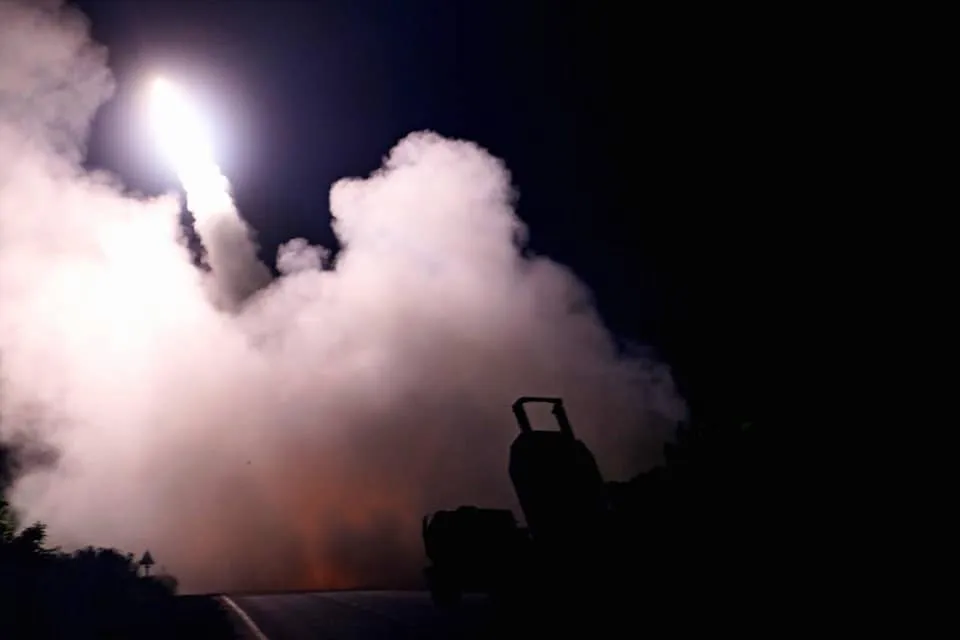
HIMARS, the High Mobility Artillery Rocket System, is an American rocket launcher on a five-ton truck, made by Lockheed Martin. It carries one pod of six GMLRS guided rockets, which Lockheed calls the "70-kilometer sniper rifle", or one larger missile. Sent to Ukraine in June 2022, four months after Russia's full-scale invasion, HIMARS is the Western weapon most people can name, because in its first months it struck Russian ammunition depots, command posts and bridges deep in occupied Ukraine that Soviet-era artillery could not reach.
My argument is that HIMARS stayed useful in Ukraine not because it was immune to Russian countermeasures, it was not, but because the people behind it kept changing it. When Russian jamming started pushing GMLRS rockets off target in 2023, the answer came as repeated software updates to the rockets and the targeting system, and the factory behind them was then expanded to a capacity of 14,000 rockets a year. That combination, a fix you can ship fast and a line that can scale, is what separates a weapon that adapts from one that is withdrawn. It is the pattern I set out across the war in why Western weapons stumbled in Ukraine.
What HIMARS and GMLRS are
| Launcher | M142 HIMARS, wheeled, Lockheed Martin; one six-round GMLRS pod or one ATACMS missile |
|---|---|
| Rocket | GMLRS, GPS-aided inertial guidance; unitary 200-pound warhead or an area-effect warhead |
| Range | about 70 km; the extended-range GMLRS is designed for 150 km and has entered production |
| Cost, US Army budget | about $191,000 per rocket and about $7.9 million per launcher, as package averages in the FY2025 request (6,408 rockets for $1.224 billion; 10 launchers for $79.4 million) |
| Production | capacity of 14,000 GMLRS a year, by Lockheed's account; a $3 billion production contract for FY2026 |
GMLRS rockets are also fired from the tracked M270 launchers that Britain, Germany and France sent, so not every GMLRS strike is a HIMARS strike.
What did HIMARS change in 2022?
Reach. Ukraine's defence minister confirmed the first launchers on 23 June 2022, and the commander-in-chief confirmed combat use two days later. From then on, the depots and command posts Russia had placed within easy reach of the front were in range of a precise rocket, and Russia had to move them back, which lengthened every supply run. In July 2022 the Russian-installed administration in occupied Kherson acknowledged that the Antonivskyi Bridge was closed after HIMARS strikes, as Reuters reported. The US Department of Defense counted more than 40 HIMARS committed to Ukraine by January 2025.
What did Russian jamming do to it?
It made the rockets miss. CNN reported in May 2023, from five US, British and Ukrainian sources, that Russian jamming of GPS signals was increasingly reducing GMLRS accuracy, and that US and Ukrainian specialists were answering with repeated updates to the rocket and targeting software. The inertial navigation inside the rocket still works without GPS, with less precision. The launcher was never the problem; the guidance of the munition was.
That is the part worth noticing. Precision that depends on a satellite signal is precision that an adversary with enough jammers can take away, and Russia used jammers at a scale no Western exercise had simulated. The same lesson runs through every guided weapon used in Ukraine, Russian ones included: Russia's answer to Ukrainian jamming is the Kometa antenna on its drones and missiles.
Where does this lead?
I expect three things.
- Navigation stops trusting GPS. Every precision rocket bought from now on will be judged on how it performs when the satellite signal is gone or false: anti-jam antennas, better inertial units, and seekers that find the target themselves.
- The rocket becomes the product. A launcher lasts decades; rockets are consumed. Lockheed's move from about 10,000 planned deliveries in 2024 to a capacity of 14,000 shows where the money is, and the extended-range rocket at 150 km is the next step. The same logic drives the Pentagon's cheap missiles in FAMM and LCCM.
- Update speed becomes a requirement. A weapon that can be fixed by software in weeks is worth more than one that has to go back to the factory. Buyers will start writing that into contracts.
Signals worth watching: GMLRS deliveries against capacity, the first extended-range rockets in Ukrainian hands, and any public figure on GMLRS accuracy under jamming.
What will the market need next?
The money in this system is in the rocket, and the rocket's limits are in its parts. GMLRS output rose toward 14,000 a year, which needs rocket motors, guidance units and warheads in the same numbers, and Lockheed brought in a second motor maker in 2024 to get them. Suppliers of motors and guidance electronics who can add capacity sell into a line that runs for years.
Navigation that does not depend on GPS is the second market. Every guided rocket bought from now on will be judged on how it flies when Russian-style jamming takes the satellite signal away, so anti-jam antennas, better inertial units and seekers that find the target themselves are the upgrades buyers will fund.
Signals worth watching: GMLRS deliveries against capacity, contracts for anti-jam upgrades to guided rockets, and new rocket-motor plants in the US and Europe.
What HIMARS means for a defense founder
- Design for the jammer you have not met. A guided product tested only where GPS works has not been tested. The route to testing under real electronic warfare is in how to get a drone tested in Ukraine.
- Make the fix shippable. GMLRS stayed in use because its problem could be answered in software. Architect a product so the part most likely to be defeated, navigation and links, can be changed without a new production line.
- The consumable is where volume lives. A launcher sells by the dozen, its rockets by the thousand. Scaling from one to thousands is the hard part, as I describe in why one to a thousand is the hard part, and the cost of what you fire against what you hit is in cost-exchange ratio.
Sources (8)
- Lockheed Martin, GMLRS media kit (range, extended-range GMLRS, 14,000 capacity)
- Lockheed Martin, awarded $3 billion to produce GMLRS rockets, 2026
- US Army, FY2025 missile procurement budget estimates
- US Department of Defense, Ukraine assistance fact sheet, 9 January 2025
- Reuters, US long-range rocket systems arrive in Ukraine, 23 June 2022
- Reuters, bridge closed in Russian-held Kherson after HIMARS shelling, 27 July 2022
- CNN, Russia's jamming of US-provided rocket systems complicates Ukraine's war effort, 5 May 2023
- Reuters, Lockheed Martin and General Dynamics pact to build rocket motors (GMLRS deliveries), 13 August 2024
Where this comes up on the site
- The M270 in Ukraine: a 1980s launcher that matters because of what it fires, and what that says about platforms
- Western weapons in Ukraine did not fail because they were bad. They failed where they had never been tested against Russian jamming and drones.
- ATACMS in Ukraine: a missile limited less by its engineering than by permission and stock