
The Excalibur shell in Ukraine: a precision weapon that lost to a jammer, and what that says about buying precision
Excalibur is the American GPS-guided 155 mm artillery shell, sent to Ukraine from 2022. More than half hit early in 2023; months later, under Russian jamming, fewer than one in ten did, and Ukraine stopped using it. Here is what it is, what happened and what it teaches.
The Excalibur shell, designated M982, is an American precision-guided 155 mm artillery round developed by RTX (Raytheon) and BAE Systems Bofors. It glides on canards after firing and steers by an inertial unit corrected by GPS, and its maker says it lands less than two meters from its aim point. The Pentagon confirmed in October 2022 that 500 of them were going to Ukraine to help it fight Russia's invasion, and there had been earlier deliveries. Within about a year, under Russian jamming, Ukrainian gunners had largely stopped firing it.
My argument is that Excalibur shows the hidden assumption in Western precision: that the satellite signal will be there. A round that costs around $100,000 is worth it only if it hits; when jamming took the hits away, it became one of the most expensive ways to miss in the war. The lesson for anyone buying or building precision is that the price of a guided weapon has to be judged against how it performs when its guidance is attacked, not on the range.
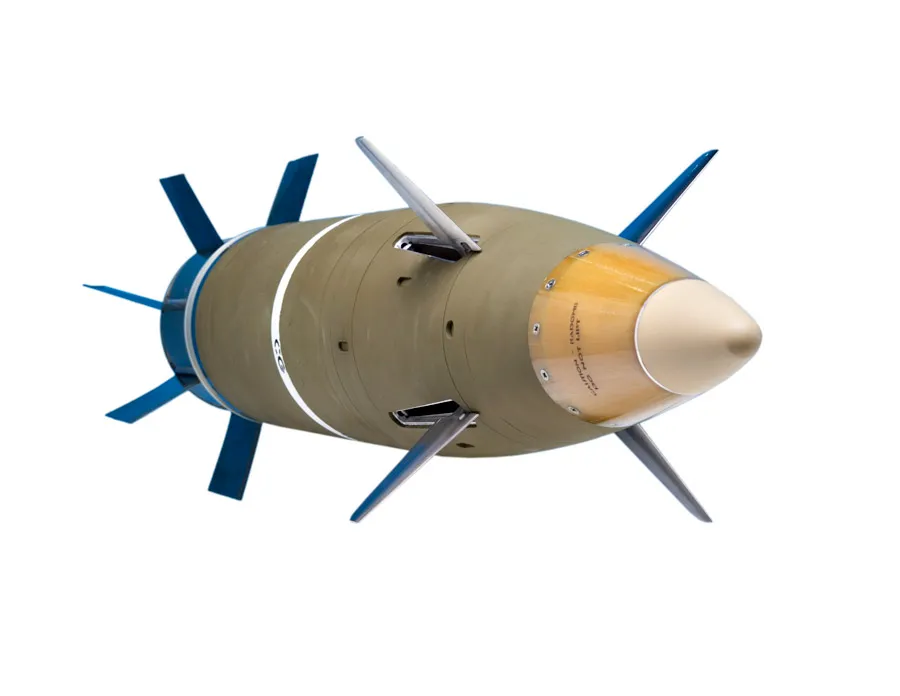
The Excalibur in numbers
| Makers | RTX (Raytheon) and BAE Systems Bofors |
|---|---|
| Calibre | 155 mm, fired from standard howitzers |
| Range | 40 km from 39-calibre guns, 50 km from 52-calibre, 70 km from 58-calibre, by RTX's figures |
| Accuracy | radial miss distance under 2 m, by RTX's claim |
| Guidance | inertial unit corrected by GPS, flying to programmed coordinates; no seeker except on the laser-guided Excalibur S |
| Price | around $100,000 a round, as the Washington Post reported |
| In Ukraine | 500 confirmed in the October 2022 US package, after earlier deliveries |
What happened to it in Ukraine?
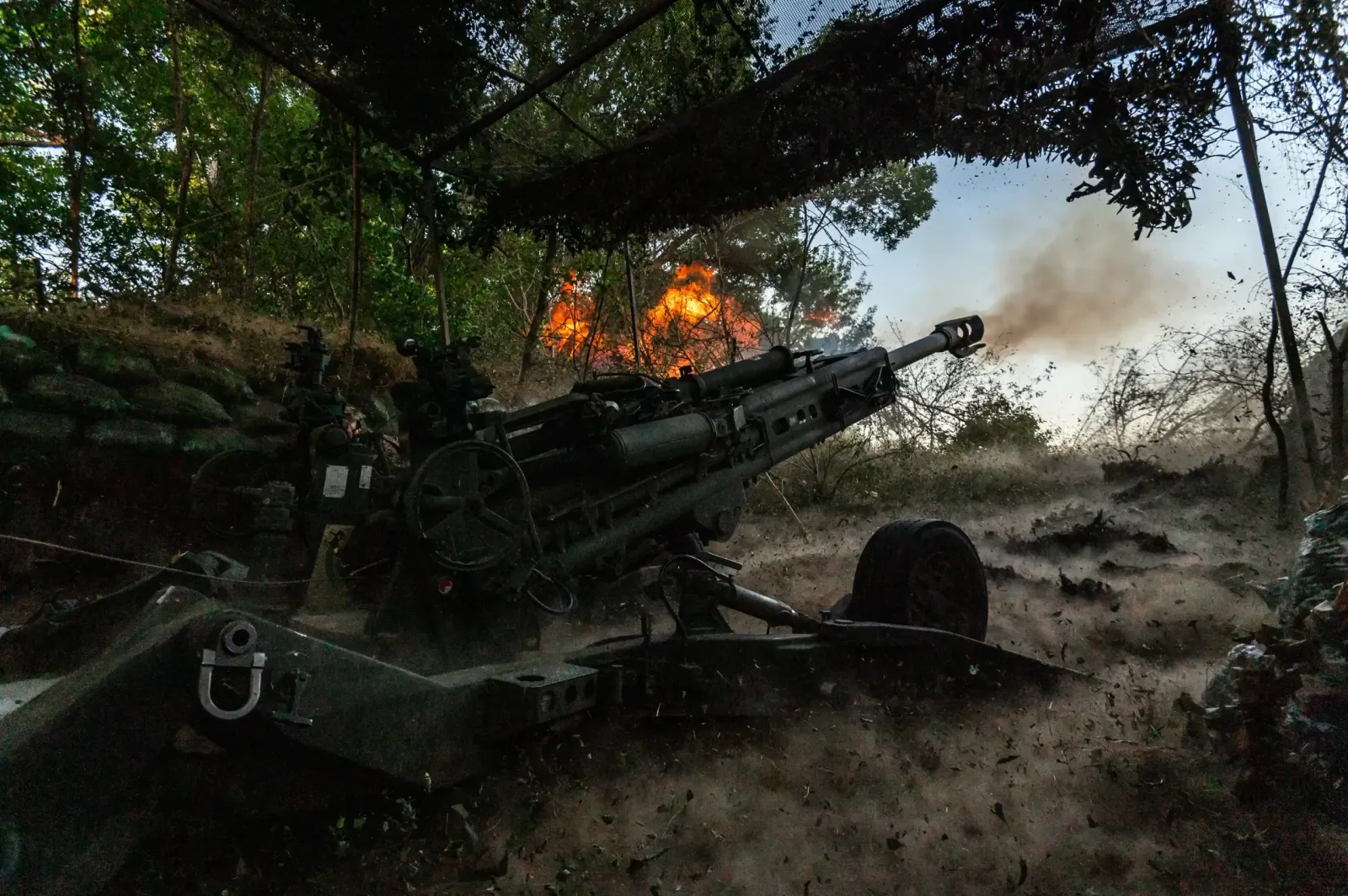
It worked, and then it stopped. Ukrainian assessments reported by the Washington Post in May 2024, based on direct observation, found that more than 50% of Excalibur rounds hit their targets early in 2023. Over the following months the rate fell sharply, to less than 10%, as Russia's electronic warfare jammed the GPS signal the shell depends on. The assessments concluded that the technology "in existing versions has lost its potential". Ukrainian gunners had largely stopped using it even before the US stopped sending it, partly because the shells also need time-consuming special calculations and programming that a plain round does not.
The assessments carried their own caveat: fewer rounds were fired late in the period and many outcomes were not observed, so the late figure is uncertain. The direction is not.
Why did jamming leave it not knowing where to fly?
Because Excalibur does not see its target. It is given a set of coordinates before firing and flies to them, and the only way it knows where it is in flight is a combination of two instruments. An inertial unit inside the shell measures every acceleration and turn and works out its position from them; it needs nothing from outside, but its small errors add up with every second of flight. A GPS receiver corrects those errors from satellite signals. The precision Excalibur is sold on, a miss of a couple of meters, comes from that correction.
Take the GPS away and the chain breaks in three steps.
- The signal is easy to drown. A GPS signal travels about 20,200 km from the satellite and arrives at around 10⁻¹⁶ watts, a figure from a GPS.gov technical briefing. RUSI notes that open sources credit one Russian tactical jammer with 10 kW of output. A transmitter on the ground near the front is louder than the satellites by many orders of magnitude, and a receiver cannot pick a whisper out of a shout, whatever its anti-jam design.
- Without the correction, the shell is guessing. The inertial unit keeps steering, but toward a position that drifts further from the truth the longer it flies, and a shell gliding 40 km or more flies long enough for the drift to matter. The Excalibur's own figure without GPS is not public. For JDAM guided bombs, RUSI cites about 5 m with GPS and about 30 m without it. A shell that misses by tens of meters is not a precision weapon.
- It has no second way to find the target. A missile with a seeker can recognise the target at the end of its flight. The standard Excalibur has only the coordinates, so when its idea of its own position is wrong, it has nothing to correct against.
The designers did plan for jamming, and in testing it worked. The Pentagon's test office reported in its FY2014 review that Excalibur Increment 1b "achieved required accuracy irrespective of the presence or absence of GPS jamming", with a median miss of 2.0 meters. The jamming in that test was the jamming its designers expected. Russia put jammers along the front in a power and density no exercise had reproduced, around exactly the kind of targets Excalibur was fired at. The same thing happened to American guided rockets, guided bombs and small drones in Ukraine; the pattern is in why Western weapons stumbled in Ukraine. Russia's own drones and missiles face the mirror problem under Ukrainian jamming, which is why they carry the Kometa antenna.
What does Excalibur reveal that is easy to miss?
Jamming explains why it missed. The more useful lessons sit underneath, and they apply to far more than one shell.
- One countermeasure switches off the whole stock. Every Excalibur depends on the same satellite signal. A jammer over a sector defeats every round fired into it, today's and the ones still in the warehouse, at once. Ukraine's drones are steered in different ways: by an operator watching video, by fibre-optic cable, by onboard vision. No single switch turns them all off. A weapon is only as robust as the variety of its guidance.
- The round is frozen at the factory; the war is not. A shell's electronics are sealed when it is made and then stored for years. The Increment 1b design was tested in 2014, eight years before it met Russian jammers. A drone gets new software in days. In a war where the enemy changes its jamming every few months, a product that cannot be updated after it leaves the factory starts ageing on the day it is built.
- It needs a target that waits. Excalibur flies to coordinates fixed before firing, and those coordinates take time to get and to program, which the Ukrainian assessments counted against it. Many targets at the front in Ukraine are small, mobile and visible for minutes: a crew, a vehicle, a launcher. By the time the round arrives, the target may have moved. A drone finds the target itself and follows it.
- The target is often cheaper than the round. Precision at about $100,000 a round makes sense against a howitzer or a command post. Much of what is hit there costs less than that. At one hit in ten, each hit costs about a million dollars; the arithmetic is the one I use for interceptors in cost-exchange ratio.
- It cannot be made in war volumes. Its guidance has to survive being fired from a gun, a shock of thousands of times the force of gravity, and that is a small, specialised supply chain. Artillery in Ukraine is fired by the thousands of rounds a day. A precision round that can be made by the thousand a year cannot be the main weapon of a war that consumes plain shells at that rate.
Put together, these point to the least obvious lesson: precision moved out of the round and into the system around it. A drone overhead that spots where a plain shell landed and corrects the next one makes cheap shells accurate enough, and a drone that strikes the target itself does the rest. The link between the two is software on the gun crew's tablet, such as Ukraine's Kropyva, which turns the drone's coordinates into firing data. Ukraine did not replace Excalibur with a better guided shell. It replaced it with cheap shells and drones that see.
Where does guided artillery go next?
I expect three things.
- Seekers over satellites. The US Army said in May 2025 that it is upgrading Excalibur rounds already in production "to improve their ability in GPS-contested environments", but the lasting answer is a seeker. Excalibur S, with a laser seeker that homes on a spot marked by a soldier or drone, already exists; Raytheon tested it against moving targets in 2020. Guidance that sees the target will replace guidance that only knows coordinates.
- Drones take the precision job. A drone at a few hundred dollars that films, finds and strikes competes directly with a $100,000 shell, and in Ukraine it already takes many of those targets. Guided shells will be kept for what drones cannot do: bad weather, dense air defense, long range.
- Buyers test under jamming first. No Western army will again buy a guided round without asking for its hit rate under heavy electronic warfare, and the makers that can show it will win the orders.
Signals worth watching: any guided-shell contract that specifies performance under jamming, deliveries of laser-guided rounds to Ukraine, and the price per round of the next generation.
What will the market need next?
The market moved from the guided shell to the system around plain shells. A drone overhead that spots where a shell landed, and software that corrects the next shot, make cheap shells accurate enough for many targets, so fire-correction kits, drones and software sold to artillery units are where the precision money now goes. Every army that watched Ukraine is rebuilding its artillery around that idea.
Guided shells keep a smaller market at the top: rounds with laser or imaging seekers that find the target without GPS, for bad weather, dense air defense and long range. Buyers will ask for their hit rate under jamming before they ask for the price.
And plain shells themselves remain a production market. A war that fires artillery by the thousands of rounds a day needs shells, fuzes and propellant at volumes that plants built for peacetime cannot meet.
Signals worth watching: army contracts for fire-correction drones and software, guided-shell contracts that specify performance under jamming, and new shell and propellant plants in the US and Europe.
What Excalibur means for a defense founder
- Test against the enemy's jammer, not yours. A navigation claim proved in a quiet range is a hypothesis. The route to testing under real electronic warfare is in how to get a drone tested in Ukraine.
- Price against the hit rate you will get, not the one you advertise. A buyer will divide your unit price by hits under jamming. Make that number good before you quote.
- Make it easy to use. Part of Excalibur's decline was the extra work it needed from gunners. A product a tired crew can use at night beats one that is better on paper. The questions an investor should ask about combat claims are in how I would evaluate a defense tech startup.
Sources (9)
- RTX, Excalibur projectile (range, accuracy)
- Defense News, Pentagon sending Excalibur guided artillery and more HIMARS to Ukraine, 4 October 2022
- The Washington Post, Russian jamming of high-tech weapons in Ukraine, 24 May 2024
- Stars and Stripes, syndicated text of the Washington Post report, 24 May 2024
- DOT&E, FY2014 Annual Report, Excalibur Increment 1b
- RUSI, Jamming JDAM: the threat to US munitions from Russian electronic warfare, 6 June 2023
- GPS.gov, Pace and Camacho, GPS spectrum protection briefing, October 2015
- US Army, partnerships bring assured PNT capabilities to soldiers, 14 May 2025
- Raytheon, laser-guided Excalibur S aces US Navy test, 5 February 2020
Where this comes up on the site
- Western weapons in Ukraine did not fail because they were bad. They failed where they had never been tested against Russian jamming and drones.
- Kometa, the Russian antenna that keeps cheap drones and missiles on course under jamming
- A Flamingo costs $600,000 and carries a ton of explosive, and at the Crimean Bridge a person steered it