
FREYJA puts a Ukrainian company at the center of Europe's missile defense. Whether it works will decide more than air defense.
In July 2026 ten countries signed up to FREYJA, a plan to defend Europe against ballistic missiles with European radars and a cheap Ukrainian interceptor, Fire Point's FP-7.x. Here is who is in it, what exists today, where the money may come from and where a supplier fits.
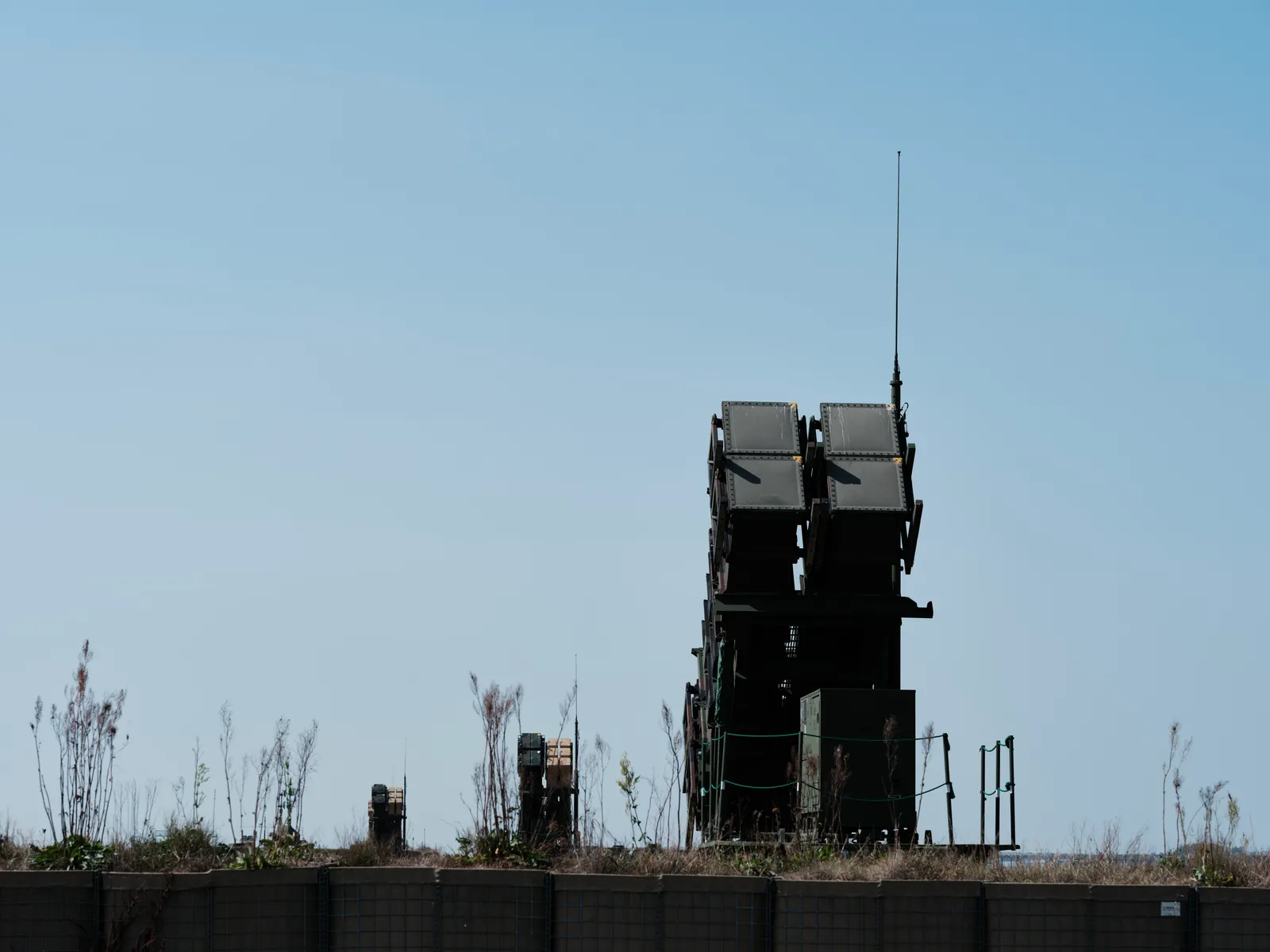
FREYJA is a European anti-ballistic missile programme that puts a Ukrainian company at the center of Europe's missile defense, against the kind of Russian ballistic missiles that have struck Ukrainian cities since 2022. Its premise is simple: Europe does not have enough interceptors against ballistic missiles, the American ones are expensive and scarce, and a Ukrainian company is building one that its backers expect to cost less. On 13 July 2026, in Paris, leaders of ten countries signed a joint declaration establishing an integrated anti-ballistic missile coalition. Zelensky said Ukraine is ready to provide the anti-ballistic missile, and others have the radars and the other critical components.
My argument is that FREYJA matters beyond missile defense. It is the first European strategic programme built around a Ukrainian company as the integrator, not as a subcontractor. If it works, it sets the template for how Ukraine's defense industry joins Europe's; if it fails, it will be read as proof that it cannot.
Who runs it, and since when?
| Founding countries | Denmark, France, Germany, Italy, the Netherlands, Norway, Spain, Sweden, Ukraine, the United Kingdom; open to others |
|---|---|
| Launched | 13 July 2026, first meeting in Paris |
| Prime integrator | Fire Point, Ukraine: overall architecture, the FP-7.x interceptor, control systems and launchers |
| Radars | Hensoldt, Germany, under a memorandum of understanding signed on 16 June 2026 at Eurosatory, covering radars including the TRML-4D, which tracks more than 1,500 targets at up to 250 km |
| Other companies reported as involved | Kongsberg, Weibel, Saab, Diehl Defence, Thales, Safran, Sener and Leonardo, as Militarnyi reported |
| Timeline | participants' target for first results: 2027 |
What is the FP-7.x?
The interceptor is being developed from Fire Point's FP-7 ballistic missile, which the company lists with a range of up to 250 km, a 200 kg payload, a top speed of 1,500 m/s and a flight altitude of up to 60 km. Those are strike-mode figures; the interceptor's engagement range and speed have not been published in a primary source. Militarnyi reports that Ukraine makes almost all of the FP-7's components, with one sourced abroad. Fire Point also makes the FP-1 long-range drone and the FP-5 Flamingo cruise missile, which are strike weapons, not part of FREYJA.
Where does the money come from?
Not yet from a single budget. In September 2026 the EU's defence commissioner, Andrius Kubilius, said the EU was considering funding FREYJA from the €90 billion loan to Ukraine or through other instruments such as the European Defence Industry Programme, as Militarnyi reported. The coalition countries can also buy with their own budgets and with EU loans; how those flow to companies is in SAFE and EDIP. Fire Point itself said in April 2026 that it was seeking investment for a 30% stake, as Reuters reported, and in August 2026 tripled the budget of its rocket-propellant plant in Denmark to €150 million, with production delayed to late 2027.
How could it go?
I see two paths, decided mostly in 2027.
- The interceptor works in testing, and Europe funds it. EU money from the support loan or EDIP, national purchases by the coalition, and production split between Ukraine and European partners. Ukraine becomes a supplier of a strategic European capability, and Fire Point a European prime.
- The tests slip, or the money does not come together. Coalition members fall back on national purchases of American and European systems, and FREYJA becomes a research programme. Ukrainian industry is then pushed back to the role of subcontractor.
What decides between them is less politics than evidence: a published intercept test, a funded production order, and a supply chain that does not depend on the one component Ukraine still imports. Watch for the first live intercept, the first EU funding decision, and whether more countries join the coalition.
What will the market need next?
FREYJA is a supply chain before it is a missile. The programme exists because Europe lacks interceptors against ballistic missiles, and the parts of one, rocket motors and propellant, seekers, launchers, radars and command software, are each short in Europe. Suppliers with capacity in any of them have a buyer once the interceptor is tested, and Fire Point, as the integrator, decides who that is.
Two less obvious markets follow. Propellant is one: Fire Point's own plant in Denmark is delayed to late 2027, which makes propellant and motor capacity elsewhere in Europe valuable. The other is the legal and export work of putting Ukrainian design authority inside a European system, which crosses Ukraine's export rules and each partner's own.
Signals worth watching: the first published intercept test, the first EU funding decision for FREYJA, and supplier contracts announced by Fire Point and Hensoldt.
Who it is for, and what I would do with it
FREYJA is for companies that make the parts of a missile-defense chain: radars, seekers, rocket motors and propellant, launchers, command and control, and the electronics inside each. It is not yet a buyer of finished products, and it will not be until the interceptor is tested.
- Find the integrator. Fire Point designs the architecture and decides what it buys; a European supplier's first conversation is with Fire Point and with the national partners already named.
- Bring capacity, not prototypes. The programme exists because there are not enough interceptors. A supplier that can deliver components at volume, from propellant to electronics, is what it lacks. The same bottleneck limits IRIS-T.
- Plan for export rules on both sides. Ukrainian technology inside a European system crosses Ukraine's export controls and European ones; settle who holds the design authority early, as in any German-Ukrainian joint venture.
The cost argument behind FREYJA, cheap interceptors against expensive threats, is the cost-exchange ratio applied to ballistic missiles.
Sources (7)
- President of Ukraine, first meeting on implementing the FREYJA anti-ballistic missile program took place in Paris, 13 July 2026
- Fire Point, Fire Point and HENSOLDT have signed a cooperation agreement, June 2026
- Fire Point, ballistic missile FP-7
- Militarnyi, EU considers funding Ukraine's Freyja air defense system, 13 September 2026
- Kyiv Independent, Fire Point hikes Denmark plant investment, 19 August 2026
- Reuters, Ukraine missile maker targets game-changer air defence system by 2027, 6 April 2026
- EU Institute for Security Studies, Building together, September 2026
Where this comes up on the site
- A Flamingo costs $600,000 and carries a ton of explosive, and at the Crimean Bridge a person steered it
- Per kilogram of warhead the FP-1 is no cheaper than a Flamingo, and it flies four times slower
- Ukraine spent a month taking apart the Crimean Bridge's defenses, then hit one arch two nights running. How eleven Ukrainian weapons dropped the span