
Russia's bridge-strike salvos are built so that the cheapest missile buys the most expensive response, and one bridge can take 8% of a year's Patriot output
In November 2026 Russia hit Kyiv's bridges with salvos that arrive in waves: old S-400 missiles to drain the Patriots, Zircons to clear a corridor, then upgraded Iskanders that guide themselves to the span. I break the tactic down wave by wave, show which weapons can stop each one, price a single raid against one bridge from the defender's side, and show where the money is for companies: finding launchers, track classification, AI that tells warheads from decoys, and second sources inside the interceptors.
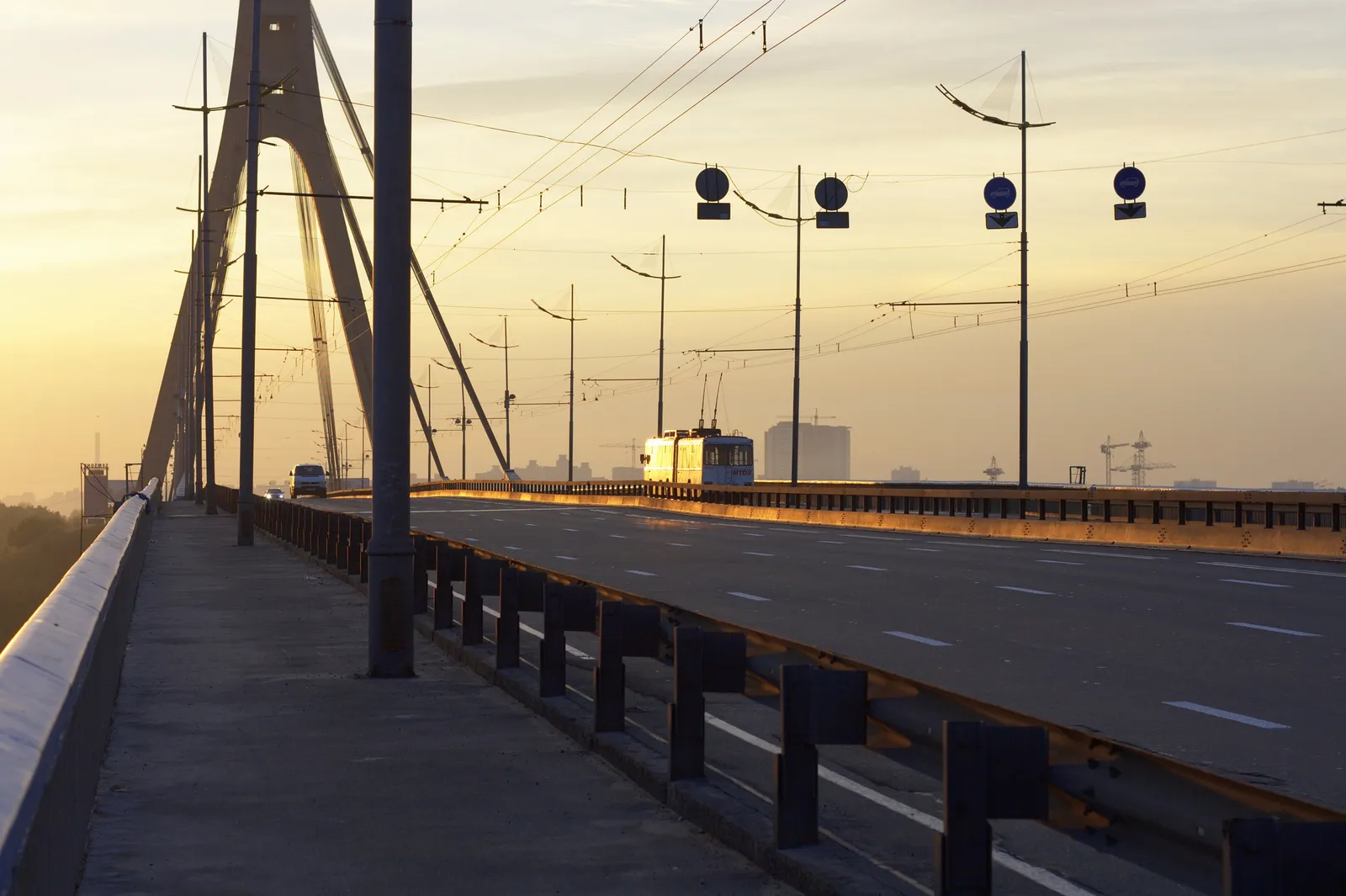
Between 11 p.m. on 6 November and 3 a.m. on 7 November 2026, Russia fired three waves of ballistic missiles at Kyiv. Ukraine's Air Force listed four types: Iskander-M, Zircon, KN-23 and missiles from the S-400 air-defense system turned against ground targets. Four missiles were intercepted. Six were aimed at the Northern Bridge across the Dnipro, and four hit it, cutting traffic both ways, tearing down the trolleybus lines and injuring at least five people, a 14-year-old among them. Since Russia launched its full-scale invasion of Ukraine in February 2022 it had never attacked Kyiv's river crossings. Since 1 October it has attacked them repeatedly: drones on the Southern Bridge first, then ballistic missiles on both.
My argument is that this salvo is a priced sequence, and the price is set against the defender. Each wave exists to make the next one land. The first wave is the cheapest missile in the raid, and its job is to make Ukraine spend its most expensive interceptor. By the time the heavy missiles arrive, the only weapon that can stop them has fewer rounds on the launchers, and the defender has paid four to six times what the attacker paid. On one night, against one bridge, the bill can reach 8% of all the PAC-3 MSE interceptors Lockheed Martin delivered in 2025.
Why bridges, and why now?
Because the missile can now find them. The upgraded Iskander-M carries a radar seeker that switches on in the last seconds and an optical seeker that matches the view from its nose camera against stored images. Neither needs satellite navigation, so the jamming Ukraine runs during every alert does not reach the part of the flight that decides the hit. A reinforced-concrete bridge over smooth water is the strongest radar contrast in a city: the water reflects radio waves away, the span reflects them back. I go through the seekers, the anti-jam antennas and the decoys in the page on the Iskander-M.
A bridge is also a target where the damage outlasts the strike. Kyiv's left-bank districts depend on a handful of crossings for traffic, power lines, trolleybuses and, on the Southern Bridge, the metro. When the Southern Bridge was hit on 27 October, metro trains between Osokorky and Chervonyi Khutir stopped. Ukraine's infrastructure ministry now plans 21 alternative river crossings, the first in Kyiv in early 2027. Russia is attacking the way a city of three million moves, and the people on the bridge when the missile arrives. On the night of 16 to 17 November Ukraine struck a bridge of a different kind, Russia's military supply crossing into occupied Crimea, and dropped its road span after a month-long operation; I go through how it was built in how Ukraine dropped the Crimean Bridge span.
How does the salvo work, wave by wave?
Three waves, each with a different job. The order matters more than the count.
| Wave | Missile | What it is | Its job in the raid |
|---|---|---|---|
| 1 | RM-48U | S-400 and S-300 air-defense missiles adapted to hit ground targets | Make Patriot batteries fire. About 400 in stock, about 40 more a month |
| 2 | Zircon (3M22) | A hypersonic missile with a warhead under 50 kg of explosive | Clear a corridor. About 120 in stock, about 4 made a month |
| 3 | Iskander-M (9M723) | The upgraded ballistic missile with radar and optical seekers | Hit the bridge. About 115 in stock, up to 65 made a month |
The KN-23, a North Korean ballistic missile Russia has fired at Ukraine since 2024, flies in the same raids; Russia's Oniks, an anti-ship missile adapted for land attack with a stock of about 600, is held in reserve for other raids. Stocks and production are Ukraine's intelligence estimates from October 2026.
Wave 1's job is to draw Patriot fire. The RM-48U is an old air-defense missile taken from stock, which Ukraine's intelligence says Russia fires more often because it is cheaper than an Iskander. It flies fast and high on a ballistic path, and the defender gets only minutes to classify the track and decide whether to spend an interceptor on it. Every RM-48U that draws two interceptors has done its job before it lands.
Wave 2 spends what is left. The Zircon is the expensive, rare missile in the raid, made at about four a month, and its warhead is small for its price. It slows to about Mach 4 near the end, which is within Patriot's reach. In this tactic its role is to keep the ballistic-defense battery engaged before the Iskanders arrive.
Wave 3 is the strike. The Iskander-M comes down nearly vertically at 700 to 800 m/s, manoeuvres at 20 to 30 g and, at 30 to 40 km altitude, releases six decoys. Only a direct hit stops it.
Which weapons can stop each wave?
Fewer than most readers assume. Ukraine has a deep air-defense network, but almost all of it is built for drones and cruise missiles.
| Defense | Wave 1: RM-48U | Wave 2: Zircon | Wave 3: Iskander-M |
|---|---|---|---|
| Patriot, PAC-3 MSE | yes | yes, as it slows | yes, the most reliable |
| Patriot, PAC-2 GEM-T | yes | yes | limited against terminal manoeuvre |
| SAMP/T, Franco-Italian, with the Aster 30 interceptor | yes | yes | ballistic capability in the newer version; limited combat record in Ukraine |
| IRIS-T, NASAMS | no | no | no |
| Guns, mobile fire teams, interceptor drones | no | no | no |
RUSI's July 2026 review of the air war puts it simply: Patriot and SAMP/T are Ukraine's ballistic defense, IRIS-T and NASAMS are its cruise-missile layer. In May 2026 Ukraine's Air Force said the SAMP/T version then in service had not yet been used against ballistic missiles. So in practice most of the load of all three waves falls on Patriot, and mostly on one interceptor, the PAC-3 MSE.
The rest of the network is not idle on the same night. On 7 November, 172 drones came with the missiles, 137 of them jet-powered, and 149 were brought down. The drones tie up the lower layers; the missiles tie up the top one.
What does it cost to stop one raid?
Here is my model of one raid against one bridge, built from the 7 November pattern: eight RM-48U in the first wave, two Zircons in the second, six Iskanders at the bridge in the third. The interceptor is Patriot's PAC-3 MSE, a hit-to-kill missile, at $3.87 million each, the unit cost in the US Army's FY2026 budget, priced on its 2020 to 2023 production contract.
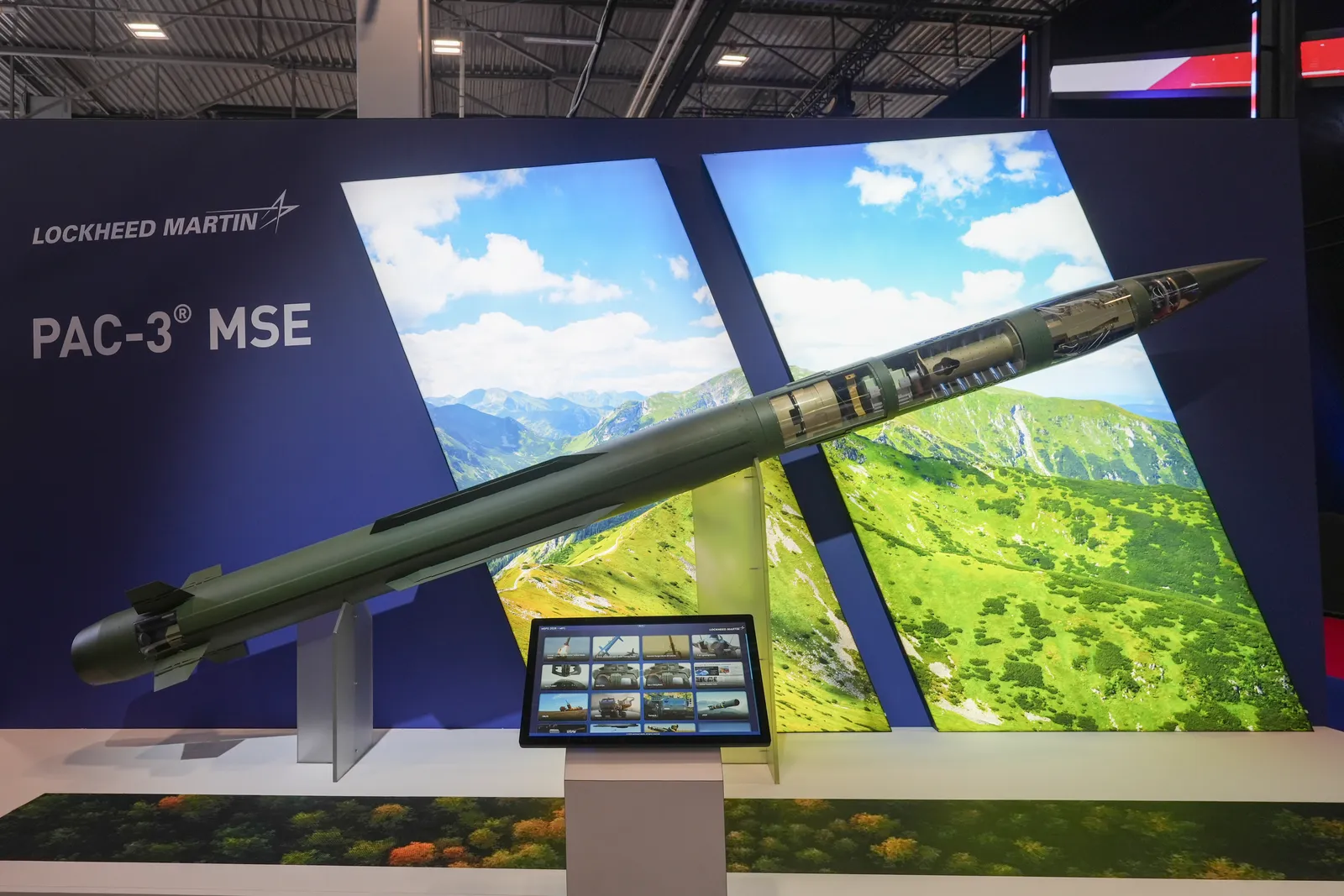
How many interceptors per missile is the variable that decides the bill. The US Army's shoot-shoot practice fires two PAC-3s at a ballistic target. A Ukrainian Patriot commander said in April 2026 that the firing rules allow two to four, and that his crews sometimes kill with one because they have to. I price two and three.
| Wave | Missiles | Interceptors at 2 each | Interceptors at 3 each |
|---|---|---|---|
| RM-48U | 8 | 16 | 24 |
| Zircon | 2 | 4 | 6 |
| Iskander-M | 6 | 12 | 18 |
| Total | 16 | 32 | 48 |
| Cost at $3.87 million | $124 million | $186 million |
Now the attacker's side. Forbes Ukraine estimates an Iskander at about $3 million. Militarnyi's reading of Russian procurement documents put a Zircon at $5.2 to $5.6 million, as reported by Defence Blog. Six Iskanders and two Zircons come to about $29 million. The eight RM-48U have no published price; Ukraine's intelligence says only that they are cheaper than Iskanders, and they come out of stocks built for another purpose.
So on the priced part alone, the defender pays $4.20 to $6.50 for every dollar the attacker spends, before a single RM-48U is counted. That is the cost-exchange ratio of this tactic, and it is worse than it looks for three reasons.
- The decoys. Six Iskanders with six decoys each put 42 objects on the radar in the last minutes. Every decoy the system does not discard costs another interceptor. RUSI's analysts list better use of the decoys among the likely reasons interception rates fell in 2025.
- The bill is paid in missiles, not dollars. Lockheed Martin delivered 620 PAC-3 MSE in 2025, for every customer in the world. Thirty-two to 48 interceptors are 5 to 8% of that, for one bridge on one night. Russia makes up to 65 Iskanders a month.
- A raid stopped is still not a bridge saved. Interception is not certain even with two or three shots. RUSI counted 227 Iskanders and Kinzhals intercepted out of 939 fired up to October 2025, and in 273 of 345 attacks none was intercepted; the results are all-or-nothing, which means the defender cannot plan on an average.
The last point is why I think the dollar figure understates the problem. A defender with unlimited PAC-3s would pay $124 to $186 million a raid and stop most of it. Ukraine does not have unlimited PAC-3s. In July 2026 its Air Force reported a night with no ballistic missile intercepted at all, and put it down to a shortage of Patriot interceptors; at the turn of July and August, one of 27 was stopped. The real cost of the salvo is the next raid, when the launchers are emptier.
What can the defender change?
Three things, and only one of them is buying more interceptors.
Stop treating every track as an Iskander. The first wave works because a crew cannot afford to let a ballistic track through. Better classification in the first minute, from radar data fused across sites, would cut the number of expensive interceptors spent on the first wave and keep rounds for the third. That is a software and sensor problem, and it is where Ukraine's own developers have already moved fast; I map that stack in Ukraine's battlefield software.
Change the target. The Iskander's seekers compare what they see with what they expect. Radar reflectors on the water, decoy structures beside a span and smoke over a bridge in daylight all attack that comparison, and each costs a small fraction of one interceptor.
Make the bridge matter less. The 21 alternative crossings, pontoon bridges and the ability to reroute power and transit around a damaged span reduce what a hit is worth to the attacker.
What do people in Kyiv do now?
They change their routes. During a ballistic alert, residents are told not to cross the Dnipro bridges and not to stand under overpasses, which have become priority targets. The warning gives 1.5 to 3 minutes on average before impact: enough to go underground or get behind concrete away from windows, and not enough for anything else. For an American reader, this is the clearest measure of what the new seekers changed. The ballistic missile used to be an area weapon that threatened everyone a little. It now threatens specific places, chosen to stop a city from moving.
Where does this go next?
The tactic will spread to other targets and other cities, and four signals will show it.
- Larger third waves. Output of 65 Iskanders a month, against six fired at one bridge, means Russia can sustain this. Salvo size will grow as far as the launcher fleet allows.
- New fixed targets with the same radar signature. Dams, river locks, port cranes and rail viaducts over water. The first strike on one of them will confirm the pattern.
- The 800 km Iskander. Ukraine's intelligence expects a test before the end of 2026. It would extend the same threat deeper into western Ukraine.
- Interceptor deliveries. Lockheed's plan to raise PAC-3 MSE capacity to about 2,000 a year by the end of 2030 and Europe's SAMP/T output are the numbers that decide whether this ratio can be held. Until they arrive, the defender rations.
What will the market need next?
Start with the uncomfortable part. The PAC-3 MSE is scarce, and it works against the missile that matters. A government with a city to protect will pay whatever Lockheed Martin asks for it, and none of the money a founder can raise changes that. A cheaper interceptor does not take the PAC-3's place in that budget. The products that sell are the ones that make every PAC-3 count: they spend fewer of them on the wrong track, keep the battery loaded for the third wave, or take a target off the list altogether.
The money in this market follows one conversion, seconds into interceptors. A crew that knows in the first minute which tracks are RM-48U, and where they will fall, can spend fewer rounds on them and keep the rest for the Iskanders. A crew that sees the launch, not only the descent, has more of its few minutes for that decision and less of them spent finding the track. On the model raid above, going from three interceptors per missile to two saves 16 PAC-3 MSE, about $62 million, on one night against one bridge. In Kharkiv in 2023 the time between the air-raid alert and an S-300 impact was 30 to 40 seconds. Everything below buys back some of those seconds, or makes the missile miss when there are none left. I have ordered it along the chain, from the launcher to the crater.
- Finding the launcher before it fires. Russia can make up to 65 Iskanders a month, but its fleet of mobile launchers is limited, and Ukraine's intelligence reported in August that the RM-48U flies from up to 17 converted S-400 launchers in five groups in the Bryansk and Rostov regions. On the attacking side the launcher is the scarce item, and the cheapest interception of an Iskander is the strike on its launcher before it fires. The products are persistent watch over known launch areas: commercial radar satellite imagery read by software trained on launchers, long-endurance reconnaissance drones, and a targeting chain fast enough to act while the launcher is still in place. The buyer is military intelligence and the long-range strike forces, a different budget from air defense.
- Seeing the launch, not only the descent. The defender's 1.5 to 3 minutes are split between finding the track and deciding what to do with it. Every second taken out of the first part goes to the second. Forward sensors near the border, infrared detection of the launch from space, and the fusion layer that puts them on one picture for the battery and for the city's alert system all sell into that split. The second buyer matters more than founders expect: a public alert that comes 30 seconds earlier is time to get underground, and it is paid for from civil budgets with reconstruction money behind them.
- Classifying the track and setting the number of shots. The RM-48U is a converted air-defense missile: single-stage, Mach 4 to 6, with a different climb and a different peak altitude from an Iskander's. Those differences show up in the radar track; how early a model can read them reliably is the claim such a product has to prove in trials. Cutting the first wave from two rounds per missile to one saves eight PAC-3s, about $31 million, a raid. The decision is not only about type. An RM-48U carries a 199 kg warhead and kills people in the blocks it hits; one falling on a field can be let through, one falling on an apartment building cannot. So the product is a decision aid that reads the type and the impact point, knows how many rounds the battery has left and what the next wave is likely to be, and proposes the shot. The firing rules already allow two to four per missile; fitting the number to the stock and the target is where the $62 million is saved or lost.
- Telling the warhead from the decoys. This is the AI problem in ballistic defense, and the most interesting one. Each Iskander releases six decoys at 30 to 40 km. Lower down, the air sorts them for free: the decoys are light and slow down, the missile does not. By then a near-vertical missile at 700 to 800 m/s is seconds from its target. The value is in deciding higher up, before the atmosphere has done the work, from radar and infrared signatures read together. That is a model, and a model is only as good as its labelled data. The labels lie on the ground. After every raid, debris and craters show which track was the missile and which were decoys. Ukraine's air defense had faced 939 Iskanders and Kinzhals by October 2025, by RUSI's count, each a real engagement against a real missile and its decoys. A test range or a simulator produces tracks; it cannot produce the matching crater. A company that matches recorded tracks to what was recovered, raid after raid, holds labels with a provenance that synthetic data cannot copy.
- Keeping that model current. RUSI lists better use of the decoys among the likely reasons interception rates fell in 2025. Russia changes how and when it releases them, and a model trained on last spring's raids is wrong about this winter's. The Excalibur shell fell into the same trap: electronics frozen at the factory for years, against an enemy that changed its jamming every few months. A discrimination model has to be sold as a subscription per battery, retrained after each change in the enemy's pattern, with the update cycle written into the contract. That puts the business in the feedback loop itself: whoever has standing access to both ends, the sensor tracks before the intercept and the forensic results after the strike, gets paid for every new version. A company that bought one historical dataset has a model that is already ageing.
- Training crews and models on the same synthetic salvos. Crews make these decisions in under three minutes, and the armies now buying Patriot or SAMP/T will face the same mixed salvos without having seen one. Denmark, which chose SAMP/T in September 2025, is one of them. A simulator built from the recorded pattern of Ukrainian raids trains the crews, and the same synthetic tracks, calibrated against the real ones, train and test the discrimination model, so the product is paid for from the training command's budget and from the air-defense software programme's.
- Making the seeker miss. The Iskander's optical seeker compares its camera picture with reference images prepared before launch from satellite or drone imagery. That puts the defense inside the attacker's intelligence cycle: a site that no longer looks like the last picture taken of it is harder to hit. Reconfigurable radar reflectors on the water, covers and structures that change a crossing's outline, smoke in daylight, and a service that watches what commercial satellites can see of a site and tells its owner when to change it. The radar seeker needs contrast, a concrete span over smooth water, and reflector arrays take that contrast away. The buyers are the owners of bridges, rail lines and energy sites, with the military setting the requirement, and a full set for a crossing costs a fraction of one interceptor.
- Second sources inside the interceptors. Lockheed is raising PAC-3 MSE capacity to about 2,000 a year by the end of 2030; Europe's Aster family, SAMP/T's interceptor, was made at 80 to 100 a year in late 2024, with a target of more than 300 a year by 2028. Ramps like these stall in the sub-tiers: rocket motors, energetics, seeker components, precision castings and test equipment. For an investor, the most bankable position in this whole market is a qualified supplier inside the PAC-3 or the Aster: slow to qualify, and selling into the demand this article is about for as long as the salvos continue.
- After the hit: crossings, repair and shelter. Modular bridging and repair kits for the 21 planned crossings and for every span that gets hit, a construction and engineering market on a wartime schedule. Underground shelter capacity near transit hubs, paid for from city budgets.
- A cheaper hit-to-kill interceptor, as a second layer. Lockheed's own PAC-3 ACE, at less than half the MSE's price and possibly in production from 2028, as Reuters reported, is aimed here. A newcomer's version sells only if it takes the first wave off the PAC-3's hands. Against the PAC-3 itself it loses the argument, because the buyer's question is whether the bridge stands, not what the missile cost.
What this means for a defense founder
- Do not sell against the PAC-3. Its buyers pay the maker's price because almost nothing else stops the third wave. Sell the product that saves them PAC-3s, and price it against the interceptors it saves.
- Price your product per raid, not per shot. A buyer facing this tactic does not ask what one interceptor costs. They ask what it costs to get through a night. Show them that number in interceptors kept on the launcher.
- In the AI, the moat is the labelled data. Anyone can train a classifier on simulated tracks. The company that ties real radar tracks to recovered debris, raid after raid, holds what nobody else can make.
- Price the model as a subscription. A discrimination model that is not retrained after the enemy changes its pattern becomes a risk sitting on a fire-control chain. Sell the update cycle, and put it in the contract.
- Plan the route to the trigger before you build. Patriot is Raytheon's system and SAMP/T is Eurosam's, and neither lets outside software near the fire decision without certification. There are two ways in: as a module through the system's maker, or through an interface the owner agrees to open, as Norway did in January when it planned to fit Ukrainian-made interceptors into NASAMS without changing its radar, command post or launchers. And the first sale does not have to touch the trigger at all. Track labelling, model testing, threat libraries and simulator data sell to the programmes that evaluate and integrate air defense, years before any software is allowed to propose a shot.
- Not all air defense is shooting. The seekers that made bridges targetable can be fooled by physical products. That is a market with short sales cycles and civilian buyers, next to one of the most expensive problems in defense.
Sources (21)
- UNITED24 Media, Russia launches three waves of ballistic missiles at Kyiv, 7 November 2026
- Euromaidan Press, Jamming doesn't stop Russia hitting bridges, 9 November 2026
- NV, Russia produces 110 ballistic missiles a month, Ukraine's intelligence, 20 October 2026
- US Army, FY2026 Missile Procurement budget justification, PAC-3 MSE unit cost
- CNN, Patriot shoot-shoot intercept, 10 July 2001
- Militarnyi, Patriot crews destroy ballistic targets with one missile, 11 April 2026
- Forbes Ukraine, cost estimate of Russian missiles, 27 June 2022
- Defence Blog, Analysts break down real cost of Russian missiles
- RUSI, Iskander improved: Russian missile tests Ukraine's air defence, 18 November 2025
- RUSI, Four years on: an update on the air war over Ukraine, 28 July 2026
- NV, SAMP/T NG for Ukraine's air defense, 27 May 2026
- Militarnyi, No ballistic missiles downed overnight due to Patriot interceptor shortage, 6 July 2026
- Reuters, Russia pounds Kyiv with missiles, 31 July 2026
- Reuters, Lockheed to make cheaper Patriot interceptors as air defense demand soars, 20 July 2026
- Lockheed Martin, accelerating PAC-3 MSE production, 6 January 2026
- Reuters, What is the Patriot missile system, 7 August 2026
- Militarnyi, Russia converted up to 17 S-400 launchers for strikes on Ukraine, 26 August 2026
- Washington Post, Russian strike hits mail facility in Kharkiv, 22 October 2023
- Defense Magazine, Ukraine's SAMP/T NG challenge: missiles may be the real bottleneck
- Army Recognition, Norway to integrate Ukrainian missiles into NASAMS, 13 January 2026
- Eurosam, Denmark selects SAMP/T NG, September 2025