
The Kh-101 and Russia’s two-ended arsenal: why the most expensive missile grows alongside the cheapest drone
The Kh-101 is the long-range missile Russia’s strategic bombers fire at Ukraine, made in Dubna at 87 a month in July 2026, about a fifth above plan. My argument is that it is one end of a deliberate two-ended arsenal: cheap drones to exhaust the defender, expensive missiles to make the defender keep buying its most expensive interceptors. Here is the mechanism and where it leads.
The Kh-101 cruise missile is the weapon Russia’s strategic bombers carry to Ukraine: a long, stealth-shaped, air-launched missile that costs an estimated $10 million or more and flies 2,500 km or further. It is the expensive, precise end of Russia’s strike arsenal, the opposite end from the Shahed drone. The part worth studying in 2026 is the factory: Ukraine’s intelligence says it is now running ahead of its own plan, while the missile still depends on imported electronics.
My argument is that the Kh-101 only makes sense next to the Shahed. Russia is not choosing between expensive and cheap strike weapons; it is building both ends at once and leaving the middle empty. Both ends serve the same purpose: to hit Ukrainian cities and power grids and to kill and exhaust the people defending them. Cheap drones wear down the defender's cheap layers and its attention; expensive missiles, fired into the same raids, force it to keep spending its most expensive interceptors. The Kh-101's growing production line is the half of that campaign of terror most Western analysis underrates.
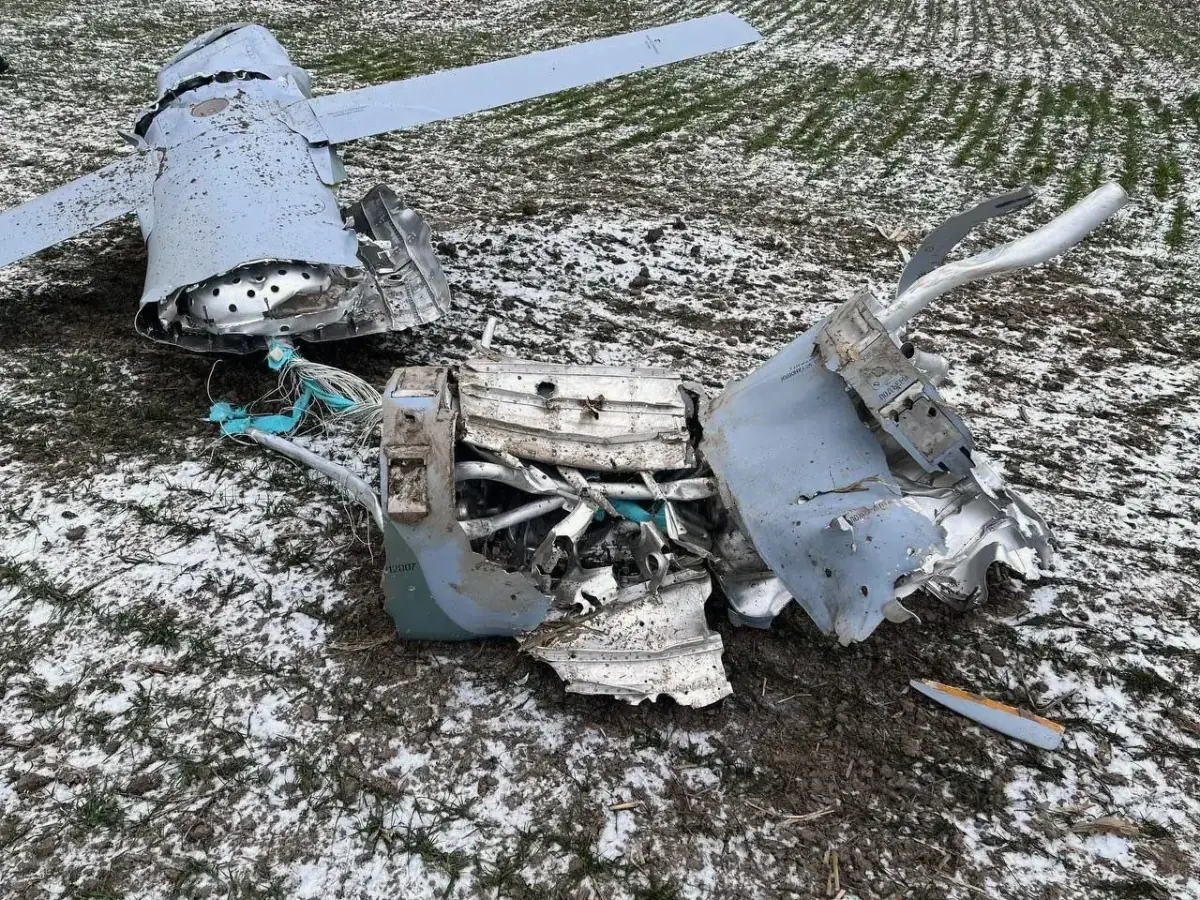
What is the Kh-101?
A conventional air-launched cruise missile developed by MKB Raduga in Dubna, outside Moscow, part of the Tactical Missiles Corporation; its nuclear twin is the Kh-102. It has been in service since 2012. It is launched from Tu-95MS bombers, which carry eight internally and up to fourteen in the upgraded Tu-95MSM with external pylons, and from Tu-160s, which carry up to twelve on two rotary launchers.
Dubna is a name worth remembering. The same town now hosts series assembly of the cheap Banderol cruise missile, next door to the plant that built the Kh-101 for decades: two ends of the market sharing people, a test base and logistics.
The Kh-101 in numbers
| Figure | Value |
|---|---|
| Developer | MKB Raduga, Dubna (Tactical Missiles Corporation) |
| Carriers | Tu-95MS and Tu-95MSM, Tu-160 and Tu-160M |
| Length, diameter | 7.45 m, 0.51 m |
| Launch mass | 2,300 to 2,400 kg |
| Engine | TRDD-50A turbofan |
| Warhead | about 450 kg; high-explosive, penetrating or submunitions |
| Range | 2,500 to 2,800 km assessed; Russia has claimed 4,500 km |
| Speed | cruise about Mach 0.58, maximum about Mach 0.78 |
| Flight altitude | about 30 to 60 m in terrain-following segments |
| Guidance | inertial plus GLONASS, electro-optical terrain comparison, a TV or infrared seeker at the end; Otblesk-U optical system with a Baget-62-04 computer; SN-99 satellite navigation by KB NAVIS |
| Accuracy | about 10 to 20 m circular error |
| Self-protection | an SP-504 active jamming station recorded in the production chain |
| Estimated cost | $10 to $13 million |
How many does Russia make?
More every year. Ukraine’s intelligence estimated about 40 a month in April 2024 and 50 a month by July 2024. Reporting in May 2025 put Russia’s plan for that year at 633. In July 2026, by the account of Ukraine’s military intelligence, Russia produced 87 against a monthly target of 72, about a fifth above plan.
At $10 to $13 million each, 87 missiles is close to a billion dollars of missiles in one month, from one product line. That is the clearest sign that sanctions have not made Russia choose between expensive and cheap strike weapons; it is scaling both at once.
What is inside it?
Ukraine’s Defence Intelligence has published the components it found in recovered Kh-101s, and the list reads like a catalogue of Western and Asian electronics:
- a Taiwanese Macronix MX29GL256 memory chip in the Baget-62-04 computer of the Otblesk-U guidance system;
- an Intel/Altera chip and a Renesas RC64475 processor in the SN-99 satellite-navigation unit;
- parts from KYOCERA AVX, Analog Devices (including Linear Technology and Maxim), Microchip Technology and Cypress/Infineon in the same unit;
- next to Russian Baikal Electronics processors and a Chinese rectifier.
The record shows the parts were in the missiles, not when or how they were bought. It still makes the same point as every other teardown of Russian weapons in Ukraine: the most expensive Russian missile depends on the same open electronics market as the cheapest one.
Where has the Kh-101 been used?
From the first day of the full-scale invasion, in long-range waves launched from bombers far inside Russia. Ukraine’s Air Force reported 2,459 Kh-101s destroyed between February 2022 and February 2026, more than three times its count for the sea-launched Kalibr.
Two strikes define how it is remembered in Ukraine. On 8 July 2024 a Kh-101 launched from a Tu-95MS hit the Okhmatdyt children’s hospital in Kyiv at about 10:45, killing two people and injuring 34, nine of them children; Ukrainian prosecutors say the missile flew to pre-programmed coordinates. On 19 November 2025 a Kh-101 hit an apartment building in Ternopil and killed 33. And on 4 October 2026 a suspected Kh-101 was reported to have flown about 100 km into Polish airspace during a mass strike on Ukraine, pending Poland’s own determination.

Why grow the expensive end at all?
Because the two ends do different jobs, and the expensive end is protected in a way the Kalibr was not. The Kalibr lost value as the defender learned it and its ships became targets. The Kh-101 is learned too, but it is launched from bombers far inside Russia, out of reach of most Ukrainian weapons, so one of the two clocks that wore the Kalibr down runs much slower for it. Out of reach of most weapons is not out of reach of all: in June 2025 Ukraine's Operation Spider's Web destroyed 10 to 13 bombers on their own airfields with drones launched from trucks parked nearby, most of them Tu-95s, one of the Kh-101's two carriers, and Russia no longer builds the type. Its stealth shape, long range and freedom to route around air defenses keep it relevant even against a defender that knows it.
The economics follow. A defender facing only drones can build a cheap defense: interceptor drones, guns, acoustic sensors. A defender facing drones and $10 million missiles in the same night has to keep both a cheap layer and an expensive one, staffed and stocked. That is the cost Russia imposes with the Kh-101, and it is why I read the July 2026 figure, 87 missiles against a plan of 72, as strategy rather than surplus.
What happens next?
I expect the expensive end to keep growing, not shrink. If the line holds the pace of the last two years, output passes 100 a month in 2027. The consequences reach beyond Ukraine:
- Interceptor demand stays high-end. Europe's shortage of medium- and long-range interceptors, the gap behind IRIS-T queues and the FREYJA coalition, does not ease when the drone problem is solved.
- NATO airspace becomes part of the flight plan. A suspected Kh-101 reported 100 km inside Poland on 4 October 2026 is a preview: long-range missiles routed near borders turn neighbouring air defense into a participant.
- The weak point is the parts, not the factory. A line running above plan still depends on traceable Western and Asian electronics, so enforcement on distribution chains remains the lever that touches the expensive end most directly.
Signals worth watching: monthly production against plan; the share of Kh-101s in mixed raids; the availability of Tu-95 and Tu-160 bombers; and incidents in NATO airspace.
What the Kh-101 says about the market
Three things a founder or investor can use.
- The expensive end is growing too. A line that goes from 40 to 87 a month in two years is not a line under pressure. Air defense planners cannot assume that cheap threats replace expensive ones; they have to answer both, and that is a production problem on the defender’s side as well, the one I describe in the risks at 80, 150 and 400 a month.
- At this price, an expensive interceptor is a fair trade. A $10 million missile with 450 kg of explosive justifies a multi-million-dollar shot, which is the opposite of the drone problem. The arithmetic is in cost-exchange ratio.
- Sanctions enforcement is a parts problem. The chips named in Kh-101 teardowns are commercial and traceable. The leverage is in the distribution chain, as the Banderol’s own bill of materials shows.
What will the market need next?
The Kh-101 is launched from strategic bombers at long range, so a defender's warning time depends on knowing when the bombers move. Commercial satellite imagery and the analysis that flags bomber activity at Russian air bases are bought by governments that cannot rely on one ally's intelligence feed, and the market for that analysis grows with every raid on Ukrainian power plants.
And because Russia builds both the expensive and the cheap end at once, a defender has to buy both layers: interceptors that can stop a cruise missile, and cheap ones that keep the drones off them. Suppliers that offer both in one package fit how the threat actually arrives.
Signals worth watching: Ukrainian intelligence figures on Kh-101 output, sanctions designations against the distributors in recovered missiles, and government contracts for commercial imagery over Russian bomber bases.
Sources (9)
- Army Recognition, suspected Kh-101 flies 100 km into Poland during mass strike on Ukraine, 4 October 2026
- The Kyiv Independent, Russia exceeding monthly production targets for key missiles, 10 August 2026
- Army Recognition, Russia plans mass production of 633 Kh-101 cruise missiles in 2025, 12 May 2025
- Ukraine Defence Intelligence, War & Sanctions: Kh-101 memory chip in the Otblesk-U guidance computer
- Ukraine Defence Intelligence, War & Sanctions: Kh-101 SN-99 satellite navigation system
- Ukrainska Pravda, the Okhmatdyt strike investigation, 4 March 2026
- Conflict Armament Research, Okhmatdyt missile remnants, 30 July 2024
- Defence Blog, Ukraine confirms interception of over 140,000 aerial targets since 2022, 24 February 2026
- UNN, what is known about the Tu-95, 29 September 2026