
The upgraded Iskander-M stopped needing satellites at the end of its flight, and that is why jamming no longer protects a bridge
The Iskander-M is Russia's main short-range ballistic missile, and in November 2026 its upgraded version hit Kyiv's bridges through Ukrainian jamming. This page explains what changed: a radar and an optical seeker for the last seconds, Kometa anti-jam navigation, six decoys, a range up to 700 km, and a factory now turning out 65 a month while the Kinzhal line stands idle.
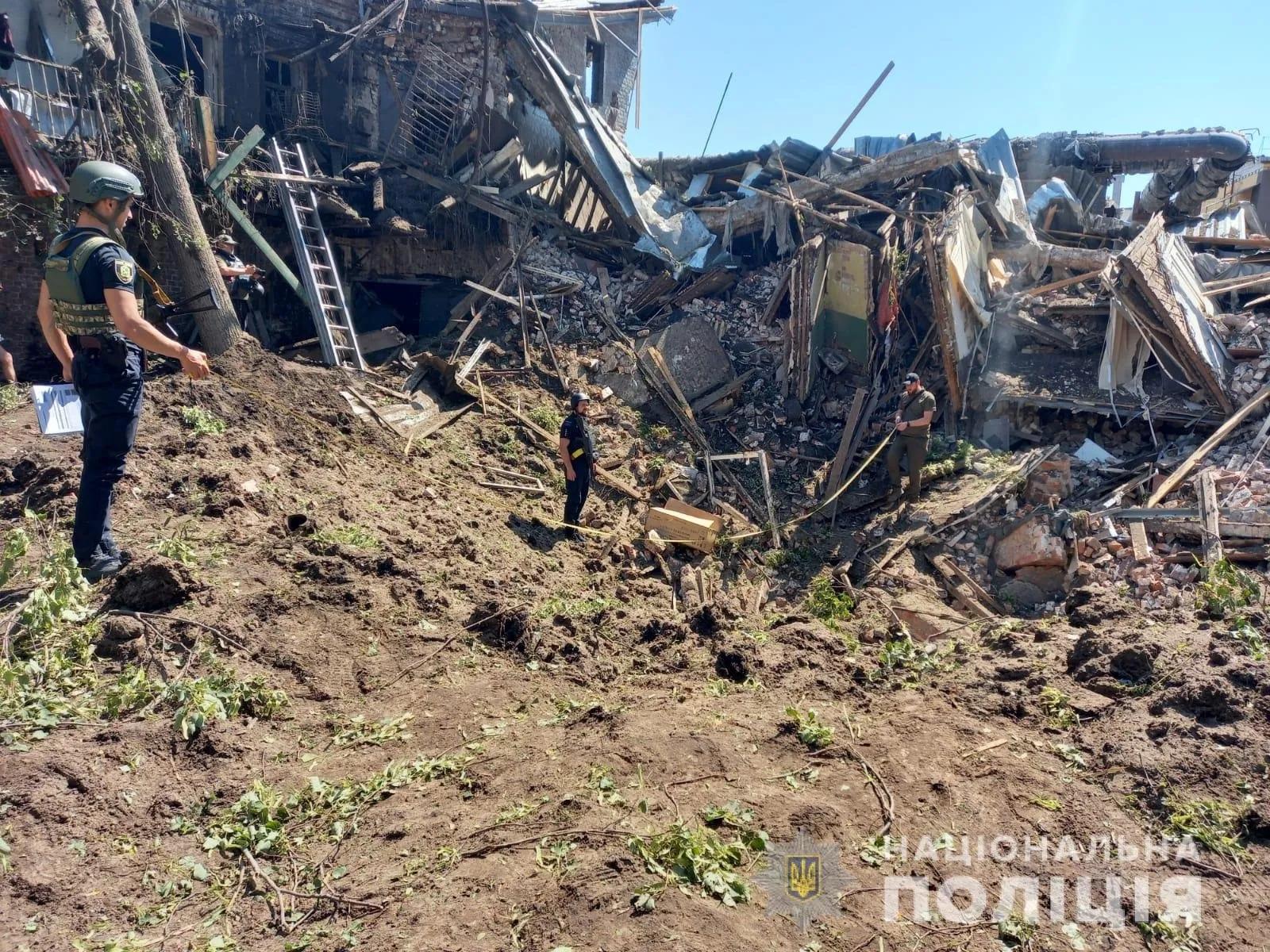
On the night of 7 November 2026 Russia fired six ballistic missiles at the Northern Bridge in Kyiv and four of them hit it, by President Zelenskyy's count. The missiles were upgraded Iskander-M, Russia's main short-range ballistic missile, and they hit a bridge across the Dnipro on a night when satellite navigation over Ukraine was being jammed, as it is during every air-raid alert. Since Russia launched its full-scale invasion of Ukraine in February 2022, the Iskander has been used against Ukrainian cities, from apartment blocks in Kharkiv to the center of Kyiv. What changed in 2026 is where it can put its warhead.
My argument is that the upgraded Iskander-M has stopped needing satellites in the part of the flight that decides the hit. In the last seconds it navigates by what its own radar or camera sees, and that changes the defense of anything that looks distinct on a radar map. Jamming GPS still matters for the long middle of the flight. It no longer protects the target. A bridge over open water is the clearest radar target a city offers, so the most important crossings in Ukraine are now protected only by hit-to-kill interceptors, and Patriot carries almost all of that load.
What is the Iskander-M?
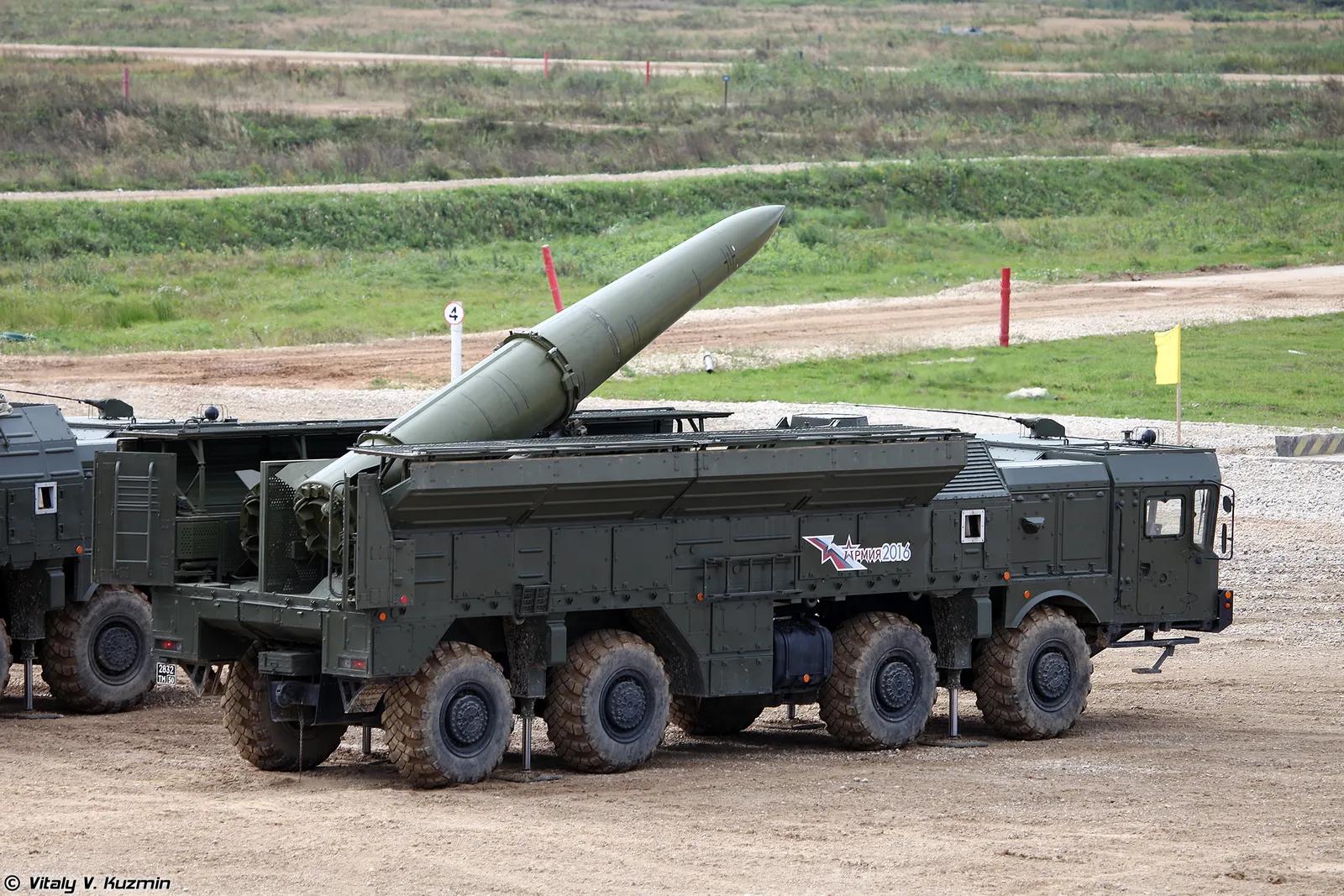
A road-mobile short-range ballistic missile system, 9K720 in Russian designation, with the 9M723 as its ballistic missile; the same launcher also fires cruise missiles. The missile is 7.5 m long and weighs 3.8 tonnes. It climbs into the stratosphere, 50 to 100 km up, accelerates to about Mach 6 (2,100 m/s) and comes down almost vertically at 700 to 800 m/s. The warhead does not separate: the whole heavy body falls on the target, and in the final segment it manoeuvres hard, at 20 to 30 g.
Speed is the first problem for the defender. From launch to Kharkiv, Sumy or Dnipro takes 90 to 150 seconds. To Kyiv or Odesa, 3 to 4 minutes. That is the whole window for detection, alert, decision and launch of an interceptor, and for the people underneath to get into a shelter.
The Iskander-M in numbers
| Figure | Value |
|---|---|
| Missile | 9M723, ballistic; upgraded 9M723-2 called "Iskander-1000" in Ukraine |
| Length, mass | 7.5 m, 3.8 t |
| Peak speed | about Mach 6 (2,100 m/s) at 50 to 100 km altitude |
| Terminal speed | 700 to 800 m/s, near-vertical dive, 20 to 30 g manoeuvres |
| Warhead | 480 kg: penetrating high-explosive fragmentation, or cluster |
| Range | about 550 km for the 9M723-2; up to 700 km depending on warhead and propellant |
| Terminal guidance | 9B918 active radar seeker (night, fog); 9E436 optical correlation seeker (day) |
| Navigation | inertial plus satellite, with Kometa-M anti-jam antennas of 8 or 12 elements |
| Decoys | 6, thermal and radar, released at 30 to 40 km |
| Flight time | 90 to 150 s to Kharkiv, Sumy, Dnipro; 3 to 4 min to Kyiv, Odesa |
| Stock and output | about 115 in stock, up to 65 made a month (Ukraine's intelligence, October 2026) |
| Estimated cost | about $3 million (Forbes Ukraine estimate) |
How does it hit a bridge through jamming?
With two seekers that do not use satellites at all. Ukraine's military intelligence lists both in its War & Sanctions database, its public register of the components and suppliers behind Russian weapons: the 9B918 active radar seeker and the 9E436 optical correlation seeker.
At night and in fog, radar. On the final leg the missile switches on its own radar, scans the ground for a few seconds and corrects its course toward the target. Smooth water reflects radio waves away to the side, so a river looks dark to a radar. A massive reinforced-concrete bridge across it reflects strongly. That contrast is about as clean a target as a radar seeker can be given, which is why bridges are hit with the precision of a guided bomb even while satellite signals are jammed.
In daylight, a camera. The optical seeker compares the image from the nose camera with reference images loaded before launch, taken from a satellite or a drone, and corrects the course. That makes the reference image the part a defender can attack: a scene that no longer looks like the picture is harder to match.
For the long middle of the flight, Kometa. Older Iskanders used simpler navigation antennas. The upgraded ones carry Kometa-M modules with 8 or 12 elements, Russian controlled-reception-pattern antennas that steer their reception away from jammers. I go through how they work and whose chips are inside in the page on the Kometa antenna.
These three pieces divide the work. Kometa gets the missile close despite jamming. The seeker does the last hundred meters and needs no outside signal. Electronic warfare can still degrade the first part, and it has no handle on the second.
Why is it so hard to shoot down?
Because every feature of the descent cuts the options down to one kind of weapon:
- It falls nearly straight down at 700 to 800 m/s with the heavy warhead attached. A conventional surface-to-air missile that bursts nearby and sprays fragments is powerless against it.
- It manoeuvres at 20 to 30 g in the last segment, which a defending missile has to match in the final second.
- At 30 to 40 km it releases six decoys, thermal and radar, so the defending radar sees seven objects where there is one missile.
What works is a direct hit: the Patriot system's PAC-3 MSE, a hit-to-kill interceptor, and to a lesser degree Patriot's older PAC-2 GEM-T interceptor and the Franco-Italian SAMP/T ground-based air-defense system. The record shows the cost of this: RUSI counted 227 Iskanders and Kinzhals intercepted out of 939 fired up to October 2025, about 24%, and 14 of 78 Iskanders, 17%, in the first weeks of October 2025. Its authors list a steeper trajectory, better terminal manoeuvre and better use of the decoys among the likely reasons.
What does the warhead do?
Two warheads, both 480 kg, built for different victims.
- Penetrating high-explosive fragmentation. At this speed it goes through concrete floors. A direct hit on an apartment block brings down whole sections of floors. The familiar shelter rule of "two walls between you and the street" does not protect against it; only a proper underground shelter does.
- Cluster. It bursts about 10 m above the ground and seeds a wide area with tungsten and steel fragments. It cannot destroy a bridge. It is designed to kill and wound people in the open and wreck vehicles, and Russia has used it on Ukrainian city streets.
What is the "Iskander-1000"?
The name Ukraine uses for the 9M723-2, first confirmed in combat by Ukraine's military intelligence in a strike on Kyiv in summer 2026. The name overstates it. Intelligence put its range at about 550 km, against about 390 km for the 9M723-1, and at up to 700 km with a lighter warhead; the newer production is reported to reach 700 km with a higher-energy propellant. Either way, 700 km brings Zhytomyr, Rivne, Khmelnytskyi and Volyn in western Ukraine into reach from Russian territory, regions that were mostly beyond Iskander range before. Ukraine's intelligence also expects a test of a version of up to 800 km before the end of 2026.
How many does Russia have?
Ukraine's intelligence estimated in October 2026 that Russia keeps about 115 Iskander-M in stock and makes up to 65 a month. The pattern behind those two numbers matters more than either: Russia holds a reserve and fires everything made above it. The stock is a buffer. Output goes straight into the war.
Output is growing because Russia moved money into it. Serial production of the air-launched Kinzhal was suspended in 2026, after problems with accuracy and wear on the MiG-31K jets that carry it, and the freed resources went to the upgraded Iskander-M. Ukrainian estimates put a Kinzhal at about $15 million, five times an Iskander; Russian procurement documents reported by Militarnyi in August 2026 give about $4.5 million. Either way, it was the more expensive missile to keep making. Russia moved its money to the missile it can produce in volume and fire from mobile launchers at fixed Ukrainian infrastructure.
The line has three limits. The chemical industry is short of solid-propellant components. The new seekers depend on electronics smuggled in past sanctions. And the fleet of mobile launchers is limited. Russia fills part of the gap with imports: North Korea's KN-23, a ballistic missile of the same class, flies in the same raids, and Ukraine's intelligence reports a North Korean missile unit with its own launchers now based in Russia.
Where does the Iskander go next?
Three developments are the ones to watch, and each has a signal:
- Longer range. The 800 km test. If it flies, every region of Ukraine and a wider band of Europe is inside a missile that the defender gets three or four minutes to answer.
- More launches from more launchers. Output is 65 a month; the launcher count is the constraint. A rise in salvo size, more than six or eight Iskanders in a night, would show the launcher fleet growing.
- New target classes. Bridges were the first fixed targets chosen for their radar contrast. Dams, locks, port cranes and rail viaducts share the same signature. Strikes on them would confirm the seeker is being used systematically.
What will the market need next?
The upgraded Iskander turns a few gaps into budgets, and Ukraine's allies will pay for most of them.
- A cheaper hit-to-kill interceptor. The only reliable answer today costs $3.9 million and is made by the hundreds a year. Any ballistic interceptor that hits directly at a fraction of the price has a market among Patriot operators facing ballistic missiles, starting with Ukraine. The buyers will be ministries of defense, financed by NATO and EU instruments.
- Radar and optical deception for fixed infrastructure. The seeker matches a stored picture. Corner-reflector arrays on the water, radar decoys beside a span, smoke and camouflage that change the scene the camera expects: all of these attack the match itself, and each costs a small fraction of one interceptor. The buyers will be infrastructure owners and road and rail agencies, with military air defense setting the requirement.
- Fast replacement crossings. Ukraine plans 21 alternative river crossings, the first in Kyiv in early 2027. Modular military bridging, pontoon systems and rapid-repair kits are a procurement category that did not exist on this scale a year ago.
- Warning measured in seconds. With 90 seconds of flight time to Kharkiv, every second between launch detection and a phone buzzing is worth building for. Sensor fusion and alert delivery are software businesses.
- Component tracing. The seekers run on smuggled electronics. Data products that trace parts from recovered missiles back to distributors are what sanctions enforcement buys.
What the Iskander means for a defense founder
- Price per intercept is the comparison buyers make. Every product in ballistic defense will be measured against the PAC-3 MSE. Make that comparison for them, with your own numbers.
- The target is part of the defense. A missile that guides by contrast can be defeated by changing the contrast. That is a market for physical products, not only for interceptors and jammers.
- Watch the inputs, not the stockpile. Russia's output is limited by propellant chemistry, smuggled chips and launchers. Each is a lever for sanctions, and each is a signal of what comes next.
I put the cost of stopping a whole raid, with its waves of different missiles, in what it costs to stop Russia's bridge-strike salvos. The ratio behind it is in cost-exchange ratio.
Sources (11)
- UNITED24 Media, Russia launches three waves of ballistic missiles at Kyiv, 7 November 2026
- Euromaidan Press, Jamming doesn't stop Russia hitting bridges, 9 November 2026
- RUSI, Iskander improved: Russian missile tests Ukraine's air defence, 18 November 2025
- NV, Russia produces 110 ballistic missiles a month, Ukraine's intelligence, 20 October 2026
- NV, Russia's Kinzhal stockpiles after the suspension of production, 20 August 2026
- The War Zone, Russia is now using longer-range Iskander ballistic missiles
- UNITED24 Media, Russia's next ballistic missile could reach 800 km
- Forbes Ukraine, cost estimate of Russian missiles, 27 June 2022
- US Army, FY2026 Missile Procurement budget justification, PAC-3 MSE unit cost
- RUSI, Four years on: an update on the air war over Ukraine, 28 July 2026
- Kyiv Independent, Russia has 50 Kinzhal missiles after pausing production, HUR claims, 20 August 2026
Where this comes up on the site
- The Kinzhal was beaten twice, by Patriot and by jamming. Russia's answer was to stop making it and build an Iskander that does not need satellites at the end
- Russia sells the Zircon as an unstoppable hypersonic missile. Over Kyiv it slows down, carries under 50 kg of explosive and works as a $5 million decoy for the Iskanders behind it
- Russia's bridge-strike salvos are built so that the cheapest missile buys the most expensive response, and one bridge can take 8% of a year's Patriot output