
Patriot: the best answer to a ballistic missile, and the worst thing to spend on a drone
Patriot is the American air defense system that protects US bases, Gulf states and Ukrainian cities against ballistic missiles. Its interceptors cost about $4 million each and are made by the hundreds a year. Here is what it is, what it costs, how many are made, and why every misused interceptor is taken from someone else.
Patriot is the main American ground-based air and missile defense system, built by Raytheon. A battery combines a radar, a control station and launchers, and it fires two families of interceptor: Lockheed Martin's PAC-3 MSE, which destroys its target by hitting it directly, and Raytheon's older GEM-T, which explodes near it. It is one of very few Western systems that can stop a ballistic missile, which is why US bases, the Gulf states, Poland and Ukraine, defending itself against Russia's full-scale invasion since 2022, all want more of it.
My argument is that Patriot's problem is not quality but scarcity, and that scarcity changes how it should be used. A PAC-3 MSE costs about $4 million and Lockheed made 620 of them in 2025. That makes each one too precious to spend on anything a cheaper weapon could stop. Patriot is the best answer to a ballistic missile and the worst thing to fire at a drone, and the wars with Iran in 2025 and 2026, when Patriots were fired at drones, often several at a single one, showed what happens when a stock this small is spent without that discipline. I go through that bill in how Iran made the US pay for its air defense.
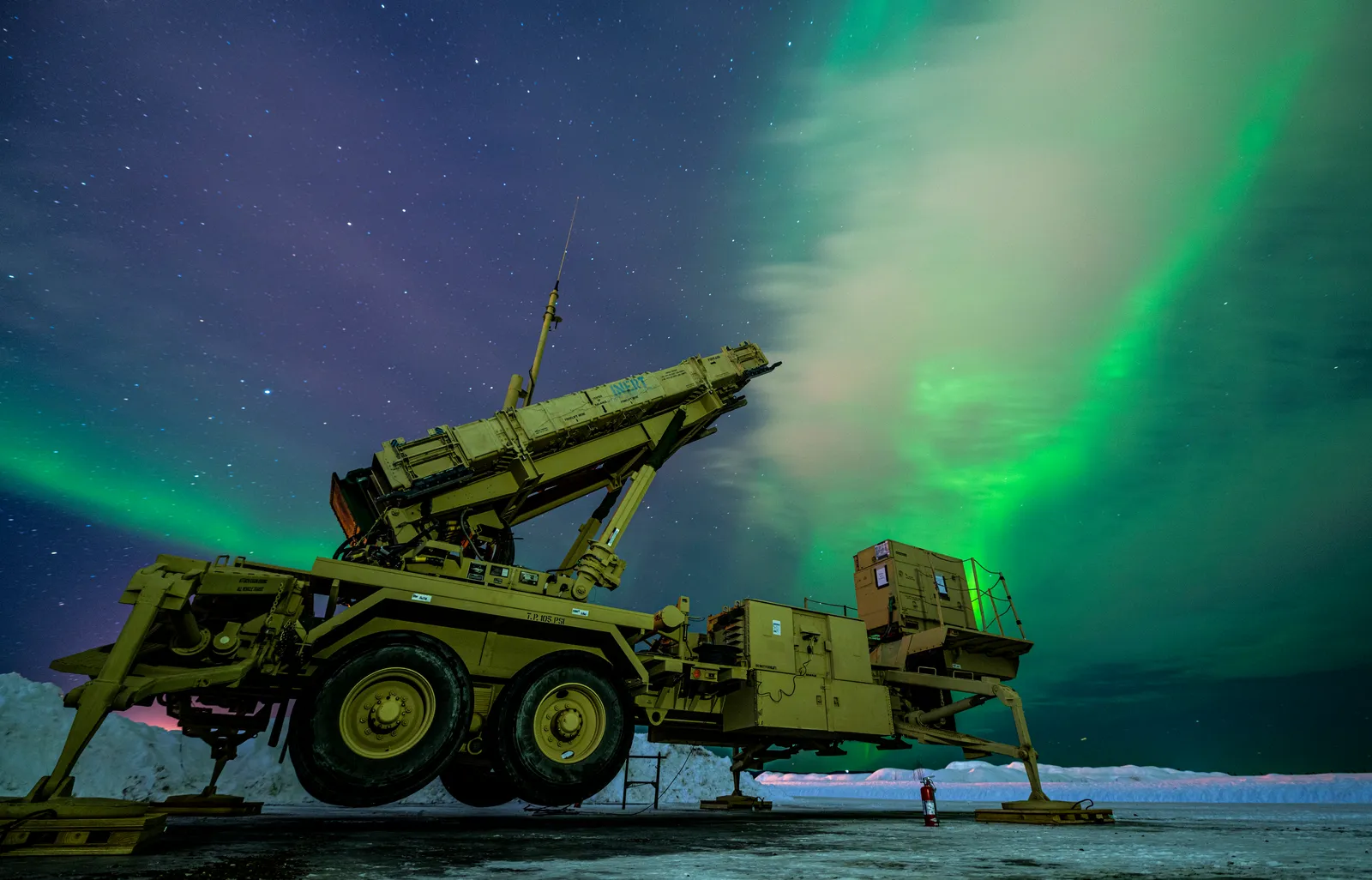
Patriot in numbers
| System | Raytheon; radar, engagement control station and launchers |
|---|---|
| Interceptors | PAC-3 MSE (Lockheed Martin), hit-to-kill; GEM-T (Raytheon), blast fragmentation |
| Price | about $4 million per PAC-3 MSE, from US Army budget documents, as Reuters reported; about $1.1 billion for a battery with missiles in a 2022 CSIS estimate ($400 million system, $690 million missiles) |
| Production | 620 PAC-3 MSE delivered in 2025; a seven-year agreement to raise capacity to about 2,000 a year by the end of 2030 |
| Contracts | $4.7 billion initial acceleration contract in April 2026; a multiyear deal worth up to $58.6 billion in July 2026, as Reuters reported |
| Next | PAC-3 ACE, a cheaper interceptor at less than half the MSE's price, possibly in production from 2028, as Reuters reported |
Why is it always short?
Because demand comes in wars and production comes in years. A Patriot interceptor depends on a seeker, the small radar in its nose, made by Boeing, and that seeker has been the bottleneck: Reuters reported in 2024 that it held up plans to expand production in Japan, and in October 2026 Boeing signed a contract worth up to $14.7 billion to triple seeker output. Even a willing buyer waits: Switzerland ordered five systems in 2022 and was told of further delays in 2026, Reuters reported.
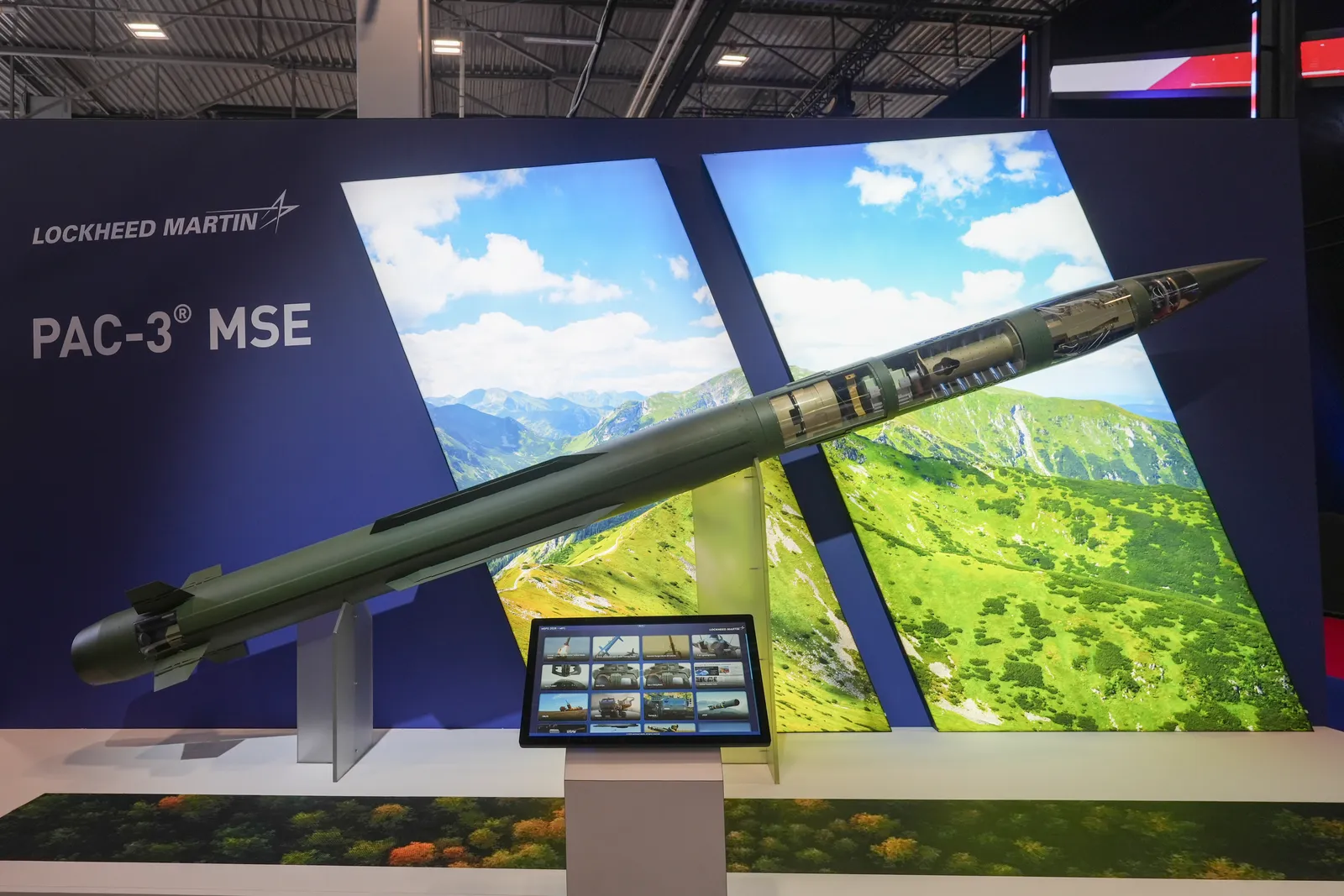
Then the wars with Iran drew the stock down. The chairman of the Joint Chiefs called the defense of Al Udeid air base in Qatar in June 2025 the largest single Patriot engagement in US military history. CSIS estimates US Patriot inventories fell under 1,000 by July 2026 and will take three or more years to rebuild.
Who waits when Patriot runs short?
Ukraine, first. It relies on Patriot against Russian ballistic missiles fired at its cities, a threat few other systems can stop. About 75% of the Patriot missiles Ukraine received since summer 2025 came through PURL, the NATO arrangement under which allies pay for US weapons for Ukraine, a NATO official told Reuters. In July 2025 the Pentagon paused a shipment that included 30 Patriot missiles over stockpile concerns, and in May 2026 Ukraine's president wrote that some batteries stood without missiles. Every interceptor spent somewhere else is one Ukraine does not get. In November 2026 Russia built whole salvos around that scarcity, sending cheaper missiles first to draw Patriot fire before upgraded Iskanders reached Kyiv's bridges; I price one such raid in what it costs to stop a bridge-strike salvo.
That is why Ukraine rations it. Patriot is kept for what only it can stop, and the cheap targets go to cheaper weapons, above all interceptor drones at a few thousand dollars each.
Where does Patriot go next?
I expect three things.
- More, but not soon. The multiyear contract and the seeker deal will raise output, but the target of 2,000 a year is for 2030. Until then, every war that uses Patriots heavily takes them from another theater.
- A cheaper Patriot. PAC-3 ACE at less than half the price is an admission that $4 million is too much for many targets. It will still cost millions.
- Patriot at the top of a cost pyramid. Buyers will build air defense in tiers, with Patriot reserved for ballistic and the most dangerous targets and cheaper layers below it. The arithmetic is in cost-exchange ratio; the same logic applies to Germany's IRIS-T.
Signals worth watching: Lockheed's annual PAC-3 MSE deliveries, the first PAC-3 ACE contract, Boeing's seeker output, and the number of Patriot missiles delivered to Ukraine against its requests.
What will the market need next?
- Seeker and motor capacity. Boeing's seeker contract and the multiyear Patriot deal are bets that the bottleneck can be bought away. Second sources for seekers, rocket motors and guidance electronics, in the US and in Europe, are the parts of the chain buyers will fund first.
- A cheaper missile for the same launcher. Every Patriot battery in service is a launcher looking for a less expensive round for the many targets that do not need a $4 million interceptor. PAC-3 ACE is Lockheed's answer; buyers will want competition for it.
- Operators, maintenance and spares. New Patriot users in Europe and the Gulf, and Ukraine's growing mix of donated batteries, need trained crews, repair capacity and spares close to where the batteries stand. That is a service market as much as a product one.
What Patriot means for a defense founder
- The shortage is in the parts. Seekers, rocket motors, electronics: a supplier who can add capacity to the Patriot chain sells into a $58.6 billion programme short of exactly that.
- The bigger opening is below Patriot. Every interceptor that does not have to be a Patriot is a market: cheap drones, guns, mid-priced missiles for fast drones. How to reach that buyer is in defense tech go-to-market.
- Price per intercept is the pitch. A buyer now compares every counter-drone product with a $4 million Patriot. Make the comparison for them.
Sources (13)
- Reuters, Lockheed to make cheaper Patriot interceptors as air defense demand soars, 20 July 2026
- CSIS, Patriot to Ukraine: what does it mean?, 16 December 2022
- Lockheed Martin, accelerating PAC-3 MSE production, 6 January 2026
- Lockheed Martin, first contract for PAC-3 MSE accelerated production, 10 April 2026
- Reuters, Army awards Lockheed Martin $58.6 billion PAC-3 Patriot missile deal, 29 July 2026
- Reuters, US-Japan Patriot missile production plan hits Boeing component roadblock, 20 July 2024
- Reuters, Boeing receives Lockheed PAC-3 MSE contract worth up to $14.7 billion, 5 October 2026
- Reuters, United States informs Switzerland of delays and price hike on Patriot delivery, 13 May 2026
- US Department of War, Al Udeid Patriot engagement, 26 June 2025
- CSIS, Renewed Iran war would test diminished interceptor inventories, 27 July 2026
- Reuters, Ukraine's F-16 jets were starved of US-made missiles for weeks (PURL share of Patriot missiles), 5 March 2026
- Reuters, US halts some missile shipments to Ukraine over low stockpiles, July 2025
- Reuters, Zelenskiy asks Trump for air defences, 27 May 2026
Where this comes up on the site
- Iran did not have to beat American air defense. It made America pay for it, and the Patriot interceptor shortage is the bill.
- Russia's bridge-strike salvos are built so that the cheapest missile buys the most expensive response, and one bridge can take 8% of a year's Patriot output
- The Kinzhal was beaten twice, by Patriot and by jamming. Russia's answer was to stop making it and build an Iskander that does not need satellites at the end