
The RM-48U was built to be shot at, and that is the job Russia gives it over Ukrainian cities
The RM-48U is a Russian air-defense training target, rebuilt from expired S-300 and S-400 missiles and fired at Ukrainian cities since 2026. It misses by about 300 metres and carries a 199 kg warhead. This page explains what it is, why Russia makes 40 a month, and why it costs the defender far more than it costs Russia.
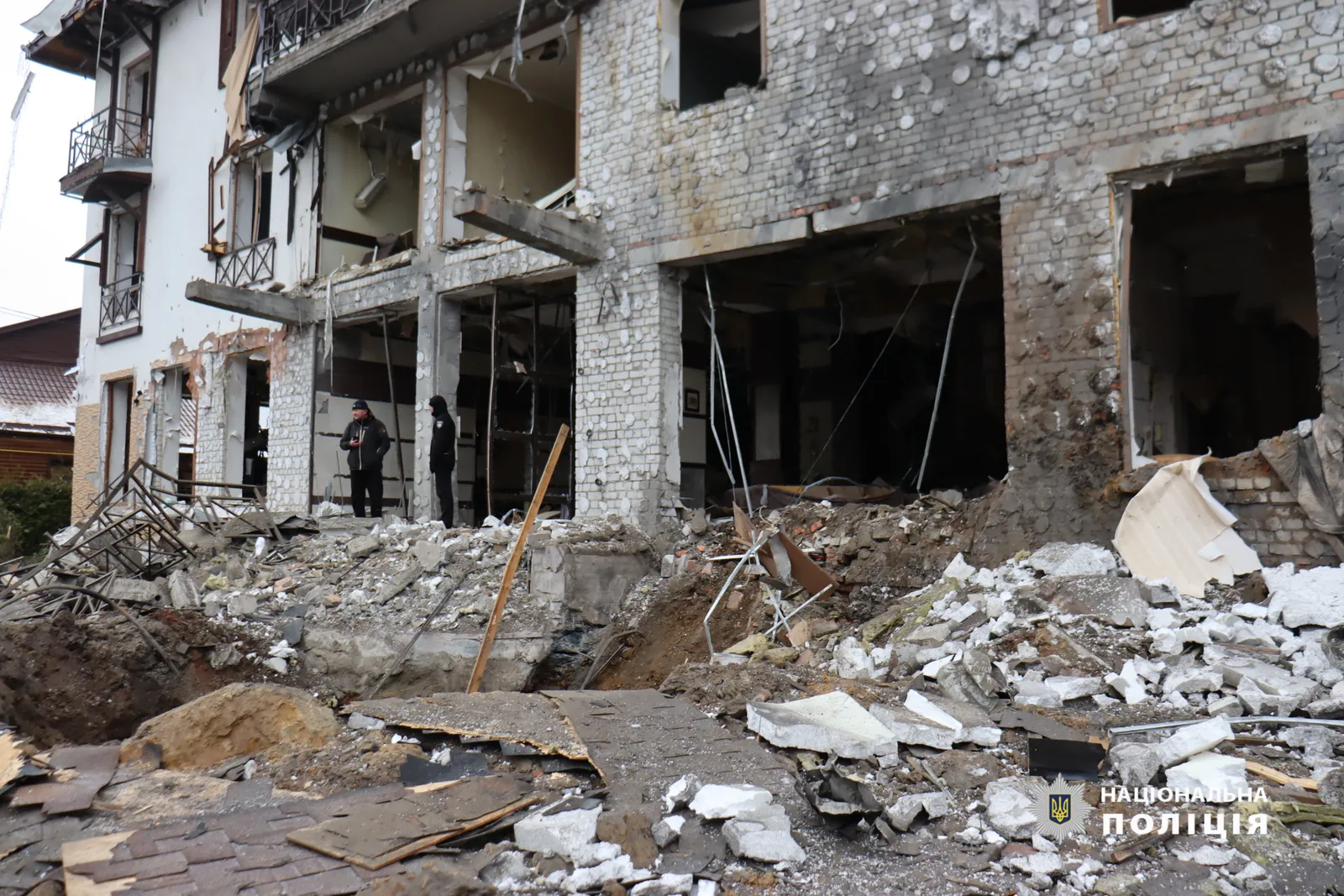
On 5 August 2026 people were waiting for a train at Kvitnevyi station in the Brovary district outside Kyiv when a missile hit the platform and killed eight of them. Ukrainian prosecutors examined the crater and the fragments and named the weapon: an RM-48U, a missile Russia designed as a practice target for its own air-defense crews. Since Russia launched its full-scale invasion of Ukraine in February 2022, it has fired its S-300 and S-400 surface-to-air missiles at Ukrainian cities, first at Kharkiv and Mykolaiv, and in 2026 it turned the target version of those missiles into the weapon behind more than half of its ballistic launches in July.
My argument is that the RM-48U's value to Russia is not where it lands. It misses its aim point by about 300 metres on average, which makes it useless against a bridge and deadly in a residential district. Its value is what it forces the defender to spend. A radar sees a ballistic track at Mach 4 to 6 and has a minute or two to decide whether it is an Iskander. A crew that cannot afford to guess fires a Patriot interceptor worth $3.87 million at a missile Russia had already retired from service. A weapon built to be shot at is doing exactly the job it was made for, at someone else's expense.
What is the RM-48U?
A target missile. "RM" stands for raketa-mishen, Russian for "target missile": a round that air-defense crews fire at during training so they can practise against something fast. It is made from 5V55 and 48N6 missiles, the interceptors of the S-300 and S-400 systems, once their service life has run out. Russia's S-400 is its main long-range surface-to-air system, and the 48N6 is the large missile it fires at aircraft.
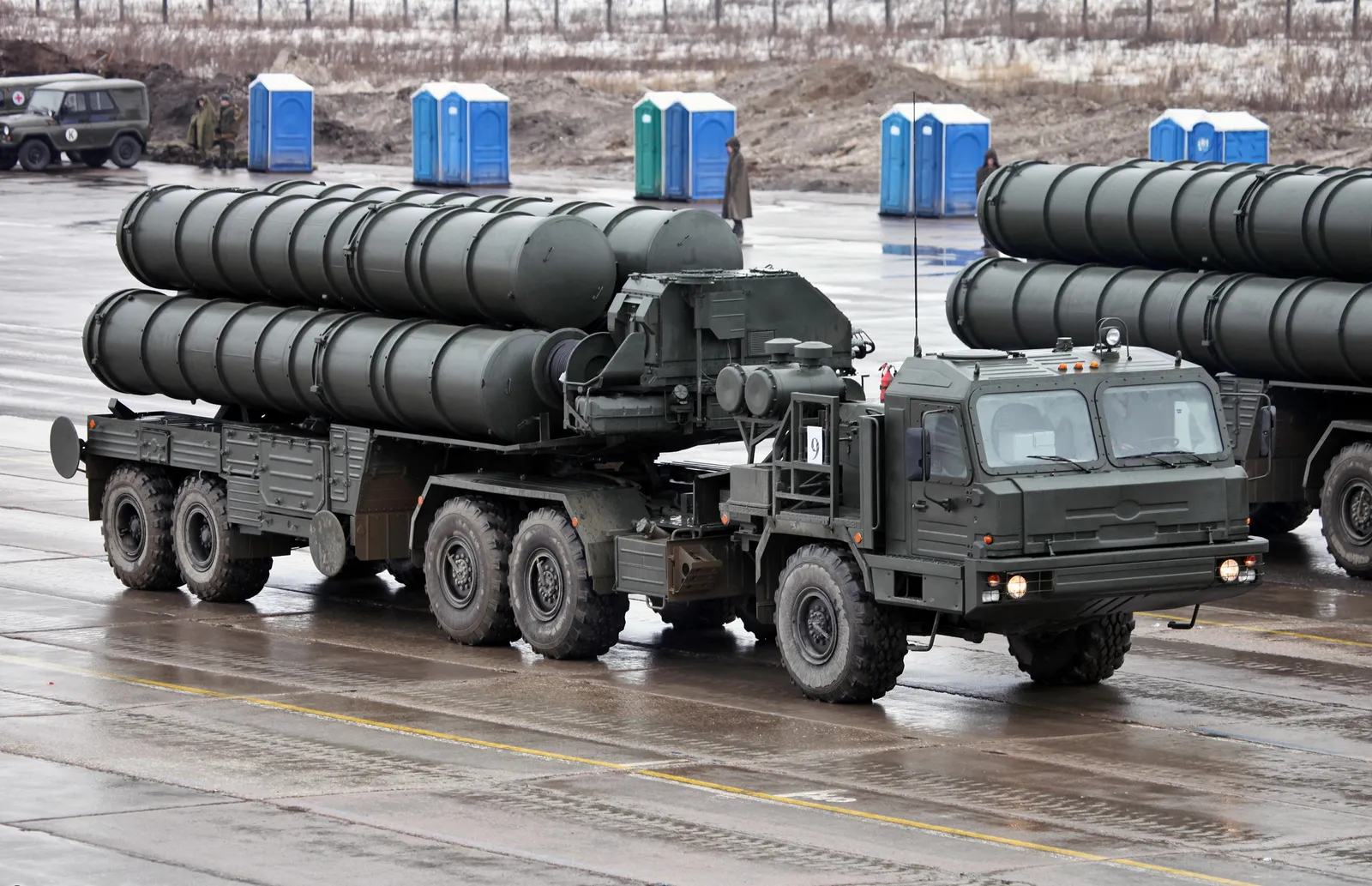
In September 2026 Ukraine's military intelligence (HUR) took a recovered RM-48U apart and published what it found. The motor comes from the 48N6DM, the tail section from the export 48N6E2, and the instrument compartment mixes parts of the 9M96 and the 48N6E2. It is a single-stage solid-fuel missile on a ballistic trajectory. For ground attack it navigates by an inertial system corrected by satellite signals through a Kometa-R12 receiver, the same family of anti-jam modules that guides Russia's other missiles. A second version is steered by radio command from the S-400's own radar, which limits it to targets inside that radar's horizon; HUR says the satellite version is the one mostly used.
The ground-attack role is older than the name. Mykolaiv's governor reported S-300 missiles fired at land targets in July 2022, and Kharkiv, about 40 km from the Russian border, has been hit by them ever since. What 2026 added is scale and a dedicated product. Debris from an RM-48U was first identified after the attack of 20 January 2026. By July it led Russia's ballistic attacks.
The RM-48U in numbers
| Figure | Value |
|---|---|
| Origin | Russian target missile built from expired 5V55 and 48N6 interceptors (S-300 and S-400) |
| Launcher | S-400 and S-300 launchers; HUR reported up to 17 S-400 launchers modified for ground strikes |
| Flight | Ballistic, Mach 4 to 6, single-stage solid motor |
| Range | up to 400 km, by HUR's teardown |
| Warhead | 199 kg high-explosive fragmentation, preformed cube fragments |
| Guidance | Inertial plus satellite (Kometa-R12); a radio-command version also exists |
| Accuracy | misses by about 300 m on average, by Ukrainian investigators' count |
| Stock and output | up to 400 in stock, about 40 made a month (HUR, October 2026); 200 made in 2025, a plan for more than 480 in 2026 |
| Price | none published; Ukraine's intelligence says it is cheaper than an Iskander-M |
| Components | 95 of 117 identified electronic parts made in the United States |
Why does Russia fire a training target at cities?
Because it is the cheapest ballistic missile Russia has, and in 2026 Russia needed many of them. An Iskander-M, Russia's main short-range ballistic missile, costs about $3 million by Forbes Ukraine's estimate, and Russia makes up to 65 a month. The RM-48U reuses hardware from expired 5V55 and 48N6 missiles, already paid for. A new 48N6 interceptor is listed at about $1.3 million by the Missile Defense Advocacy Alliance; what Russia pays to turn an expired one into an RM-48U has not been published, and I will not invent a number. Ukraine's intelligence says only that it is cheaper than an Iskander, and it ties the growth in RM-48U use to exactly that.
The volume tells the rest. Ukraine's intelligence counted about 15 RM-48U a month from January to June 2026, and 46 in the first 20 days of July. Ukrainian prosecutors counted 158 ballistic and hypersonic missiles fired at Ukraine in July 2026, the most of any month since the full-scale invasion began, and 87 of them were RM-48U. Iskander launches fell from more than 100 in June to 38 in July. Sidharth Kaushal of RUSI, the London defense think tank, told Reuters that the RM-48U lets Russia save its Iskanders for later attacks. The cheap missile carries the volume, and the expensive one is kept for the targets that need accuracy.
That division of labor is what I break down in Russia's bridge-strike salvos. On 7 November 2026 the S-400 missiles came in the first wave over Kyiv, ahead of Zircons and the upgraded Iskander-M that hit the Northern Bridge. The first wave is there to make Patriot batteries fire.
Why can the defender not just let it fall?
Because in the first minute it looks like the missile that matters. A ballistic track at Mach 4 to 6, coming down from high altitude, is what an Iskander looks like on a radar too. Telling them apart takes tracking time that a ballistic attack does not leave: an Iskander reaches Kyiv three to four minutes after launch, and in Kharkiv, close to the border, the gap between the air-raid alert and an S-300 impact has been 30 to 40 seconds. A crew that lets a track go because it guessed "RM-48U" and was wrong loses a power plant, a bridge or an apartment block.
The 300-metre miss does not make it harmless. It makes it indiscriminate. Three hundred metres is the width of several city blocks, and a 199 kg warhead built to shred an aircraft sprays fragments over a wide area, as Ukraine's prosecutors put it. Fired at a military target inside a city, it lands on whatever is near. That is why the RM-48U is a weapon of terror against Ukrainian civilians even when Russia claims a military aim, and why the defender cannot treat it as a decoy.
So it gets an interceptor, and Ukraine has two kinds that stop ballistic missiles: Patriot's PAC-3 MSE, which carries almost all of the load, and the Franco-Italian SAMP/T in a few places. Lockheed Martin delivered 620 PAC-3 MSE in 2025 for every customer in the world. Every one spent on an RM-48U is one missing from the next wave, and the cost-exchange ratio runs the wrong way before the expensive Russian missiles have even launched.
Where do its parts come from?
From the United States, mostly. HUR identified 117 electronic components in the RM-48U it examined, and 95 of them were made by American companies; the rest came from Taiwan, Switzerland, Germany, the Netherlands, Japan and South Korea, and a laser diode from France's 3SP Technologies. HUR named 63 Russian enterprises in the production chain. Ukraine's intelligence publishes such findings on its War & Sanctions portal, a public database of foreign parts found in Russian weapons.
That is the uncomfortable part for a Western reader. The missile that drains a $3.87 million American interceptor is assembled around American chips that reached Russia despite export controls. Export control on commercial electronics is the cheapest air defense the West has, and the RM-48U shows how leaky it still is.
Where does the RM-48U go next?
I expect it to become the standard opening wave of every large Russian raid, and four signals will show how far.
- Output against the plan. HUR's figure of about 40 a month in October sits close to the 480-a-year plan. A rise above it means Russia has found more expired missiles to convert or a way to build new airframes for the purpose.
- More launchers. Seventeen modified S-400 launchers were reported in 2026. The count shows how much S-400 capacity Russia is willing to turn from air defense to striking cities.
- Better accuracy. A terminal seeker like the Iskander's would turn a 300-metre area weapon into a precision one. The Kometa module is already there; the next teardown will show whether anything else was added.
- Sanctions enforcement. Whether the share of American parts in the next teardown falls from 95 of 117.
What will the market need next?
The RM-48U is a tax on the most expensive interceptor in the world, and Patriot's buyers pay whatever Lockheed asks for that interceptor, because almost nothing else stops the third wave. The products that sell are the ones that cut how many PAC-3s an RM-48U costs.
- Ballistic track classification. Telling an RM-48U from an Iskander in the first minute, from trajectory, speed profile and radar data fused across sites. The buyer is an air-defense command, the product is software and integration on radar feeds that already exist, and the price is set by the interceptors it saves: every avoided PAC-3 is $3.87 million, so a system that saves a few a month per battery pays for a seven-figure annual licence. Certified access to a fire-control chain is the moat.
- A cheaper second-layer interceptor for low-end ballistic targets. Something that can kill a 300-metre-accuracy missile over a city's outskirts without being a PAC-3. Buyers are every Patriot and SAMP/T user in Europe, funded through NATO and EU instruments; it sells only as the layer under Patriot, never as its replacement.
- Component tracing and compliance. Distributors and chipmakers need to show where their parts end up. Supply-chain tracing, end-user screening and forensic matching of teardown parts to sales records are a compliance market that exists because of weapons like this one.
- Civil protection near the likely aim points. Shelters at rail stations and transit stops, faster alerts on the routes most exposed to the border. City budgets, with allied reconstruction money behind them.
What the RM-48U means for a defense founder
- The threat that matters most is not always the most advanced one. An old missile in large numbers moves the defender's budget more than a new missile in small ones. Size your product to the volume threat.
- Sell the saved interceptor, not the feature. Air-defense buyers count in PAC-3s. Show how many your product keeps in the launcher.
- Teardowns are market research. HUR's published component lists show which chips, receivers and modules Russia depends on. A founder in sensing, navigation or compliance can read the next year's demand straight from them.
Sources (15)
- Reuters, Russia adapts a training missile to lead its ballistic onslaught of Ukraine, 18 September 2026
- Euromaidan Press, Russia is using inaccurate missiles to attack Ukrainian cities, 18 September 2026
- UNITED24 Media, Russia builds ballistic "Frankenstein" from S-400 missiles and packs it with US tech, 10 September 2026
- Censor.net, HUR showed the RM-48U: 95 of 117 components are from the USA, September 2026
- UNITED24 Media, Russia uses RM-48U target missiles in ground strikes for the first time, 20 January 2026
- The War Zone, Claims swirl around use of new Russian missiles to strike Ukraine, 21 January 2026
- The War Zone, Russia now firing S-300 surface-to-air missiles at land targets in Ukraine, 8 July 2022
- NV, Russia produces 110 ballistic missiles and 10,000 drones monthly (HUR stock and production figures), 20 October 2026
- Militarnyi, RM-48U missiles make up more than half of ballistic and hypersonic missiles fired at Ukraine in July and August, 19 September 2026
- Militarnyi, Russia converted up to 17 S-400 launchers for strikes on Ukraine, HUR, 26 August 2026
- The Washington Post, Russian strike hits mail facility in Ukraine's Kharkiv, killing 6, 22 October 2023
- Missile Defense Advocacy Alliance, Missile interceptors by cost, 16 July 2025
- Forbes Ukraine, cost of Russian missiles fired at Ukraine, 27 June 2022
- US Army, FY2026 Missile Procurement justification (PAC-3 MSE unit cost), June 2025
- Lockheed Martin, accelerating PAC-3 MSE production, 6 January 2026