
Russia holds more than 600 Oniks missiles, and against Odesa it beats the defense with the curvature of the Earth, not with speed
The P-800 Oniks is a Russian supersonic anti-ship missile that Russia fires from occupied Crimea at Odesa's ports, grain terminals and the Black Sea coast. This page explains how it works, why it is hard to see before the last minutes, why Russia has more of it than of any other fast missile, and which products would change the defense of a coastline against it.
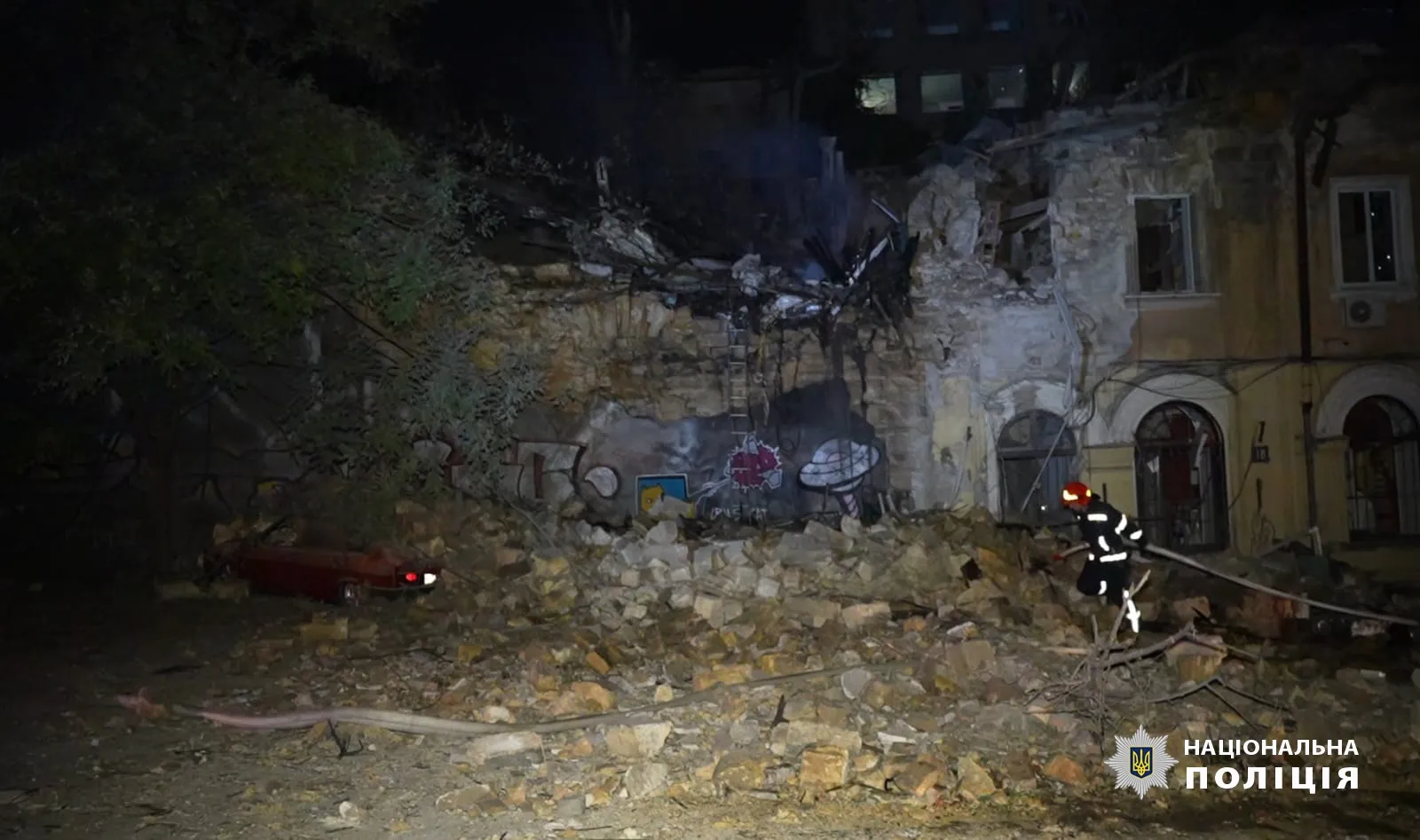
On the night of 23 July 2023 Russia fired 19 missiles at Odesa, the Ukrainian port city on the Black Sea. Ukraine's Air Force shot down nine of them, all Kalibr and Iskander-K cruise missiles. None of the five Oniks fired from coastal launchers in occupied Crimea was among them. One person was killed and 22 were injured in the city that night, and the strikes on Odesa's port and grain infrastructure ran on through that summer. Since Russia launched its full-scale invasion of Ukraine in February 2022, the coast around Odesa has been the Oniks's main target.
My argument is that the Oniks is dangerous to a coastal city for a reason that has little to do with its speed. It finishes its flight 10 to 15 metres above the water, below the horizon of any radar standing on the shore, and at Mach 2 that leaves the defender seconds, not minutes, between first sight and impact. The defense against it is a sensor problem before it is an interceptor problem. And of the fast missiles Ukraine's intelligence counts, Russia holds more of the Oniks than of any other: more than 600.
What is the Oniks?
A supersonic anti-ship cruise missile made by the Russian missile maker NPO Mashinostroyeniya, in service since 2002, NATO name SS-N-26 Strobile. A rocket booster launches it and a ramjet, an air-breathing engine with no moving compressor, carries it at about Mach 2.2. It can be fired from ships, submarines and aircraft, and from two land systems: the stationary Bastion-S and the mobile Bastion-P, which is the one Russia uses in Crimea. Its export version is called Yakhont, and its design became the basis of BrahMos, the missile India builds in a joint venture and has sold to the Philippines.
The Oniks in numbers
| Figure | Value |
|---|---|
| Designation | P-800 Oniks, 3M55; export version Yakhont; NATO SS-N-26 Strobile |
| Length, diameter | 8.6 m (surface-launched), 0.67 m |
| Launch mass | about 3,000 kg (surface-launched) |
| Warhead | 200 kg high-explosive or 250 kg semi-armour-piercing |
| Speed | up to Mach 2.2 in flight, about Mach 2 low over the sea |
| Flight profile | climbs to about 14 km, then descends to 10 to 15 m on approach |
| Range | 300 km on the standard profile, 120 km on an all-low profile (CSIS); 600 to 800 km in the version adapted to strike land targets |
| Stock | more than 600 (Ukraine's intelligence, October and November 2026) |
| Production | more than 55 in January to July 2026, about 8 a month |
| Estimated cost | about $1.25 million (Forbes Ukraine) |
Why is it hard to see?
A radar on the ground sees in straight lines, and the Earth curves away beneath them. An object 10 to 15 metres above the sea drops below the horizon of a ground radar at about 30 km, for a target 10 metres up and an antenna 20 metres up. At Mach 2, about 700 m/s, a missile covers that distance in well under a minute.
So the Oniks has two phases for the defender. High up, at 14 km, it is visible far away and fast but predictable. In its last stretch over the water, where it is aimed, it drops out of the line of sight of radars on the shore and comes back into view close to the target, unless a raised or airborne sensor is watching. A launcher on Crimea's western coast is under 200 km from Odesa, about five minutes of flight. The defender who has not tracked and engaged it during the high phase has seconds to react at the end.
That is why the 23 July 2023 count is the telling one. Ukraine's air defense stopped subsonic cruise missiles that night and none of the Oniks. In August 2026 Ukraine reported one of two Oniks fired from Crimea downed.
Why does Russia have so many?
Because it was designed to sink ships, and Ukraine has few large warships for it to attack. Russia adapted the missile to strike land targets and extended the range of that version to 600 to 800 km. It keeps making about eight a month and holds more than 600.
The price explains the rest. At about $1.25 million, the Oniks costs less than half an Iskander-M. It is the cheapest of the fast missiles in Russia's salvos, by the published estimates, and the one it can afford to fire at grain terminals. On 19 July 2023, two days after Russia walked out of the Black Sea grain deal, Odesa's regional governor named Oniks and Kh-22 missiles among the weapons used against the grain and oil terminals of Odesa and Chornomorsk. On 25 September 2023 two Oniks destroyed grain storage in the Odesa region. These are economic targets: Ukraine's grain exports leave through these ports.
What does the Oniks do in a salvo?
It spreads the defense. Ukraine's Air Force has listed Oniks among missiles fired together with Kalibr cruise missiles, Kh-22 and Kh-59 air-launched missiles, the cheap Banderol cruise missile and attack drones. A battery facing missiles at 14 km, missiles at 50 m over land and drones at a few hundred metres has to divide its sensors and interceptors across all of them. The Oniks is the one in that mix that arrives fastest at low altitude, which makes it the hardest of them to catch late. I explain how Russia layers missiles of different speeds into one raid in what it costs to stop Russia's bridge-strike salvos, and why the defender's bill grows faster than the attacker's in cost-exchange ratio.
Where does the Oniks go next?
Three signals are worth watching.
- Strikes deeper inland. The 600 to 800 km land-attack version puts central Ukraine in reach from Crimea. Oniks hits far from the coast would confirm the adapted version in regular use.
- The Baltic. Russia deployed Bastion launchers to Kaliningrad, its Baltic exclave between Poland and Lithuania, in 2016. Any reinforcement there puts the same sea-skimming problem against NATO ports.
- Production above ten a month. Output of about eight a month sustains the current tempo. A rise would mean Russia sees the Oniks as a main land-attack weapon, not only a stock to use up.
What will the market need next?
Every product that helps against the Oniks starts from one fact: the shore cannot see it late in its flight.
- Raised sensors. Radars on aerostats, masts and drones that look over the horizon at the sea give minutes back. A tethered aerostat radar is far cheaper than a fighter on patrol, and coastal air-defense commands in Ukraine, Poland, the Baltic states and Romania are the buyers.
- Cueing from the high phase. The Oniks is visible at 14 km for most of its flight. Software that passes that track to whatever defense sits closest to the predicted impact point turns a lost track into an engagement. It sells to air-defense commands as an integration product.
- Point defense for ports and terminals. Short-range guns and missiles placed at the terminal, not at the city's edge, are what can still act in the last seconds; the high-altitude interceptors I describe in the Patriot air-defense system are too few to sit at every quay. Port operators and grain exporters have a direct financial reason to pay for them, with the military setting the requirements and operating the weapons.
- Insurance and risk data for Black Sea shipping. Every terminal hit moves war-risk premiums. Data products that model strike risk by port and by month sell to insurers, shipowners and traders.
What the Oniks means for a defense founder
- Sensor height is an economic variable. Every extra ten metres of antenna height buys seconds of warning against a sea-skimmer. An aerostat, a mast or a drone that adds that height is easier to build, cheaper to buy and faster to field than another interceptor, and the seconds it buys can be priced in interceptors saved.
- The customer may not be the military. Port operators, grain traders and insurers lose money every time an Oniks lands. They have their own budgets for the parts of the defense the law lets them own: sensors, hardening and passive measures.
- Big stocks are a forecast. I expect most of six hundred missiles with few ships to attack to be fired at land. Plan for the threat a country holds in volume, not the one it advertises.
Sources (9)
- Ukrinform, Ukraine downs 9 of 19 missiles launched at Odesa, 23 July 2023
- PBS NewsHour (AP), Russia hits critical port facilities in Odesa in second night of attacks after Kremlin halts grain deal, 19 July 2023
- LIGA.net, Russia fires missiles and drones at Odesa, targeting grain infrastructure, 25 September 2023
- Ukrainska Pravda, Ukraine's air defence downs Oniks missile and 113 other Russian assets, 24 August 2026
- CSIS Missile Threat, P-800 Oniks/Yakhont/Bastion (SS-N-26 Strobile), updated 23 April 2024
- NV, Russia produces 110 ballistic missiles a month, Ukraine's intelligence, 20 October 2026
- UNITED24 Media, Russia keeps building missiles despite sanctions, 4 November 2026
- Forbes Ukraine, cost estimate of Russian missiles, 27 June 2022
- Business Standard, Manila to acquire BrahMos cruise missiles for $375 million, 29 January 2022