
SAMP/T is Europe's only answer to Patriot against ballistic missiles, and the limit is how many Asters Europe can build
SAMP/T is the Franco-Italian long-range air defense system, and with Patriot it is one of the two Western systems Ukraine uses against Russian ballistic missiles. This page explains the system and its Aster 30 missile, the SAMP/T NG upgrade Ukraine will be first to use in combat, what it costs, and why missile output, not the launcher, decides what it can do.
In July 2026 Ukraine ordered four SAMP/T NG air defense systems from France, paid for with European loan money, and France agreed to lend it two older SAMP/T batteries until the new ones arrive, to be handed back afterwards. A loaned battery that has to be returned says more about the state of European air defense than any brochure. Since Russia launched its full-scale invasion of Ukraine in February 2022, Russian ballistic missiles have struck Ukrainian cities throughout the war, and Europe has one long-range system of its own that can stop them, the only European alternative to Patriot, as Defense News described it.
My argument is that SAMP/T's limit is not the launcher or the radar but the missile. A full SAMP/T NG section holds 48 Aster missiles ready to fire, and in December 2024 France's procurement chief put output of the whole Aster family at 80 to 100 a year. One section's load was half of Europe's annual production. Building that system in Europe was a choice for sovereignty, and the factory behind it is small. Ukraine is where that choice gets tested, against Russian missiles fired at its cities.
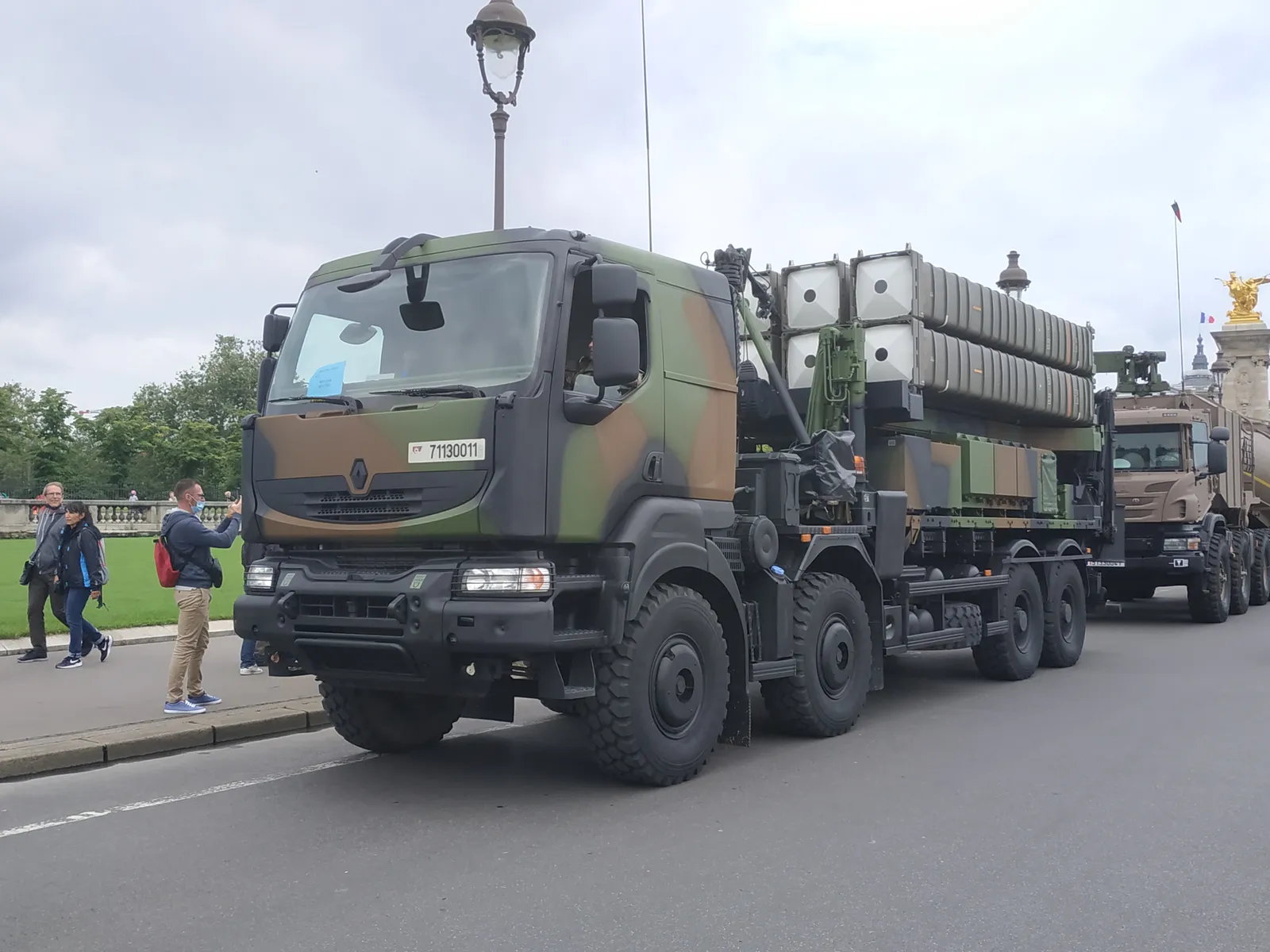
What is SAMP/T?
SAMP/T, from the French Sol-Air Moyenne Portée/Terrestre, is a mobile ground-based air and missile defense system built by Eurosam, a joint venture of MBDA France, MBDA Italia and Thales. It is in service with the French and Italian armies. A section combines a multi-function radar, an engagement module that runs the fight, and vertical launchers on trucks, each carrying eight Aster 30 missiles. The Aster 30 is a two-stage interceptor, and the same missile family arms French, Italian and British warships.
With the American Patriot, it is Ukraine's defense against short-range ballistic missiles. RUSI, the London defense think tank, counted Patriot and SAMP/T in July 2026 as the two systems that give Ukraine an effective defense against ballistic missiles, with Germany's IRIS-T and the American-Norwegian NASAMS covering cruise missiles and drones below them.
SAMP/T in numbers
| Figure | Value |
|---|---|
| Maker | Eurosam (MBDA France, MBDA Italia, Thales) |
| Missile | Aster 30 B1; Aster 30 B1NT for the NG version, with a Ka-band seeker and hit-to-kill guidance |
| Reach | Aster 30 up to 120 km depending on the target; SAMP/T NG engages beyond 150 km |
| Radar | SAMP/T NG radar detects and identifies targets beyond 350 km, 360-degree coverage |
| Section | up to 6 launchers of 8 missiles, 48 ready to fire; operational in under 30 minutes |
| Targets | aircraft, cruise missiles, drones, short-range ballistic missiles; B1NT adds medium-range ballistic and hypersonic threats |
| Missile price | more than €2 million per Aster 30, by IFRI's estimate |
| Output | 80 to 100 Aster missiles a year in late 2024; a target of more than 300 a year by 2028 |
| In Ukraine | first battery spring 2023, second from Italy in September 2024; two more on loan from France in 2026; four SAMP/T NG ordered for delivery from 2027 |
How does SAMP/T stop a ballistic missile?
By meeting it close to the target, late in its fall. A ballistic missile such as the Russian Iskander-M comes down almost vertically at 700 to 800 metres a second. The radar has to find it, track it and hand a firing solution to the engagement module in the minute or so left, and the Aster 30 has to be fast and agile enough to reach it. In the last phase the Aster fires lateral thrusters, a design MBDA calls PIF-PAF, which push it sideways directly instead of waiting for its fins to turn it, the reason it can follow a manoeuvring target.
The current Aster 30 B1 is built to destroy short-range ballistic missiles. The B1NT, the missile of the NG version, adds a Ka-band seeker, and Eurosam says its hit-to-kill design covers short- and medium-range ballistic missiles, low-manoeuvring missiles and hypersonic threats. MBDA has said B1NT deliveries begin in 2027. The NG also fires the B1, so the first batteries Ukraine receives may start with the older missile, and their full ballistic capability depends on how many B1NTs follow.
There is a second limit that matters in a city. One section covers one area. Ukraine has to choose which cities and which plants sit under its few ballistic-capable batteries, and Russia's raids test those choices; the way a mixed salvo drains them is what I lay out in Russia's bridge-strike salvos.
What does SAMP/T cost?
A missile costs more than €2 million, by the estimate of IFRI, the French international relations institute, reported when France, Italy and Britain ordered more than 200 Asters in March 2025. That is below the $3.87 million the US Army budgets for a Patriot PAC-3 MSE, and it buys a missile that can also kill aircraft and cruise missiles at long range.
The system price depends on the contract. Denmark is the clearest public case: in September 2025 it chose SAMP/T over Patriot for the long-range layer of its air defense, in a package of eight medium- and long-range systems, two of them SAMP/T, budgeted at about 58 billion kroner (about $9.1 billion) to buy and operate. The US had offered two Patriot systems for an estimated $8.5 billion. Denmark's defense chief said that buying from more than one or two suppliers shortens delivery times, which puts factory capacity into the choice alongside performance.
Why are there never enough Asters?
Because the missile line was sized for peacetime. France's procurement chief Emmanuel Chiva said in December 2024 that output of the Aster family had reached 80 to 100 missiles a year, with a target of more than 300 a year by 2028. For comparison, Lockheed Martin delivered 620 PAC-3 MSE in 2025. The Aster is shared by France's and Italy's air defense, their navies and Britain's destroyers, and every export order joins the same queue.
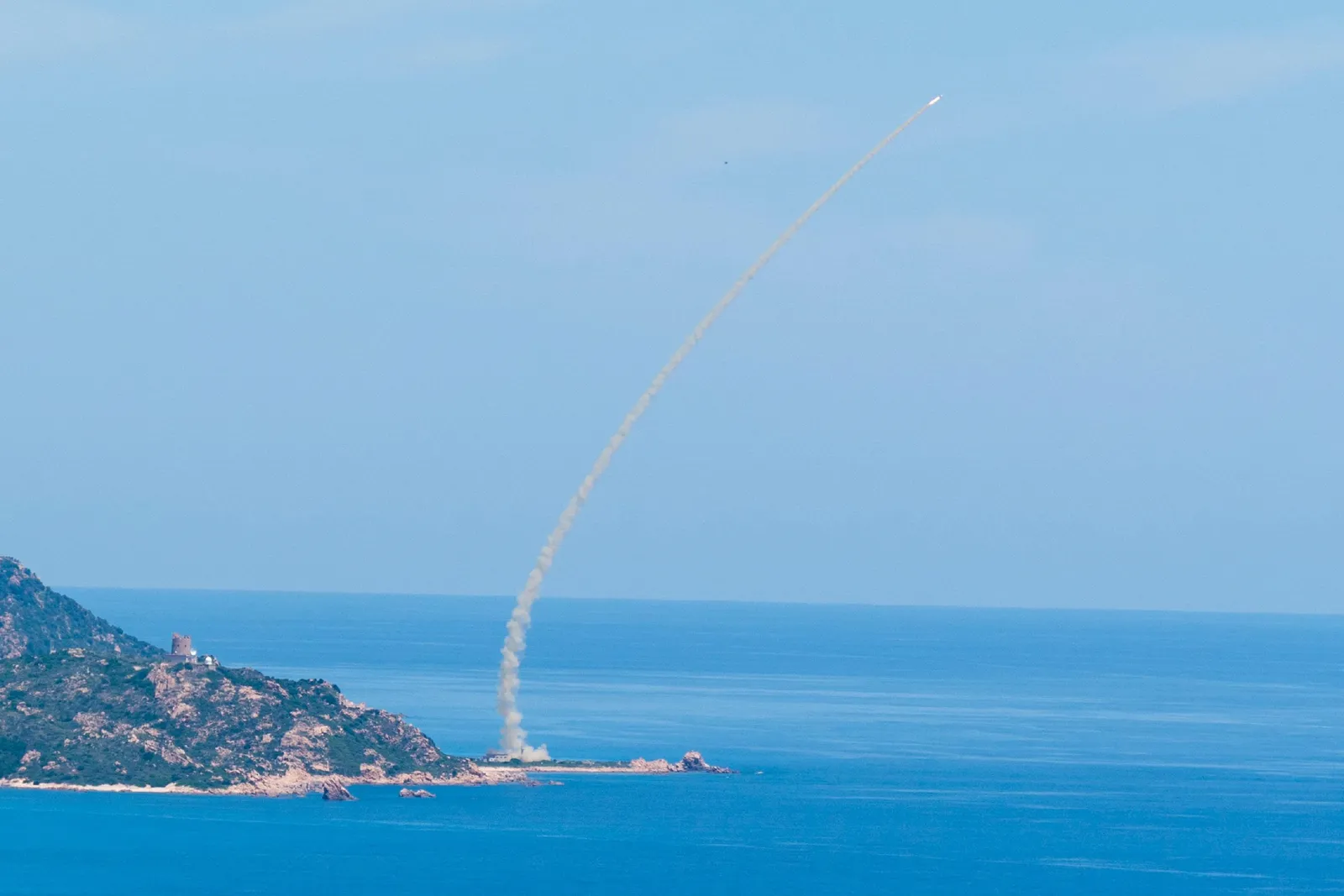
Ukraine meets that limit before anyone else. The four NG systems start arriving in 2027, the B1NT the same year, and the factory's larger volumes may not come until 2028 or later. Analysts have warned that the new batteries could stand with shallow magazines. France and Italy agreed to bring forward delivery of the Asters already promised, by October 2026, and in July 2026 France authorized licensed production of the Aster 30 in Ukraine, together with SCALP cruise missiles and AASM Hammer bombs. A Ukrainian Aster line would put production next to the combat demand that is exposing Europe's shallow missile stocks.
Where does SAMP/T go next?
I expect it to become the European standard for ballistic defense on NATO's eastern flank, with the missile count deciding how fast. Four signals will show it.
- The first combat results of SAMP/T NG over Ukraine. Ukraine's presidential office says Ukraine will be the first country to use the NG in combat. Its record against Iskanders will sell or stall every European order that follows.
- Aster output against the 300-a-year target. Any annual figure MBDA or France's procurement agency publishes is the single number that matters most.
- A Ukrainian Aster line. Whether licensed production starts, and when the first Ukrainian-built Aster is fired.
- More European buyers choosing it over Patriot. Denmark chose the NG in 2025. The next long-range order on the eastern flank will show whether sovereignty outweighs Patriot's larger production base.
What will the market need next?
- Aster supply chain capacity. Rocket motors, seekers, thruster systems and guidance electronics for a line that has to triple in four years. Second sources in Europe and, under the license, in Ukraine are where MBDA's suppliers and new entrants will be paid first. The March 2025 order of more than 200 Asters alone is worth more than €400 million at IFRI's price.
- Integration with other sensors and command systems. A SAMP/T battery is more valuable when it receives tracks from other radars and passes its own picture on. Software that ties it into national and NATO air defense networks, and into Ukraine's own air-picture tools, is sold to air-defense commands and ministries, typically as integration contracts plus support.
- A cheaper layer below it. Every Aster spent on a drone or an old missile is one missing for an Iskander. Interceptor drones at a few thousand dollars, guns and mid-priced missiles take those targets off the SAMP/T, and their buyers price them against a €2 million Aster, the cost-exchange ratio at work.
- Crews, maintenance and spares close to the batteries. Ukraine will run old SAMP/T, borrowed SAMP/T and new NG side by side. Training, repair and spares are a service market that grows with every battery delivered.
What SAMP/T means for a defense founder
- The bottleneck is in the missile, so the opportunity is in its parts. A supplier who can add capacity to the Aster chain sells into a programme short of exactly that, with European governments paying.
- European buyers now pay for sovereignty and delivery time. Denmark chose a European system and cited delivery. A European founder with a credible production plan has an argument an American competitor cannot make.
- Ukraine is the proving ground. A component proven in Ukraine's SAMP/T NG batteries will carry that record to every European buyer afterwards. Getting into the Ukrainian supply chain now is worth more than any trade show.
Sources (12)
- Militarnyi, Ukraine orders four SAMP/T NG systems; France to temporarily transfer two SAMP/Ts, 15 July 2026
- Militarnyi, Ukraine to receive two more SAMP/T systems in 2026, 14 July 2026
- Defense Magazine, Ukraine's SAMP/T NG challenge: missiles may be the real bottleneck, 29 August 2026
- Eurosam, Denmark chooses European SAMP/T NG to protect its sky, 12 September 2025
- Defense News, Denmark picks French-Italian SAMP/T air defense system over Patriot, 12 September 2025
- Le Figaro, France, Italy and the United Kingdom order more than 200 Aster missiles (IFRI price estimate), 14 March 2025
- Ukrinform, Italy to deliver second SAMP/T battery to Ukraine by end of September, 18 September 2024
- Defense News, Italy confirms SAMP/T missile defense donation to Ukraine, 23 January 2023
- The Defense Post, Aster missile guide, 30 July 2026
- RUSI, Four years on: an update on the air war over Ukraine, 28 July 2026
- US Army, FY2026 Missile Procurement justification (PAC-3 MSE unit cost), June 2025
- Lockheed Martin, accelerating PAC-3 MSE production, 6 January 2026
Where this comes up on the site
- Russia's bridge-strike salvos are built so that the cheapest missile buys the most expensive response, and one bridge can take 8% of a year's Patriot output
- Russia sells the Zircon as an unstoppable hypersonic missile. Over Kyiv it slows down, carries under 50 kg of explosive and works as a $5 million decoy for the Iskanders behind it
- NASAMS fires a fighter jet's missile from the ground, and that is both why it spread so fast and why it runs short