
Too proud to take Ukraine's $2,000 answer to Iran's Shaheds, the Pentagon paid in American lives and billions
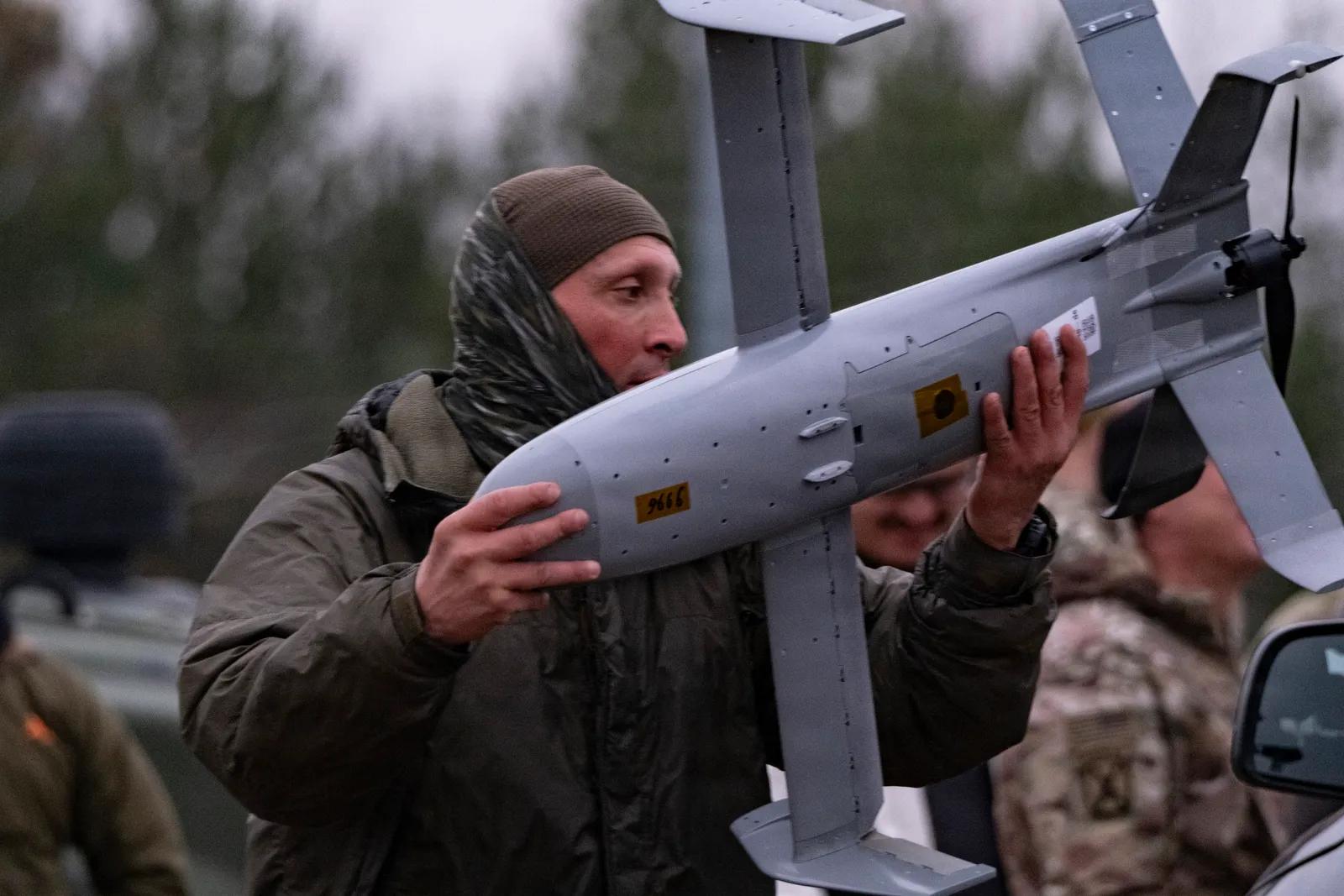
The Atlantic reported on 15 November 2026 that US Army officers warned for months about Iran's Shahed drones and urged the Pentagon to field Ukraine's cheap interceptors, and that the warnings were ignored. Then a Shahed killed six American soldiers in Kuwait. I read the refusal as arrogance in the Pentagon and the White House, and I count its bill: lives first, then radars, aircraft, Patriots and years of factory output, against a cheap layer that would have cost a few million dollars. The failure of 13,000 Merops in the Gulf shows that what Ukraine offered was never a drone but a system.
On the morning of 1 March 2026, the second day of the US-Israeli war against Iran, a Shahed drone came through the roof of an office building at a logistics center in Kuwait used by the US military. Six American service members were killed and more than two dozen wounded, the deadliest single attack on US troops in the war. The drone was the same Iranian design Russia has launched at Ukrainian cities almost every night since its full-scale invasion of Ukraine in February 2022, and by then Ukraine had a cheap and effective way to shoot it down.
On 15 November The Atlantic published an investigation by Simon Shuster, built on interviews with more than a dozen current and former US and Ukrainian officers. Its account: US Army officers in Europe knew about Ukraine's interceptor drones months before the war, fielded them at their own bases in Romania and Poland, sent detailed reports up the chain urging commanders in the Middle East to do the same, and were ignored. Several of them have since been fired or pushed into retirement. The Pentagon disputes this. Its spokesman told the magazine that Central Command had built "the most extensive air defense umbrella in the world" over the Middle East.
My reading: this was arrogance at the top, in the Pentagon and in the White House, and it failed on both counts it was meant to serve. Politically, the United States ended up taking Ukraine's help anyway, six weeks later, at a base that had already been hit. Economically, which is the part that will outlast the politics, it took the drone threat, which Ukraine had already answered with a few million dollars of hardware, and paid for it in Patriots at millions of dollars a round and in years of factory output. Ukraine's war has already shown many times that a correct partnership changes the price of a war. This is the clearest price tag yet. And the 13,000 cheap interceptors the Army rushed to the Gulf once the war began show the deeper part: what Ukraine was offering was never a drone. It was a working system, and a system cannot be bought in a week.
What did The Atlantic report?
| Date | Event, as The Atlantic reported unless noted |
|---|---|
| Summer 2025 | Ukraine fields interceptor drones against Shaheds: Octopus, Sting, Bullet, a few thousand dollars each |
| Autumn 2025 | US Army officers in Germany train on them; the US shelves a deal to buy Ukraine's most advanced military equipment |
| December 2025 | A Ukrainian report on employing interceptor drones against Shaheds circulates in the US military and among allies; US Army Europe has the interceptors at bases including in Romania and Poland |
| 23 February 2026 | US Army Europe publishes a second, public report with guidance for other commands |
| 28 February 2026 | The US and Israel attack Iran |
| 1 March 2026 | Shahed strike in Kuwait: six US service members killed |
| Early March 2026 | US Army Europe sends a few hundred of its Ukrainian interceptors to US bases in the Gulf; Gulf states call Kyiv wanting interceptors in a hurry |
| 5 March 2026 | Ukraine offers equipment and experts to help the US counter Iranian drones |
| 13 March 2026 | President Trump on Fox News Radio: "No, we don't need their help in drone defense" |
| March 2026 | The Army buys 13,000 Merops interceptors and flies them to the region; they down one Shahed, by the account of two people familiar with the mission |
| August 2026 | The Army ends the drone role of its Unmanned Assault Battalion, about 600 soldiers set up to learn from Ukraine |
| Late September 2026 | Ukraine fields an interceptor for the jet-powered Shahed; the US has no deal to buy it |
| November 2026 | The US has used nearly three quarters of its Patriot interceptors since the war began |
The officers The Atlantic spoke to call the motive arrogance and politics, and the Pentagon rejects the whole account. I side with the officers, because the record after March reads like pride, not judgment. The President said on 13 March that the US did not need Ukraine's help with drones. By late April, Ukrainian officers were at Prince Sultan Air Base in Saudi Arabia training American crews on Sky Map, the command software built by the Ukrainian company Sky Fortress, Reuters reported. That was the same base where an Iranian strike had destroyed an E-3 radar plane in March. The officers who argued for the Ukrainian approach were fired or retired, the battalion set up to learn from Ukraine lost its drone role, and the deal to buy Ukraine's best equipment stayed shelved. Saying no in public and yes in private, after the losses, is the most expensive way to take advice.
What did Iran's attacks cost the United States?
Start with what has no price. Six soldiers died under the Shahed in Kuwait on 1 March. By the Pentagon's casualty database, 23 US service members had died and 865 had been wounded in the Iran war and the operations that followed by late October, a count that includes deaths outside combat. Each of those lives is beyond any figure, and nothing below sets one. The warning was not new either: in January 2024 a single one-way drone hit Tower 22, a small US base in Jordan, and killed three American soldiers and wounded more than 40.
Then the recorded material losses, as far as they are public:
| Loss | When and where | Value, as published |
|---|---|---|
| THAAD AN/TPY-2 missile-defense radar, struck; satellite imagery showed it hit, and it was reported destroyed | First days of March, Muwaffaq Salti Air Base, Jordan | About $300 million, a US official told Bloomberg; the Congressional Budget Office puts it near $500 million |
| E-3 Sentry radar plane, destroyed during a missile and drone strike | 27 March, Prince Sultan Air Base, Saudi Arabia | No official figure |
| Five KC-135 tankers, damaged on the ground | 13 March, Prince Sultan Air Base | No official figure |
| 228 damaged structures across US bases in the region | February to June | $4 billion to $9.4 billion to repair, CSIS estimate |
| Missile-defense interceptors fired and still to be replaced | War to 1 August | $13.1 billion, CBO |
| The whole war to 1 August, Defense Department costs only | $38.1 billion, CBO, not counting base repairs |
Not all of it was Shaheds. Iran's ballistic missiles did much of the damage, and most of the $13.1 billion in interceptors went to missiles that no drone interceptor can stop. The fair comparison is narrower, and it is still brutal. US and allied air defenses shot down more than 6,000 Iranian one-way attack drones over the war, by the count a US air-defense officer gave in August. Ukraine brings down more than nine in ten of the ordinary Shaheds Russia sends, with interceptor drones that cost about $2,000 each. At that rate all 6,000 come to about $13 million in hardware, and about $24 million even at Kyiv's planning rule of two interceptors per Shahed. For scale, the reported value of the radar in Jordan alone is more than 12 times the higher figure. Spread across the country, the cheap answer costs about four cents per American; the Patriots the US has used in this war come to up to $20 a head. The CBO adds the part money does not fix: the war used between half and two thirds of the US stock of some missile-defense interceptors, and rebuilding it will take at least five years.
What did saying no cost?
Start with the three prices. A Shahed costs Russia roughly $35,000, by The Atlantic's figure. A Patriot PAC-3 MSE interceptor costs $3.87 million in the US Army's 2026 budget. A Ukrainian interceptor drone costs about $1,000 to $2,300 at its makers' prices; the Merops, built by a company backed by former Google chief executive Eric Schmidt, costs about $15,000 now, the Army secretary said in March and April, and $3,000 to $5,000 in large orders.
Here is what stopping 1,000 Shaheds costs with each, at two interceptors per drone. That is the US Army's own protocol for a Patriot against a drone, at least two missiles, as The New York Times reported, and it is Kyiv's planning rule for interceptor drones too, even though they bring down more than nine in ten:
| Interceptor | Rounds | Cost | What it takes out of production |
|---|---|---|---|
| Patriot PAC-3 MSE | 2,000 | $7.7 billion | 3.2 years of Lockheed's 2025 output for every customer in the world |
| Merops at today's price | 2,000 | $30 million | weeks of a drone line |
| Ukrainian interceptor, Sting class | 2,000 | $4 million | about two days of Ukraine's December 2025 deliveries |
The ratio between the first and the last line is about 1,900 to 1. Nobody fired Patriots at all of Iran's drones: fighters, helicopters, guns and cheaper interceptors took many, and most Patriots went to Iran's ballistic missiles, which only Patriot and its peers can stop. The Atlantic writes that the US and its allies burned through most of their Patriots trying to stop the drones; CSIS estimates that US forces themselves fired few, if any, at one-way drones, and that the drone Patriots were mostly the Gulf partners', which fired hundreds of them at Shaheds. Either way, every Patriot that went to a drone was a trade of a hundred to one in the attacker's favor, and the defenders fired them in pairs or more, as I describe in Iran's drones and the Patriot shortage. Even the cheapest Western answer, a fighter firing two or three laser-guided rockets, comes to about $65,000 a drone with the flight hour, some 30 times what Ukraine pays.
Now the stock. Before the war the US had about 2,330 Patriot interceptors, by CSIS's estimate as Reuters reported it. Nearly three quarters of them is about 1,750 rounds. Not all of them were the newest PAC-3 MSE; some were the older GEM-T. Priced as MSEs, the round now being bought to replace them, that is up to about $6.8 billion, and at Lockheed's 2025 delivery rate it is nearly three years of the factory's output. If even one in ten of those rounds went to drones, the drones cost the US up to about $680 million in Patriots. At two rounds a drone, those 175 Patriots stopped about 88 drones; the same 88, taken with Ukrainian interceptors at two each, would have cost about $350,000.
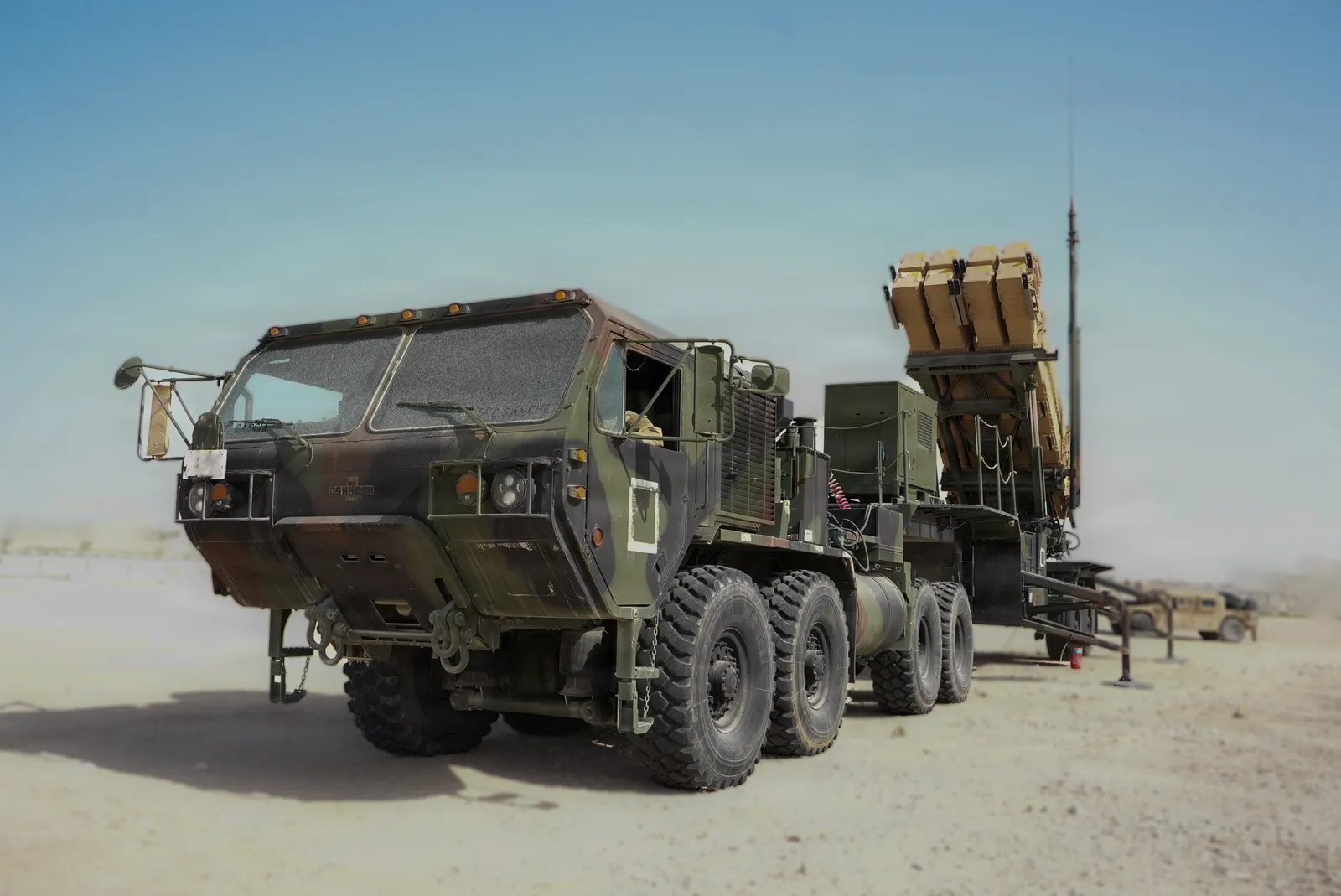
That is the war economics. The defender who has the cheap layer pays in thousands of dollars and days of production. The defender who lacks it pays in millions and in years, and the years are the worse half, because they decide what is left for the next war.
Why did 13,000 cheap interceptors stop only one Shahed?
This is the part of the investigation I find most instructive, because it runs against the obvious conclusion. The obvious conclusion is that the Pentagon should have bought the cheap drones sooner. When it finally did, it bought a lot of them, fast: the Army secretary, Dan Driscoll, told Congress in April that the Army had bought 13,000 Merops within about eight days of the war starting, and they were flown to the region on chartered flights. By the account of two people familiar with the mission, they shot down one Shahed.
At about $15,000 a round, 13,000 Merops are roughly $195 million of hardware. That is what was bought, not what was fired; nobody has published how many flew. Driscoll praised the system in public and gave no interception figures. But $195 million of interceptors and one reported Shahed is a result no Patriot battery would have been allowed to produce, and it came from the cheapest interceptor in the theater.
The Atlantic names two causes. Host countries had never operated the system and were slow to approve flights in their airspace. And the interceptors had no network of sensors to find their targets. Those two are the reported part. The rest is my reading of why they mattered: in Ukraine, an interceptor drone is the last link of a chain.
- Detection. Thousands of acoustic sensors, many of them microphones on poles wired to ordinary smartphones, hear a Shahed's engine. I go through how Ukraine built it in Sky Fortress; at $400 to $1,000 a node, the whole national network costs less than a few Patriots.
- Command and control. Software such as Delta puts the tracks on one map and gives a launch team a target in time to fly. Why NATO's own command systems were not built for this I compare in Delta against NATO's command systems.
- Crews. Operators who have done this every night for a year, with the procedures to match.
- Permission and doctrine. Airspace, rules of engagement and a command that expects the cheap layer to take the drones so the expensive one can wait.
Capability is the product of these factors, not their sum. If any of them is zero, the interceptor is worth nothing, whatever its price. Ukraine spent three years of war building all four. In early March it offered them, with its own experts, and the offer was turned down. The Pentagon bought the one factor that ships in a crate.
Why is a partner's experience worth more than the hardware?
Because of three costs that never appear on a purchase order.
Time. Before the war, the knowledge cost almost nothing: two reports, a training course and a few hundred interceptors already at bases in Europe. After the first strike it had to be bought in a crisis, at crisis prices, by Gulf governments calling Kyiv in a hurry and by an Army flying drones in on charters. Learning before a war is paid for in staff time. Learning during one is paid for in lives and in stockpiles.
Depreciation. Russia's jet-powered Geran-5 flies too fast for the first generation of interceptor drones, and Iran has already used it against US forces, which still answer it with Patriots and fighter jets. Ukraine fielded an interceptor for it within months. A country that buys one generation of the cheap layer and stops there owns a depreciating asset. What it needs is standing access to the loop that keeps producing the next generation, the same logic I apply to air-defense software in Russia's bridge-strike salvos: the value is in the update cycle, and the update cycle runs through the people who see the new threat first.
The shared stockpile. Patriots spent in the Gulf are Patriots that do not reach Ukraine. In my model of one Russian ballistic raid against one Kyiv bridge, stopping it takes 32 to 48 PAC-3s. Had the 1,750 rounds spent since February all been MSEs, they would have covered 36 to 55 such raids. The consequence reaches beyond the US stockpile, to the partner whose experience was refused.
Put the three together and the right comparison is not $2,000 against $3.87 million. It is the peacetime cost of keeping a complete cheap layer ready at bases that may never be attacked, against the wartime cost of the high-end rounds it saves: their price, the years to replace them, and the other fronts that go without while they are rebuilt. In peace the cheap layer looks like an idle expense. On the first night of a war it is an option that protects the most expensive stockpile the country owns, and an option has to be bought before it is needed.
Where does this go next?
I expect the operating economics to force a change, slowly, and these signals will show how slowly.
- A US contract for the jet-Shahed interceptor. The Atlantic reports there is none. The first one will show whether the Pentagon has learned to buy the next generation before the war that needs it.
- A sensor network at US bases in the Gulf. Eight months after Kuwait there is still no Ukrainian-style network of sensors and interceptors at them, by The Atlantic's account. Watch for acoustic and passive-radar contracts for base defense, not only for drones.
- A revived US-Ukraine drone deal. The deal shelved in autumn 2025 is the cheapest fix on the table: co-production on American soil, with Ukrainian designs and Ukrainian combat feedback.
- Where the Army puts its drone learning. With the Unmanned Assault Battalion's drone role ended, the question is which unit, if any, holds the Ukrainian lessons. The bipartisan letter of 1 September asked exactly that.
- Gulf states buying direct. Governments that called Kyiv in March do not need Washington's permission to buy. If they sign with Ukrainian makers, the cheap layer in the Middle East will be built around the Pentagon rather than by it.
What will the market need next?
The lesson for a company is in the Merops numbers. The hardware was available, cheap and fast. The system was not. The products that sell next are the ones that make the hardware work on the first night.
- Base defense as a complete package. Sensors, command software, interceptors, trained crews and spares, delivered and running at a base or a port, sold as a service with a monthly price and a readiness standard. The buyers are the US services, Gulf governments and the operators of ports and airports. The case to the buyer is the option above: the cost of readiness against the Patriots one bad night consumes.
- Passive sensor networks for bases abroad. Acoustic and passive-radar networks, installed and integrated with the host country's air defense. Ukraine's nodes cost $400 to $1,000; the money is in the installation, the integration and the data link, not the microphone.
- Host-nation approval as a product. The Gulf mission stalled on airspace approvals. A firm that arrives with the paperwork, the frequency plan, the rules of engagement and the training already agreed with the host government sells days, and in this war days were the scarce resource.
- Training built on Ukrainian practice. With the Army's own Ukrainian-model battalion wound down, training crews on interceptor drones and on the whole chain is a gap a private provider can fill, for the US and for allies. Ukrainian instructors with combat time are the asset.
- American co-production of Ukrainian designs. Merops itself shows the route: a design proven in Ukraine, built by a US company, bought within days. Production in the US, with components that pass the National Defense Authorization Act's sourcing rules, is what makes a Ukrainian design purchasable at Pentagon speed.
- Interceptors for the jet Shahed. Ukraine has one; the US has no contract. The first maker that offers a fast interceptor with its sensor chain to US and Gulf buyers is selling into a gap The Atlantic has just made public.
What this means for a defense founder or an investor
- Sell the chain, not the drone. A cheap interceptor without detection, command software and crews can cost more per kill than a Patriot. On its own it may be the least valuable part of the interceptor business; the value sits with whoever runs the whole chain at the base. Price and present your product as part of a working chain, or partner with the companies that own the other links.
- Count what your buyer saves in stock, not dollars. The buyer's real constraint is the years it takes to replace a Patriot. A product that keeps 100 PAC-3s on the launcher saves $387 million and about two months of the world's production.
- The first night is the sale. The Gulf mission failed on approvals and integration, not on hardware. Show a buyer how your system is running within days of arrival, and you are selling the thing that was missing.
- Ukrainian combat feedback is an asset with a shelf life. The threat changes in months. A company with a standing channel to Ukrainian operators and makers sees the next generation first, and that is worth more than any single design.
Sources (26)
- The Atlantic, Simon Shuster, The Pentagon ignored a warning about the danger of Iran's drones, 15 November 2026
- Stars and Stripes, Pentagon raises official death toll from Iran war to 23, 29 October 2026
- CBS News, Army survivors of deadly attack in Kuwait dispute Pentagon's account, 9 April 2026
- Stars and Stripes, Pentagon: US strikes in Syria and Iraq had good effects (Tower 22 casualties), 5 February 2024
- Bloomberg, Iran hits key US radar, deepening Gulf missile defense woes, 6 March 2026
- Reuters, Five US Air Force refueling planes hit in Iranian strike in Saudi Arabia, WSJ reports, 13 March 2026
- CNN via KRDO, Destruction of vital US radar aircraft could hamper ability to spot Iran threats, 30 March 2026
- Reuters via Al-Monitor, US turns to Ukrainian counter-drone tech after Iran attacks, sources say, 22 April 2026
- Congressional Budget Office, Estimating the cost of combat operations against Iran, 15 September 2026
- Defense News, Iran war has cost $38 billion, depleted two-thirds of US missile interceptors, CBO says, 15 September 2026
- CSIS, The war may be ending. What did Epic Fury cost?, 23 June 2026
- Anadolu Agency, US has sent 10,000 interceptor drones to the Middle East, Army secretary says, 13 March 2026
- The War Zone, Cheap interceptor drones proven in Ukraine sent to protect US troops against Iranian Shaheds, 16 April 2026
- Ukrinform, Trump says US does not need Ukraine's help in drone defense, 13 March 2026
- Defense News, The Army shut down a specialized drone unit; legislators want to know why, 3 September 2026
- Reuters, What is the Patriot missile system and why are supplies depleted worldwide, 7 August 2026
- CSIS, Renewed Iran war would test diminished interceptor inventories, 27 July 2026
- US Army, FY2026 Missile Procurement budget justification, PAC-3 MSE unit cost
- Lockheed Martin, accelerating PAC-3 MSE production (620 delivered in 2025), 6 January 2026
- Reuters, Ukraine deploys units to intercept targets in the Middle East, 20 March 2026
- The New York Times, How Iran's cheap, low-tech drones have cost the U.S., 18 April 2026
- Il Sole 24 Ore, The US military has shot down 1,400 Iranian missiles and drones using third-party supplies, 12 August 2026
- CSIS, Munition inventories: an update amid renewed war risk, 10 November 2026
- El Cronista, A $4 million missile to stop a $35,000 drone, 16 November 2026
- LIGA.net, Ukraine produces up to 1,000 interceptors per day (two per Shahed), 20 January 2026
- US Census Bureau, population clock