
Iran did not have to beat American air defense. It made America pay for it, and the Patriot interceptor shortage is the bill.
In two wars with Iran, in June 2025 and from February 2026, the US fired its best interceptors in numbers its factories cannot replace for years. Iran's weapon was not one missile but the mix: waves of cheap drones and missiles built to make the defender spend. Here is what it cost, why it lasts, and what Ukraine does differently.
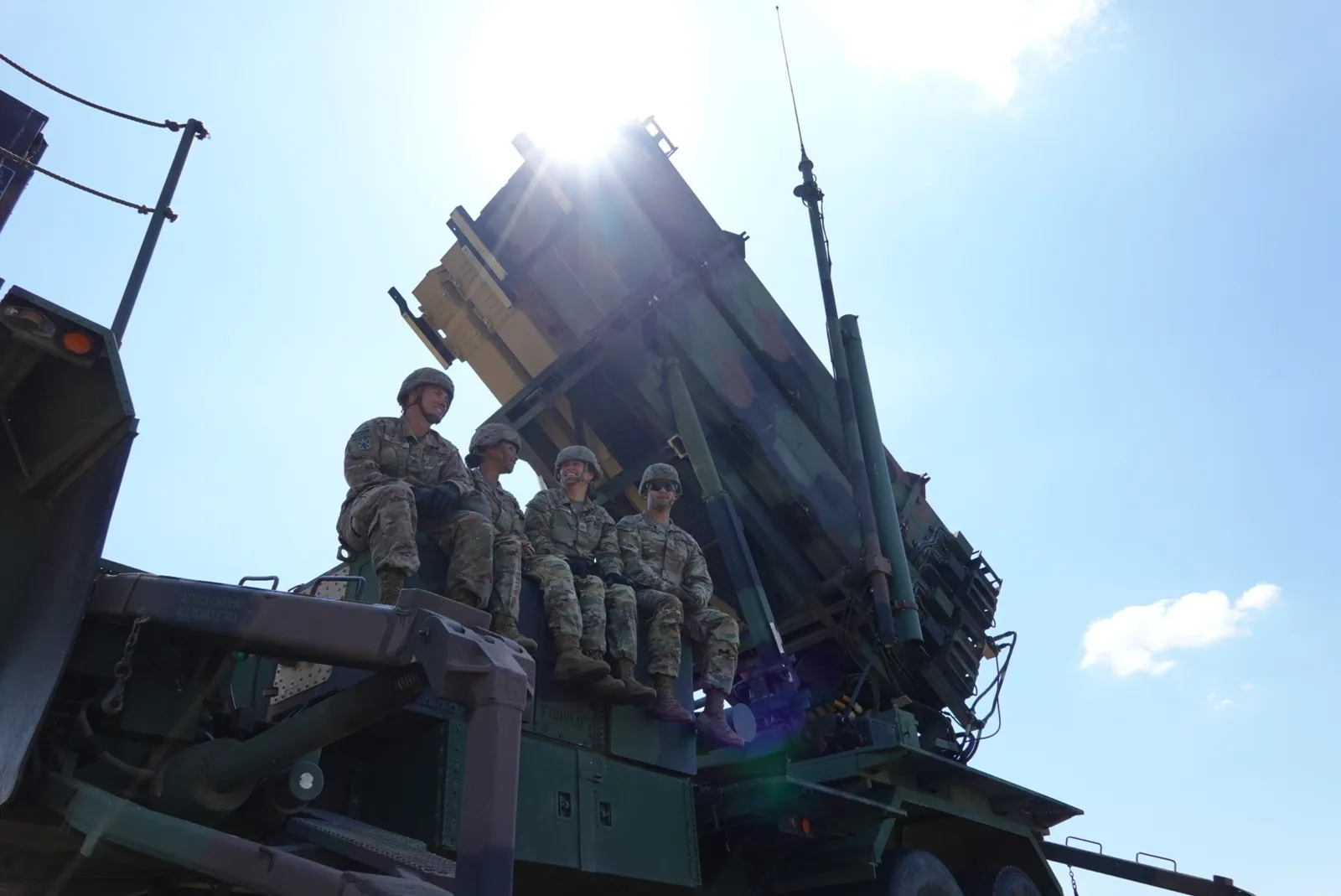
The Patriot interceptor shortage in the United States did not come from a lost battle. It came from wars the US defended well. In June 2025, when the US joined Israel's twelve-day war with Iran, and again in the US war with Iran that began on 28 February 2026, American and partner air defenses stopped most of what Iran launched. In doing so they fired their most expensive interceptors, Patriot and THAAD, in numbers the factories that make them cannot replace for years. The Center for Strategic and International Studies (CSIS) estimates that US Patriot inventories were under 1,000 by July 2026, and that Patriot and THAAD stocks will take three or more years to return to prewar levels.
My argument is that Iran won something without hitting much: it turned America's air defense into a bill. Asymmetric attack, waves of drones that cost almost nothing next to what they force the defender to spend, now does more damage to a defender's arsenal than a bombing campaign does to its targets. The US fought a cost war with a quality arsenal. It fired Patriots at cheap drones, often several missiles at a single drone, and did not ration them at all, and the price lands not only on the Pentagon's budget but on every ally that relies on the same missiles, Ukraine first. Ukraine, which has faced the same Iranian-designed drones from Russia since 2022, has already shown the other way to fight it.
What did Iran's attacks cost in interceptors?
| June 2025, twelve-day war | about 550 Iranian ballistic missiles fired at Israel; the US reportedly fired more than 150 THAAD interceptors and about 80 Navy interceptors, by CSIS's account |
|---|---|
| THAAD stock used | 150 is about 28% of the 534 THAAD interceptors delivered, by CSIS's count |
| 23 June 2025, Al Udeid air base, Qatar | the chairman of the Joint Chiefs called it "the largest single Patriot engagement" in US military history |
| 2026 war, Gulf states to 9 March | the UAE alone reported 253 ballistic missiles, 1,440 drones and 8 cruise missiles detected, as Reuters reported |
| Patriot stock by July 2026 | under 1,000, by CSIS's estimate; Reuters, citing CSIS, put it at fewer than 850 of about 2,330 before the war |
| Price per interceptor | about $4 million for a Patriot PAC-3 MSE; about $15 million for THAAD in the FY2026 budget estimate |
The exact firing totals are classified, and these are estimates and reports. The direction is not in doubt.
Why were the cheap drones the point?
Because they made the expensive missiles necessary. Drones made up about 71% of all recorded Iranian strikes on the Gulf in the early weeks of the 2026 war, in a CSIS dataset, and the UAE alone took two thirds of them. CSIS's analyst Kateryna Bondar described them as used "less to inflict direct military damage" and more to force "defenders to expend costly interceptors against low-cost systems".
The mechanism is a mix, not a single weapon. Waves of slow drones occupy the radars, the fighters, the gun crews and the cheaper interceptors. Ballistic missiles fired into the same raid then meet a defense that has already spent its attention and part of its stock, and only the most expensive interceptors can stop them. Each drone that is shot down still did its job if it cost the defender more than it cost Iran. The one that is not shot down does worse: a single drone of this kind killed three US soldiers at Tower 22 in Jordan in 2024, two years before the war.
And the expensive layer was spent on the drones themselves. Where nothing cheaper was in place, defenders fired Patriots at drones, and often two or three of them at a single target to be sure of the kill. Three missiles at about $4 million each against one drone that costs a few tens of thousands is a trade of more than a hundred to one, and it is exactly the trade Iran was offering. More than a quarter of all THAAD interceptors gone in twelve days in 2025 shows the same habit at the top of the stack: fire first, count later.
Why is the shortage worse than the bill?
Because an interceptor's real cost is not its price. It is the time to make another one.
Lockheed Martin delivered 620 PAC-3 MSE Patriot interceptors in 2025. If CSIS's estimates are right, the US Patriot stock fell by roughly 1,500 in 2026, about two and a half years of the factory's entire output, before a single missile goes to Ukraine, Poland or the Gulf. THAAD is starker: Lockheed made 96 a year when the US fired more than 150 in twelve days in 2025, more than a year and a half of production gone in under two weeks.
That stock is shared. In July 2025, after the twelve-day war, the Pentagon paused a shipment to Ukraine that included 30 Patriot missiles, citing low stockpiles, as Reuters reported. In May 2026 Ukraine's president wrote to the US president that deliveries were no longer keeping pace and that some batteries stood without missiles, Reuters reported. Every interceptor fired in the Gulf is one that is not defending a Ukrainian city from a Russian ballistic missile, or a US base in the Pacific. That is the part of asymmetric war that never shows up on a damage report.
What does Ukraine do differently?
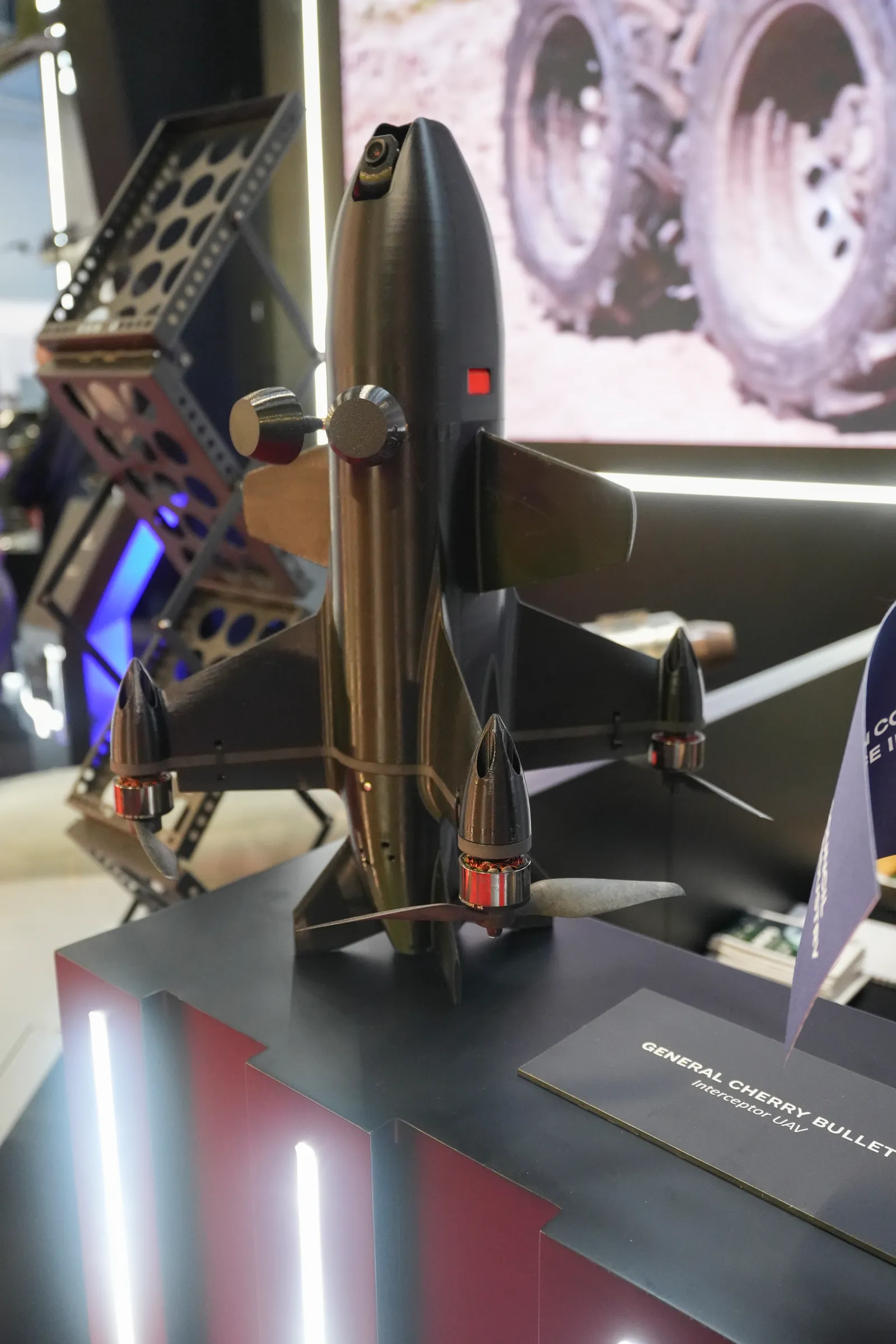
It rations by cost. Ukraine has fought off Shahed-type drones, the same Iranian design Russia now builds at home and launches at Ukrainian cities, almost every night since 2022. It keeps its Patriots for what only they can stop: ballistic missiles. It does not fire a salvo of Patriots at a drone, because it cannot afford to. Against the drones it built a cheap layer: mobile fire groups with machine guns, electronic warfare, and interceptor drones that cost about $1,000 to $2,000 each, by their makers' prices. By April 2026 interceptor drones accounted for about 40% of the long-range attack drones Ukraine shot down, an Air Force officer told Reuters. Ukraine's defense ministry reported deliveries approaching 950 anti-Shahed interceptors a day in December 2025, as CSIS noted.
Put that next to the American number. Ukraine received more drone interceptors in one day than Lockheed makes Patriot interceptors in a year. They do not do the same job, and that is the point: the cheap layer exists so that the expensive one is saved for the targets that need it. When Iran attacked the Gulf in March 2026, Gulf states asked for Ukrainian interceptors, and Ukraine deployed specialist teams to five of them, Reuters reported, to do exactly that work. What it cost the US not to take that help before the war, The Atlantic's November investigation lets me price in what saying no to Ukraine's interceptors cost.
Where does this lead?
I expect four things.
- The cheap layer becomes doctrine, not improvisation. Every serious air defense will be built in cost tiers: guns, electronic warfare and interceptor drones for the mass; mid-priced interceptors for faster drones; Patriot and THAAD only for ballistic and high-end threats. The arithmetic is in cost-exchange ratio.
- The US buys more of what ran out, and more slowly than it needs. The Army signed a multiyear Patriot deal worth up to $58.6 billion in July 2026, Lockheed aims for 2,000 PAC-3 MSE a year by the end of 2030, and THAAD output is meant to rise from 96 to 400 a year over seven years. A cheaper Patriot interceptor, PAC-3 ACE, at less than half the price, could start production in 2028, Reuters reported. Even half the price is still millions. Newcomers are trying to change the price itself: the Missile Defense Agency is funding several low-cost interceptor efforts, among them Long Wall's Cyclops for ballistic missiles above the atmosphere.
- Others copy Iran. The lesson for Russia, Iran and North Korea is that mass cheap drones mixed with missiles drain a richer enemy's arsenal. China read the same bill from the other side, as the country most likely to face that kind of attack from the US and its allies, and it is one reason the PLA studies the drone war in Ukraine so closely, which I go through in what China learns from the drone war in Ukraine. Russia's jet-powered Geran-5 already pushes the cheap layer to its limit, because interceptor drones are too slow for it.
- The bottleneck moves to the parts. Patriot's limit has long been its seeker, the radar in its nose, made by Boeing; Boeing signed a contract worth up to $14.7 billion in October 2026 to triple seeker output, Reuters reported. Cheap interceptors have their own bottleneck: small engines, as in the jet-interceptor engine bottleneck.
Signals worth watching: any official figure for US Patriot and THAAD stocks, US orders for interceptor drones and other counter-drone weapons costing under $100,000, and Patriot deliveries to Ukraine against its requests.
What will the market need next?
Read as a business, the Iran wars wrote a list of products that buyers lack and will pay for.
- A mid-priced interceptor for fast drones. Drone interceptors at $1,000 to $2,000 stop slow Shaheds but cannot catch the jet versions, which reached 450 to 600 km/h. Patriot can, at $4 million. The gap between them, an interceptor in the tens of thousands of dollars that catches a fast drone, has buyers on three continents and almost no product in volume.
- Early classification. In a mixed raid the defender's costliest mistake is firing the wrong interceptor at the wrong target. Sensors and software that tell a drone from a cruise missile from a ballistic missile early, and assign the cheapest weapon that will work, save more money than any single interceptor.
- The parts that cap output. Seekers, small rocket motors and small jet engines limit every interceptor line, cheap or expensive. A supplier that adds capacity there sells to everyone at once.
- Crews and training, sold as a service. Ukrainian makers told Reuters that trained pilots, not drones, were the main obstacle to deploying interceptor drones in the Gulf. A company that delivers the interceptor with the operators, training and support sells the outcome the buyer actually needs.
- Base and site defense as a subscription. Gulf states, US bases and critical infrastructure need protection against drone waves every night, not a one-off purchase. Defense delivered as a managed service, with sensors, interceptors and crews on site, is a business model this market has barely tried. Kyiv already puts automated machine-gun turrets on its bridges, with the questions of who authorizes fire that I go through in Sky Sentinel turrets on Kyiv's bridges.
What it means for a founder or an investor
- The money is in the cheap layer. The US and its allies have just learned, at a cost of billions, that they lack a layer between machine guns and Patriot. A system that stops a drone for thousands of dollars, at volume, is the product every air defense now needs. The buyers are already visible: Gulf states that asked Ukraine for interceptor teams in March 2026, and a US Air Force whose Middle East commander called laser-guided rockets "our primary weapon against a drone", as The War Zone reported. What most still lack is a procurement category for it, with a requirement, a performance threshold and a budget line, and the companies that help write that requirement will shape the market.
- Sell the cost per intercept. A buyer will compare you with a $4 million missile and a $2,000 drone. Know your cost per kill, including crews, sensors and misses, and show it.
- Volume is the feature. Ukraine's advantage is not one brilliant interceptor but hundreds a day. How to get from a prototype to that rate is in why one to a thousand is the hard part, and where to prove it works is in how to get a drone tested in Ukraine. The pattern of Western systems meeting Russian and Iranian tactics is in why Western weapons stumbled in Ukraine.
Sources (20)
- CSIS, Renewed Iran war would test diminished interceptor inventories, 27 July 2026
- CSIS, Rebuilding the US missile inventory is a multiyear project, 27 May 2026
- CSIS, Depleting the missile defense interceptor inventory, 5 December 2025
- CSIS, Kateryna Bondar, Unpacking Iran's drone campaign in the Gulf, 10 March 2026
- CSIS, Cost and value in air and missile defense intercepts, 13 February 2024
- US Department of War, "Historically successful" strike on Iranian nuclear site (Al Udeid Patriot engagement), 26 June 2025
- Reuters, Iranian missiles and drones fired at Gulf countries, 10 March 2026
- Reuters, What is the Patriot missile system and why are supplies depleted worldwide, 7 August 2026
- Reuters, US halts some missile shipments to Ukraine over low stockpiles, July 2025
- Reuters, Zelenskiy asks Trump for air defences as Russia escalates strike threats, 27 May 2026
- Reuters, Inside Ukraine's drive to defeat the dreaded Shahed drone, 29 April 2026
- Reuters, Ukraine's interceptor drone makers look to exports as Iran war flares, 7 March 2026
- Reuters, Ukraine deploys units to intercept targets in the Middle East, 20 March 2026
- Lockheed Martin, accelerating PAC-3 MSE production (620 delivered in 2025), 6 January 2026
- Lockheed Martin, framework agreement to quadruple THAAD interceptor production, 29 January 2026
- The War Zone, laser-guided rockets now primary anti-drone weapon for USAF jets in the Middle East, 25 September 2025
- Reuters, Army awards Lockheed Martin $58.6 billion PAC-3 Patriot missile deal, 29 July 2026
- Reuters, Lockheed to make cheaper Patriot interceptors as air defense demand soars, 20 July 2026
- Reuters, Boeing receives Lockheed PAC-3 MSE contract worth up to $14.7 billion, 5 October 2026
- The Atlantic, The Pentagon ignored a warning about the danger of Iran's drones, 15 November 2026