
The Da Vinci drone is one of the least documented weapons on Zelensky's Kerch Bridge list, and by its maker's account the one that worked before the bridge was touched
Da Vinci is the name Ukraine uses, according to its maker Destinus, for the LORD, a propeller-driven drone with a reported range above 1,000 km and a 40 to 100 kg warhead. Destinus says it was used to suppress Russian air defenses before the Kerch Bridge strikes. I cover what is public, what is not, and what a market for that mission looks like.
Of the 11 weapons Zelensky named for the Kerch Bridge operation, the Da Vinci drone has one of the thinnest public records. He listed it and moved on. The manufacturer, Destinus, supplied the rest: Da Vinci is what Ukraine, fighting Russia's full-scale invasion since February 2022, calls the LORD, and LORD systems "were also deployed to suppress Russian air defences."
That is a single sentence from one company, and I want to be clear about it from the start. The identification of the Da Vinci with the LORD comes from Destinus, which told the Ukrainian defense outlet Militarnyi that the LORD is operated in Ukraine under that name. I found no Ukrainian government statement that says what the Da Vinci is, and no source independent of the company that equates the two names. Everything below is built on that basis.
My argument is that this drone matters because of the job it was given. The bridge fell in the seventh stage of a month-long operation, and Zelensky said the first stages destroyed the air defenses, radars and electronic warfare equipment on the approach. A drone that clears those is the least visible part of the strike and the one the later stages depend on. For the operation as a whole, see the Kerch Bridge article.
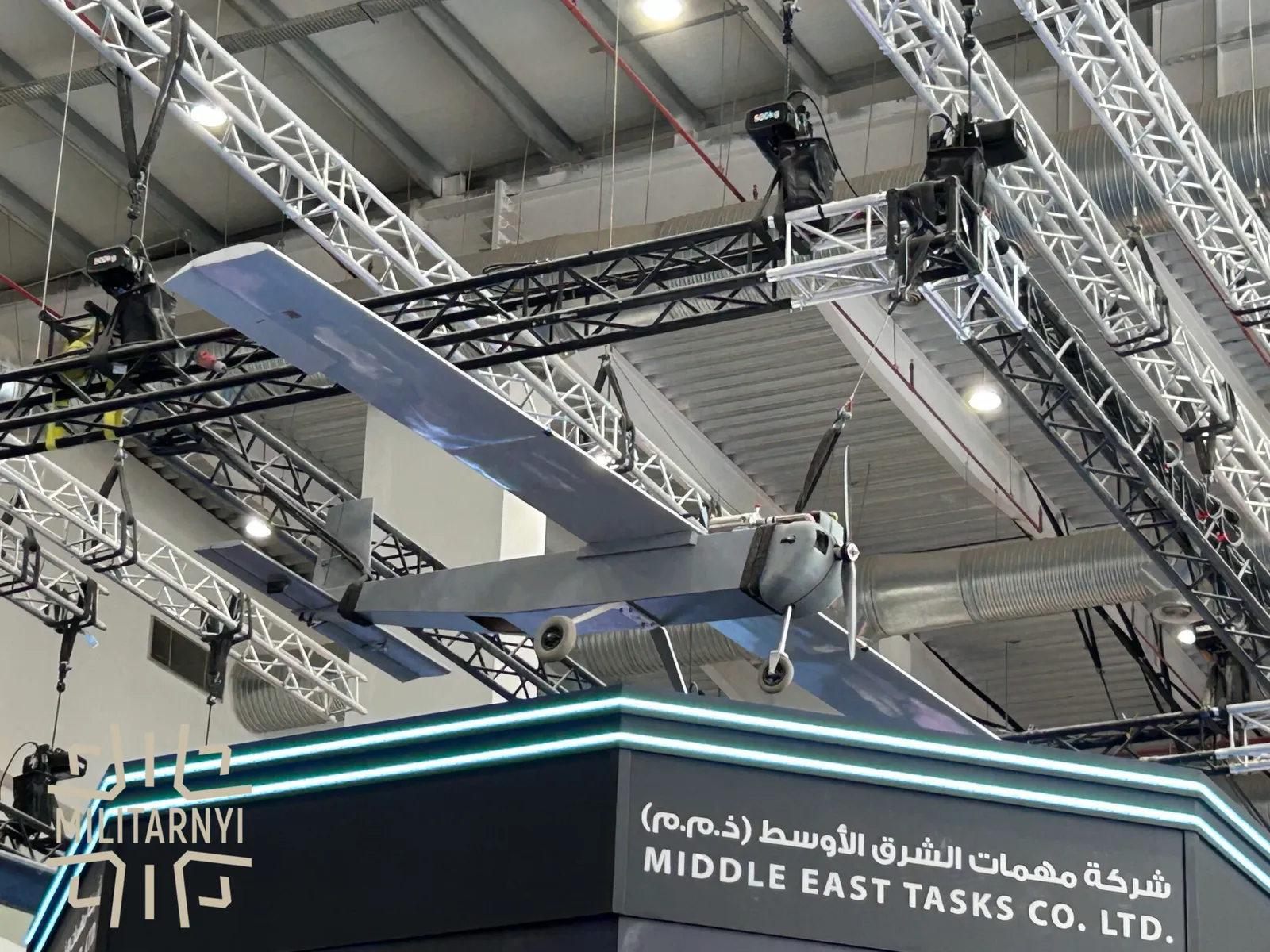
The Da Vinci (LORD) in numbers
| LORD 1 and LORD 2, as shown in February 2026 | |
|---|---|
| Maker | Destinus (Dutch venture money; counted by Ukraine as a Ukrainian system) |
| Ukrainian name | Da Vinci, per Destinus |
| Range | more than 1,000 km, per Destinus; earlier descriptions gave 750 km to over 2,000 km depending on the version |
| Warhead | 40 to 100 kg |
| Engine | piston engine; model not published |
| Launch | about 15 minutes of preparation; method not detailed |
| Navigation | fully automated; flies at very low altitude, including where satellite signals are jammed |
| Roles named by the maker | strike, aerial target, bomber, cargo carrier; earlier also intelligence gathering and jamming |
| Differences between versions | "minor design features" |
| Price, production, number used | not public |
The two versions were shown at the World Defense Show in Saudi Arabia in February 2026. At the same time Destinus announced a heavier platform it calls Da Vinci Squared, with no specifications. All of these are the maker's numbers, with no outside test.
What is known about where it came from?
Destinus called the LORD its first model in an interview in early 2024. At that time its founder, Mikhail Kokorich, described a propeller-driven drone built for intelligence gathering, jamming and electromagnetic interception that could also strike ground targets, and said the company had already delivered "hundreds" of low-cost drones to Ukraine, without saying how many were LORDs. Those drones are shipped as components and assembled at undisclosed military sites, he said. The company's own site, according to Army Recognition, stresses that it is built for fast, cheap production from parts on the open market.
Russian outlets claimed in December 2024 that Ukraine had started using it and posted debris photographs. Those claims were never confirmed, and I do not rely on them.
Why would a slow drone be the first one in?
Here I am reading the mission, because the specification is silent on exactly this.
A piston-engine drone is slow compared with a missile, which makes each one easy to shoot down and a large number of them expensive to keep shooting down. A defender with a limited stock of interceptors has to decide, in seconds, what to shoot at. A drone that costs far less than the interceptor that is fired at it forces the defender to spend the expensive thing or to let the cheap thing through. Ukraine knows this from the receiving end, because Russia sends piston-engine Shahed drones in this way against its cities; I describe the cost problem in the Shahed page. The same logic, turned around, is what the air-defense suppression stages of the Kerch operation require.
"Suppress" has three meanings, and Destinus did not say which it meant. The drone may hit a radar or a launcher with its 40 to 100 kg warhead, which is enough for a radar or a launcher; a hardened shelter is another matter. It may be a decoy, flown in to make a radar switch on and reveal itself to the next weapon. Or it may do both in one raid. The public record does not show how many were used, what they hit, or what they cost.
What did the Da Vinci do at the bridge?
Destinus says LORD/Da Vinci systems were deployed to suppress Russian air defenses, and Zelensky described the early stages as destroying air defense systems, radars and electronic warfare equipment on the way to the bridge. The two statements fit. They are not proof of each other. The road span fell to Palianytsia missile-drones, according to the SSU, the rail section was hit by Neptune, Ruta and Flamingo, and Destinus says seven of its Ruta missiles brought down a span. I cover those weapons in the pages for the Neptune and the Ruta.
A cruise missile arriving in a corridor already cleared of radars is a different problem from one arriving in a live one, and that earlier work is the part of the operation Destinus says the Da Vinci belonged to.
What has not been shown yet?
- The count and the results. How many drones flew and what they hit is not public.
- The independent identification. The link between Da Vinci and LORD rests on Destinus.
- The price. There is none. Destinus's pitch of cheap, fast production is not a number.
- The engine and the guidance. Both are described only in general terms. A drone that navigates where satellite signals are jammed has a method of doing it, and the method is not published.
Where does this go next?
I expect the mission to grow faster than the drone. Over the next two years, suppressing air defenses with cheap drones will be the opening move of every deep-strike plan Ukraine makes, and every Western military that studies the Kerch operation will want the same capability. The signals to watch:
- A buyer outside Ukraine. A European or Gulf government ordering LORD-class drones for this role, which the February 2026 showing in Saudi Arabia hints at.
- A seeker that homes on a radar. A cheap drone that finds an emitting radar by itself turns a decoy into a weapon.
- Published production figures. Destinus has given numbers for Ruta. A number for LORD would show whether this line runs at scale.
What will the market need next?
- Radar-homing seekers at drone prices. A passive seeker that costs a small fraction of a missile's, with a library of Russian radars, and sold as a module that fits several airframes. The buyers are every maker of long-range drones.
- Mission planning for raids of dozens. Software that picks the routes, the timing and the targets for a raid of many cheap drones followed by a few expensive missiles. The product is a planning tool and an accepted playbook, bought by ministries and by the primes that integrate them.
- Piston engines in volume. The choice and supply of small engines is the problem I describe in small aircraft engine selection. Whoever makes a reliable engine of this class outside Asia has more orders than lines.
- Targeting data on emitters. Fresh, trusted location of radars, which a sensor company or a signals-intelligence service sells by the subscription.
- Damage assessment. Footage and analysis that tell a commander whether the radar was destroyed or only switched off.
What Da Vinci means for a defense founder
- Sell the mission. A buyer who must open a path to a target is paying for the path. Price per radar removed is the number to bring.
- Document the part you can prove. Destinus has published LORD's specifications and, on outcomes, one sentence about Kerch. A founder with a result, even a small one, outranks one with a spec.
- Be careful with a borrowed name. Da Vinci is a Ukrainian operational name and LORD a company brand, with a single source joining them. If you publish both, say who says so.
- Expect copies. A cheap piston-engine drone is easy to replicate. The durable advantage is the supply chain behind it and the doctrine that uses it, which is the harder thing to copy.
Sources (6)
- Militarnyi, Ruta missiles and Da Vinci drones: Destinus reveals details of strikes on Crimean Bridge, 17 November 2026
- Militarnyi, Ruta missile developer presents Lord deep strike drone, 11 February 2026
- TWZ, What we know about Ukraine's strikes that cut Russia's Kerch Bridge road vehicle span, 17 November 2026
- Defence Industry Europe, Destinus says seven Ruta cruise missiles hit the Kerch Bridge, 17 November 2026
- Kyiv Post, Russian dissident's Swiss start-up has secretly supplied Ukraine with military drones, 2 February 2024
- Army Recognition, Russia accuses Ukraine of using LORD long-range kamikaze drone, 10 December 2024 (maker's website claims only)