
The Banderol is not a better missile. It is dangerous because it falls between two kinds of air defense.
The usual assumption is that the dangerous threat is the advanced one. Russia’s cheap jet-powered cruise missile works for the opposite reason, and the way it is used says more about the defender’s budget than about its own engineering.
The usual assumption about cheap cruise missiles and air defense is that the dangerous threat is the advanced one: faster, higher, stealthier, smarter than what came before. Russia’s Banderol is none of those things against a modern air-defense system. It is a cheap missile with a hobby-market engine, and one at a time it can be shot down. It still gets through often enough to change how Ukraine defends, and the reason is the opposite of the usual assumption. Its value is not that it is exceptional. It creates a problem that existing air defense was never priced around.
The assumption, and why it fails here
Ukraine’s air defense was built in clear layers, each sized to a class of threat. Mobile fire teams and interceptor drones take the slow targets: Shahed-type one-way attack drones, Iranian-designed and launched by the hundred, at around 180 km/h. Expensive missile systems take the fast and high ones. Every element was tuned to its own class.
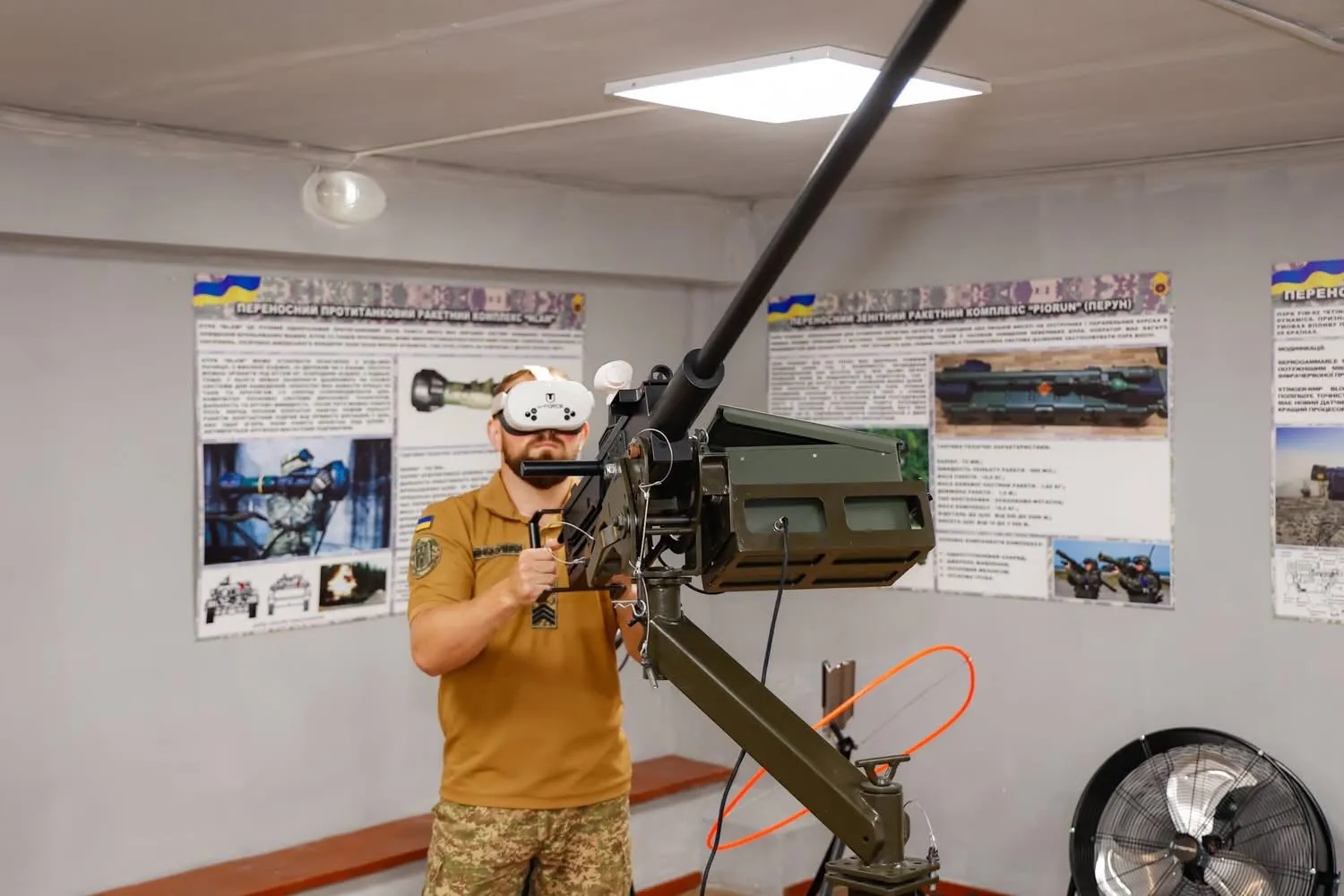
The Banderol belongs to neither. For a mobile fire team with a heavy machine gun, which works well against targets up to about 250 km/h, it is far too fast: over 600 km/h at the top, with seconds left to detect, aim and fire. For an interceptor drone, whose top speed is around 370 km/h, it cannot physically be caught. For long-range radar it flies too low, appearing on the screen seconds before it arrives. That leaves the third option: a Western air-defense missile that costs many times more than the Banderol itself. Too fast for the tools that are cheap, too cheap to be worth the tools that are fast.
Why is a cheap missile harder to stop than a better one?
Because the defender’s problem is not whether it can shoot it down. It is what each shot costs and how many are coming. A better missile is rarer and more expensive, and a defender can afford to answer it with an expensive interceptor. A missile at $50,000 to $300,000 arriving in numbers forces a choice between letting some through and spending far more per kill than the attacker spent per missile. Even a perfect interception rate in that exchange means a slow exhaustion of the side that defends. That is no longer tactics. It is economics.
Ukraine’s Air Force said as much at the end of August 2026: Russia used five times as many jet-powered drones in July as in June, because ordinary Shaheds were being shot down, and the jet-powered ones cannot be stopped with the methods used against ordinary drones. Their interception rate is well below the 88 to 90% achieved against slow ones.
How is the Banderol used against Ukraine?
The pattern has four parts.
- Low, and along the terrain. It first hit the south, where flat sea let it stay under the radar horizon almost to the coast. Inland it flies at up to 100 m, and its 2.5 km turning radius lets it follow river beds and tree lines around defended zones and arrive from the side nobody was watching.
- Against logistics and people at work. At least 60 strikes on the Kharkiv region in three months from May 2026. On 19 July three hit a postal terminal in daytime, with fragmentation warheads, killing four workers. The alert came too late. On 9 August, at an apartment block in Kharkiv, it sounded only after the first two explosions. Terminals, warehouses and ports are wide, flammable and impossible to move, and a 20 to 30 m circular error is enough for them.
- Mixed with slow drones. On the night of 10 to 11 September 2026, one Banderol came with 161 drones. The mix makes the defender handle two classes of threat in the same night: the drones load the cheap layer, and the jet-speed target needs the expensive one.
- As pressure on the budget. Every Banderol that draws a Western missile costs the defender more than it cost to make. That part of the strategy works even when the missile is shot down.
It is also a weapon that does not always stay where it is sent. In August one crossed into Moldova and Moldova closed part of its airspace for fifteen minutes; five days later several flew toward Belarus.
Where the assumption still holds
The Banderol is not hard to shoot down when the right tool is in the right place, and Ukraine reports bringing them down at over 80%. On 22 August six of the missiles shot down in a single day were Banderols. On 2 September a MiG-29 pilot destroyed one at extremely low altitude with an R-60, a short-range missile first fielded in 1973, which Ukrainian engineers rebuilt with digital electronics and a far more sensitive seeker. Shoulder-fired missiles such as Stinger, Mistral and Poland’s Piorun give the best price per result today; the catch is that they have to cover every likely entry route densely, and there are not enough of them. And Brave1, Ukraine’s defense-tech cluster, says a newer system intercepts the Banderol for less than the missile costs. The gap is real, but it is a gap in coverage and price, not in physics.
What it means for anyone building air defense
The lesson is not that cheap weapons replace advanced ones. It is that advanced air defense needs a cheaper layer underneath it, and every layer has to be priced against the cheapest threat that can reach it. The market opening is the middle: something faster than 370 km/h and cheap enough to fire at a $50,000 missile without regret, built in quantities that match the attacker’s production. I put numbers on that in cost-exchange ratio, and what happens as Russian output grows is in the risks at 80, 150 and 400 a month. What the missile itself is, in numbers, is in the overview and the specifications.
For a founder, the second half of the job is getting that product tested where these threats fly and sold to a buyer who measures cost per intercept. That is the work I describe on the defense-tech page.
What will the market need next?
The middle layer has buyers who already have budgets. Ukraine buys through its procurement agency; Gulf states learned in 2026 what cheap drones and missiles cost them in interceptors, which I go through in how Iran made the US pay for its air defense; and European governments are now protecting ports, refineries and power plants against the same class of weapon. Each of them buys a package, not an interceptor: sensors, shooters and crews priced together against the cost of the threat.
The price per intercept is set by the cheapest threat that can reach the site, which is why I go through the contract model that follows from it in cost-exchange ratio.
Signals worth watching: tenders for protecting critical infrastructure against drones and cruise missiles, multi-year service contracts for air defense of ports and plants, and middle-layer interceptors reaching units in numbers.
The Banderol series
- What the Banderol is, read from Ukraine’s teardown
- The specifications, number by number
- How it is used, and why it gets through (this article)
- The risks at 80, 150 and 400 a month, and the counters
- Cost-exchange ratio, the number air defense has to design to
- Why the US needs cheap interceptors more than its own Banderol
Sources (7)
- Ukrainska Pravda, Air Force on jet-powered drones, 31 August 2026
- Ukraine Defence Intelligence, War & Sanctions: S8000 Banderol technical page
- Ukrainska Pravda, attack with 161 drones and a Banderol, 11 September 2026
- Ukrainska Pravda, S8000 strike on Kharkiv suburbs, 19 July 2026
- The Kyiv Independent, Banderol enters Moldovan airspace, 17 August 2026
- Militarnyi, on new air defense against the Banderol
- Interfax-Ukraine, Banderol interception effectiveness, 2 September 2026