
The US does not need its own Banderol. It needs cheap interceptors, made at the same pace.
Washington is already buying low-cost cruise missiles by the thousand. The harder and more urgent problem is the other side of the same arithmetic: stopping cheap missiles and drones at a price and a rate the US can sustain.
Russia’s Banderol raises an obvious question in Washington: should the US build its own? It is the wrong question, because on the offensive side the US is already doing it, at a larger scale and with a deeper industrial base. The US low-cost cruise missile is funded. The question that is not answered yet is the defensive one, and in my view it matters more.
The Banderol, officially the S8000, is a small jet-powered Russian cruise missile built largely from commercial parts, at an estimated $50,000 to $300,000 apiece and about 80 a month; it has been hitting Ukrainian logistics since spring 2025. What it is and why it gets through are in the overview and why a cheap cruise missile is hard to stop.
Three ways to spend the money, side by side
| Offensive mass | Cheap kinetic defense | Cheap sensing | |
|---|---|---|---|
| What it is | Low-cost cruise missiles bought by the thousand | Interceptors priced near the threat | Dense, low-cost detection that cues the interceptors |
| Public cost figures | FAMM: $355 million for 1,000 missiles in the 2027 request; nearly 28,000 for $12.6 billion over five years | Coyote 2C: $75 million for 600 (2024); in Ukraine, interceptor drones at $3,000–5,000 | In Ukraine, acoustic sensors at $400–1,000 each, about 14,000 fielded |
| How it is bought | Fixed-price, multi-vendor, multi-year (LCCM: Anduril, CoAspire, Leidos, Zone 5; at least 10,000 missiles) | Mostly small lots and rapid-acquisition contracts | Largely not a US program category at scale |
| What it solves | Gives the US its own mass for strike | Lowers the cost per kill against cheap threats | Finds low, small, cheap threats early and cheaply |
| What it does not solve | Stopping the same weapons when they come the other way | Volume, unless bought like ammunition | Nothing on its own; it needs cheap shooters |
Is the US already building its own Banderol?
In substance, yes. The Air Force’s Family of Affordable Mass Missiles asks for $355 million for 1,000 missiles in 2027 and plans nearly 28,000 over five years. The low-cost containerized missile effort has Anduril, CoAspire, Leidos and Zone 5 on fixed-price terms for at least 10,000, with test missiles from June 2026 and production buys from 2027; Anduril alone plans 1,000 a year. For comparison, the same reporting cites a JASSM-ER, the Air Force’s standard long-range stealthy cruise missile, at $1.5 million apiece, and a Tomahawk Block V costs about $3.64 million; in the first four weeks of the 2026 war with Iran the Navy fired more than 850 Tomahawks, eight and a half years of the previous year's production, which I go through on the Tomahawk page. The FAMM request works out at about $355,000 a missile by simple division, right at the top of the $50,000 to $300,000 range estimated for the Banderol.
These are not copies of the Russian missile, and they do not need to be. The US should not copy every cheap weapon it sees. It should copy the industrial logic: commercial-grade manufacturing, several vendors, fixed prices and a production rate written into the plan. That is the industrial lesson of the Banderol, and the US has learned it for the weapon it fires.
Why cheap defense matters more
Because the same arithmetic runs both ways. A cheap cruise missile works by making each defensive shot cost more than the threat. The US and its allies are on the wrong side of that ratio today: a Patriot interceptor at over $3 million against a drone that can cost $35,000, about 85 to 1, and even a dedicated counter-drone interceptor near $125,000. I go through the number in cost-exchange ratio.
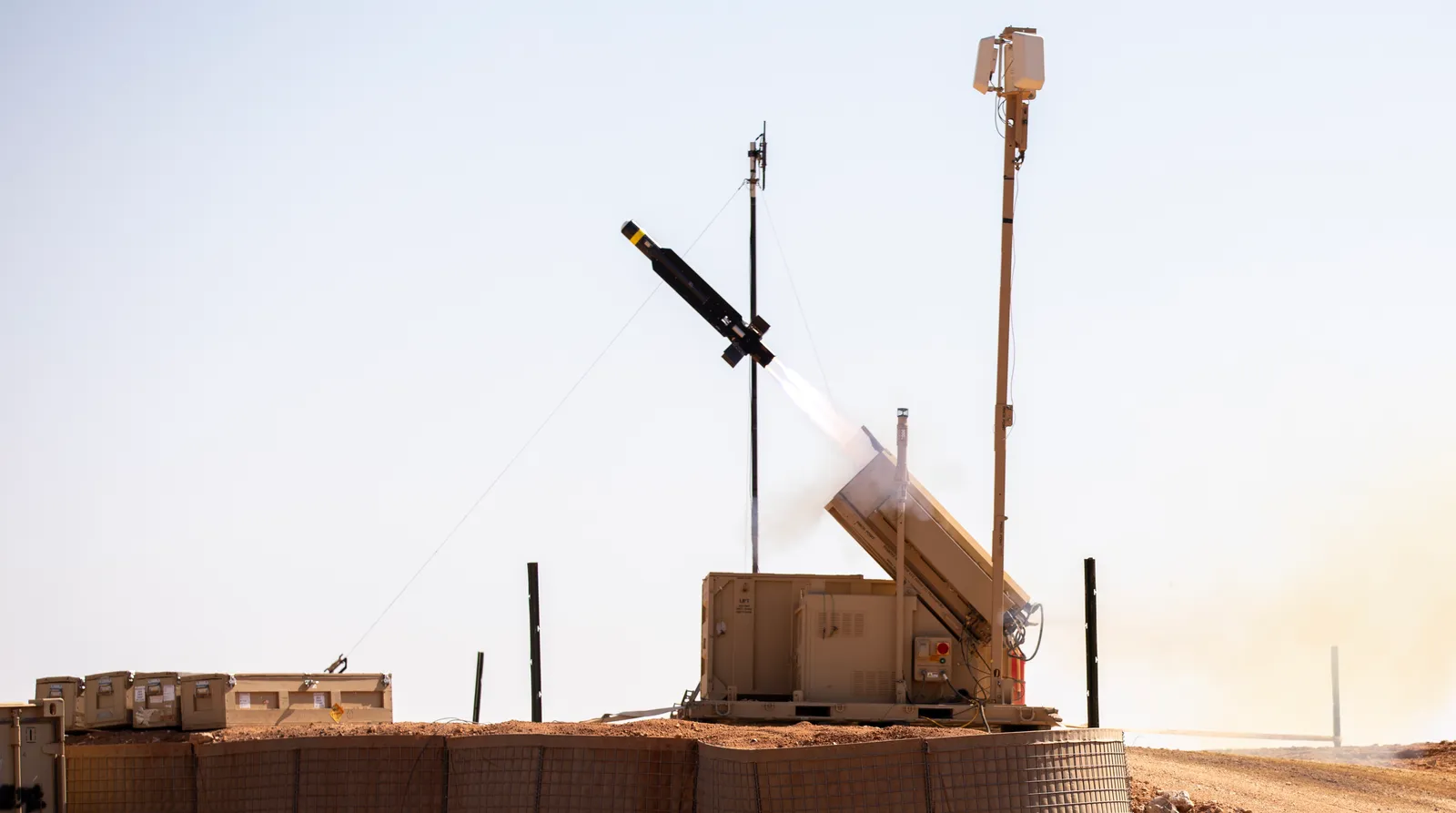
The threats that make this a problem do not stay inside one war: a Banderol has already come down in Moldova, and several flew toward Belarus; on 4 October 2026 a suspected Kh-101 was reported 100 km inside Polish airspace. Russia moved to jet-powered drones when ordinary ones started being shot down routinely, and it is reportedly scaling its cheap cruise missile from about 80 a month toward 300 to 400. China shows a line with almost the same characteristics, and Iran has built a jet-powered version of its Shahed attack drone. American parts are part of the problem too: Ukraine’s teardown of the Banderol found Texas Instruments, Analog Devices, Silicon Labs, MaxLinear and InvenSense chips inside, some made as late as 2024. Export control on the components that go into cheap missiles belongs on the defensive side of the ledger. Bases, ports and allied cities will face that class of weapon long before any adversary faces 28,000 American ones.
How would a US program for cheap interceptors work?
The same way the offensive one already does.
- Buy by the thousand, on fixed prices, from several vendors, with a monthly output in the contract. The low-cost cruise missile program shows the Pentagon can.
- Price against the cheapest threat in range, and score bids on cost per kill as well as kill rate.
- Fund sensing as infrastructure, dense and cheap, the way Ukraine’s acoustic network works, so the cheap shooters know where to go.
- Test where the threat flies. Ukraine is where jet-powered drones and cheap cruise missiles are being intercepted now, and US products that want credibility should be tested against them. That route, and its export-control limits, is part of what I take on for defense-tech startups.
- Use the scale advantage. A US plant does not have to disperse production to survive strikes, which lets it chase the economies of scale I describe in what dispersed production trades away.
What will the market need next?
A US program for cheap interceptors would create four markets at once. Vendors that can sign a fixed price with a monthly output. Makers of dense, cheap sensors, funded as infrastructure around bases and cities. Test services that put US products against real jet drones and cheap cruise missiles, which today means Ukraine. And US contract manufacturers that can take an interceptor design to thousands a month without the dispersal Ukraine's factories need to survive.
The last one is the least crowded. Most US defense startups can build a prototype; few have a partner who can build ten thousand. A manufacturer that offers that capacity to several interceptor startups at once, the way electronics contract manufacturers serve many brands, would be selling the scarcest thing in the program.
Signals worth watching: the first US contract for interceptors with a monthly volume clause, Pentagon funding for sensing networks around bases, and US contract manufacturers announcing defense lines.
Which position fits which reader
- A founder building interceptors or sensors: the US offensive programs are a template for the contract you should ask for, not competition. Your pitch is cost per kill and monthly output.
- An investor: the offensive side already has budget lines and named vendors. The defensive middle layer, fast enough for jet-powered threats and cheap enough to fire at them, is where demand is clearer than supply.
- A program office: the fastest way to change the ratio is to buy the cheap layer the way you already buy cheap missiles.
What the Russian missile is and how it is used is in the overview and why it gets through.
Where I could be wrong
US counter-drone and air-defense budgets are spread across services and programs, and some cheap interceptor efforts are not visible in public reporting. The defensive side may be further along than the public record shows. I would still put the next dollar there before adding to the offensive mass.
The Banderol series
- What the Banderol is, read from Ukraine’s teardown
- The specifications, number by number
- How it is used, and why it gets through
- The risks at 80, 150 and 400 a month, and the counters
- Cost-exchange ratio, the number air defense has to design to
- Why the US needs cheap interceptors more than its own Banderol (this article)
Sources (10)
- Air & Space Forces Magazine, Air Force five-year plan for cheap cruise missiles, 29 April 2026
- DefenseScoop, low-cost containerized missile contracts, 15 May 2026
- US Army, Coyote interceptor contract, 2024
- Defense News, interceptor drones and air-defense economics, 5 March 2026
- UNITED24 Media, Sky Fortress acoustic detection, 1 July 2025
- Ukrainska Pravda, Air Force on jet-powered drones, 31 August 2026
- Ukrainska Pravda, defense ministry adviser on the Banderol, 14 July 2026
- The Kyiv Independent, Banderol enters Moldovan airspace, 17 August 2026
- The War Zone, US is burning through its Tomahawk stockpile, 27 March 2026
- SOFX, US Navy requests 785 Tomahawks for FY2027 while RTX can deliver 110 this year, 9 April 2026