
A cheap cruise missile at 80, 150 and 400 a month: what breaks for the defender, and what scales back
A production rate is a threat in its own right. Here is what each level of Russian Banderol output does to a defender, and which counters can be built as fast as the missiles.
Cheap cruise missile mass production is a threat in its own right, separate from any one missile. The defense industry still measures threats mostly by what one unit can do, the way a Kalibr or a Kh-101 is judged. Production rate is a capability too. Russia’s Banderol, a small jet-powered cruise missile built from commercial parts at an estimated $50,000 to $300,000 apiece, is at about 80 a month, by Ukraine’s intelligence estimate in August 2026. Russia first aimed at 100 to 150. Having seen what jet-powered weapons achieve, it is now reportedly pushing toward 300 to 400. Each of those numbers asks a different question of the side that has to stop them, and the counters that work at one level fail at the next. Each level also opens a different market for the companies building the answer.
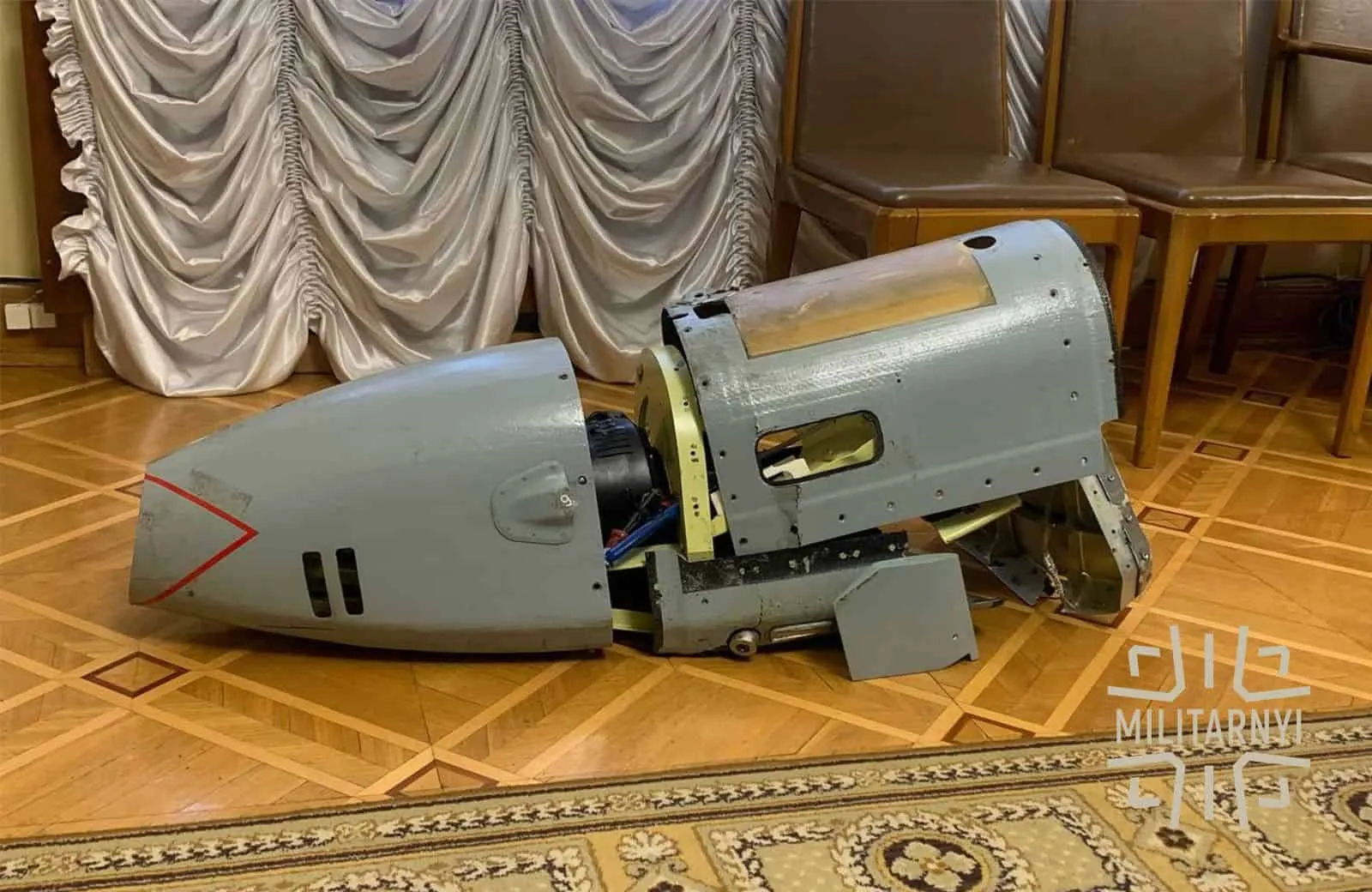
At about 80 a month: the stock problem
Risk. Two or three a day is a steady drain on whatever is used to stop them. Ukraine reports bringing them down at over 80%, but the tools that work are the expensive ones: ground-based air-defense missiles, fighters with air-to-air missiles. Each of those shots spends a limited resource that costs many times more than a missile priced at $50,000 to $300,000.
What to do. Keep the expensive interceptors for what only they can stop, and push everything else down to cheaper tools. Ukraine has already shown the way against slower drones such as the Iranian-designed Shahed: 100,000 interceptor drones in 2025, at a few thousand dollars each, and a cost per Shahed downed that its security council puts at over 25 times below a Western air-defense missile.
What happens to air defense at 150 a month?
Risk. Five a day, and the missile starts to set the budget. The question is no longer whether each one can be stopped but how many expensive shots a year the defender can afford, and which other targets go uncovered while the expensive layer chases cheap missiles. The attacker does not need the missile to hit anything to make this round expensive.
What to do. Fill the middle layer: something faster than 370 km/h, which is where today’s interceptor drones top out, and cheap enough to fire without regret. Brave1, Ukraine’s defense-tech cluster, says a newer system already intercepts the Banderol for less than the missile costs. At this level, the number that matters about such a system is not its kill rate in a test. It is how many it can deliver a month.
At 300 to 400 a month: a contest of production rates
Risk. Ten to thirteen a day, and this becomes a race between two factories: the one building missiles and the one building what stops them. Kronshtadt’s own original plan was 250 a month; the new target is above it. Coverage gaps get found faster, because there are more missiles to probe with, and a missile that turns in 2.5 km can use every gap it finds. Spillover grows too. One Banderol has already crossed into Moldova, and several flew toward Belarus. More missiles means more of those incidents, over countries that are not at war.
What to do. Plan interceptor production the way the attacker plans missiles: as a monthly output with second sources, a measured line and stock. I wrote about what that takes in why one to a thousand is the hard part and what breaks first between prototype and series production. A defender who can only buy in small lots loses this race whatever the quality of each unit.
What if it gets more accurate?
The second scaling risk is not quantity. Military circles discuss a version with an electro-optical seeker and a tandem warhead built for bridge supports; neither side confirms or denies it. Today a 20 to 30 m circular error makes the Banderol an area weapon, good against terminals and depots. A seeker with drone-level precision would make it a precise one, at the same price and the same rate. That would move it from logistics to infrastructure that is much harder to rebuild, and it would raise the value of every intercept.
Which counters scale as fast as the missile?
Five, in my reading.
- Cheap sensing. Ukraine’s acoustic network runs on about 14,000 sensors at $400 to $1,000 each and picks up cruise missiles as well as drones. Against a target that appears on long-range radar seconds before arrival, sensors are the cheapest place to add warning time.
- Dense short-range coverage. Shoulder-fired missiles such as Stinger, Mistral and Piorun give the best price per result against the Banderol today. Their limit is numbers: they have to cover every likely entry route, and there are not enough of them. That is a production and procurement problem, not a technical one.
- Interceptors priced below the missile and built by the thousand. The middle layer, built at a rate set by the attacker’s output rather than by a budget cycle.
- Fighters and expensive missiles kept for the hard cases. Not retired, rationed. A MiG-29 with a modernized 1970s missile has already shown the old tools still work at the edges.
- Pressure on the supply chain behind the missile. The parts are civilian and sit in thousands of devices worldwide; sanctions alone won’t close that. But Ukraine’s sanctions database shows the Russian end is narrow: most of the electronics came through one distributor, JSC Chip and Dip, the engine through IQ Components and Trek, the servos through TK Mir, with foreign suppliers including Align Trading, Hytera Communications and Hadsund International Technology. Chips dated as late as 2024 show the channel is live. Pressure on a handful of named importers raises the cost and slows the line. It does not replace the other four.
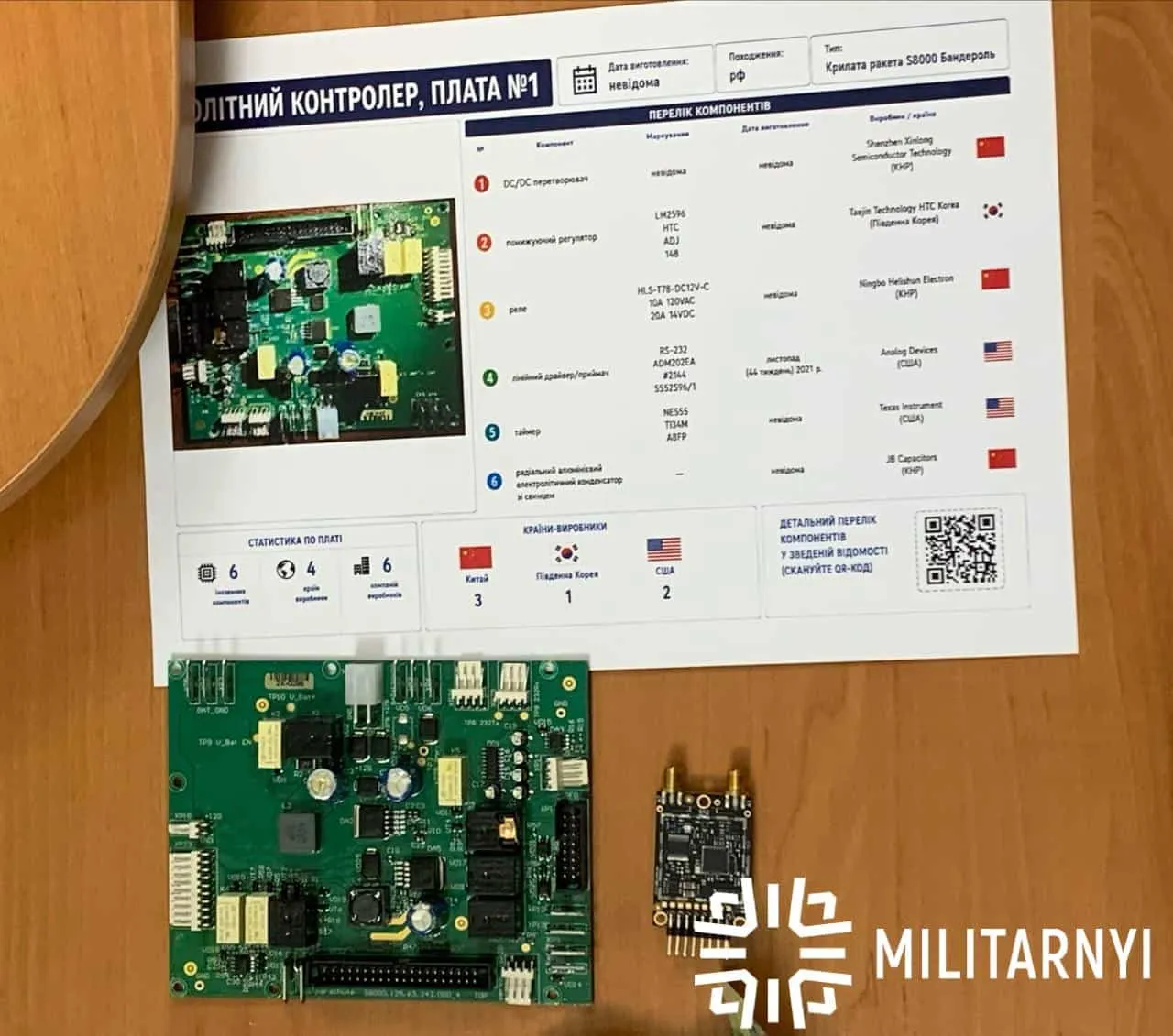
What an attacker does next
Whoever adapts faster gets the next round. When Ukraine started bringing ordinary Shaheds down routinely, Russia moved to jet-powered ones: five times as many in July 2026 as in June, by the Air Force’s count. When the middle layer fills, the next move will be something else again. Russia is also not the only one learning: the US, China and Iran all have cheap jet-powered strike weapons in development or service. The defender’s advantage is not one product. It is the speed of changing products and the production behind each one. For the economics underneath all of this, see cost-exchange ratio. For what the missile is, see the overview and the specifications, number by number.
What will the market need next?
Every counter on this list is a production problem before it is a technical one, and each has a buyer. Acoustic sensor networks at $400 to $1,000 a node need makers that can supply them by the tens of thousands and keep them running. Shoulder-fired missile lines, the best price per result against the Banderol today, are too small for the demand, so second sources and new lines for Stinger, Mistral and Piorun class missiles have buyers in every European army. And middle-layer interceptors have to be built at a rate set by Russia's output, which favours makers that can promise a monthly volume in the contract.
The supply-chain counter has a market too. Tracing components to a handful of named importers is intelligence work that governments and chipmakers both need, and it is still done mostly by hand.
Signals worth watching: capacity announcements for shoulder-fired missile lines in Europe, orders for acoustic or passive sensor networks outside Ukraine, and new sanctions designations against the distributors named in Ukraine's database.
The Banderol series
- What the Banderol is, read from Ukraine’s teardown
- The specifications, number by number
- How it is used, and why it gets through
- The risks at 80, 150 and 400 a month, and the counters (this article)
- Cost-exchange ratio, the number air defense has to design to
- Why the US needs cheap interceptors more than its own Banderol
Sources (8)
- The Insider, on Banderol production capacity, 17 September 2026
- Ukrainska Pravda, Air Force on jet-powered drones, 31 August 2026
- Interfax-Ukraine, Banderol interception effectiveness, 2 September 2026
- Militarnyi, on a new system intercepting the Banderol
- National Security and Defense Council of Ukraine, interceptor drones in 2025
- UNITED24 Media, Sky Fortress acoustic detection, 1 July 2025
- The Kyiv Independent, Banderol enters Moldovan airspace, 17 August 2026
- Ukraine Defence Intelligence, War & Sanctions: S8000 Banderol technical page